After Paris, we made a short visit to Amsterdam just shy of two full days. We all really liked this city. The people are so welcoming, and the holiday vibe is so festive. Plus, two of our three museum visits were highly emotional experiences.
As I write this, we are on a train to Dresden after a short overnight in Frankfurt. Here is my Amsterdam recap.
The first museum tour was the Van Gogh Museum. The temporary exhibit – Van Gogh Along the Seine – was perfect given our time in Paris.
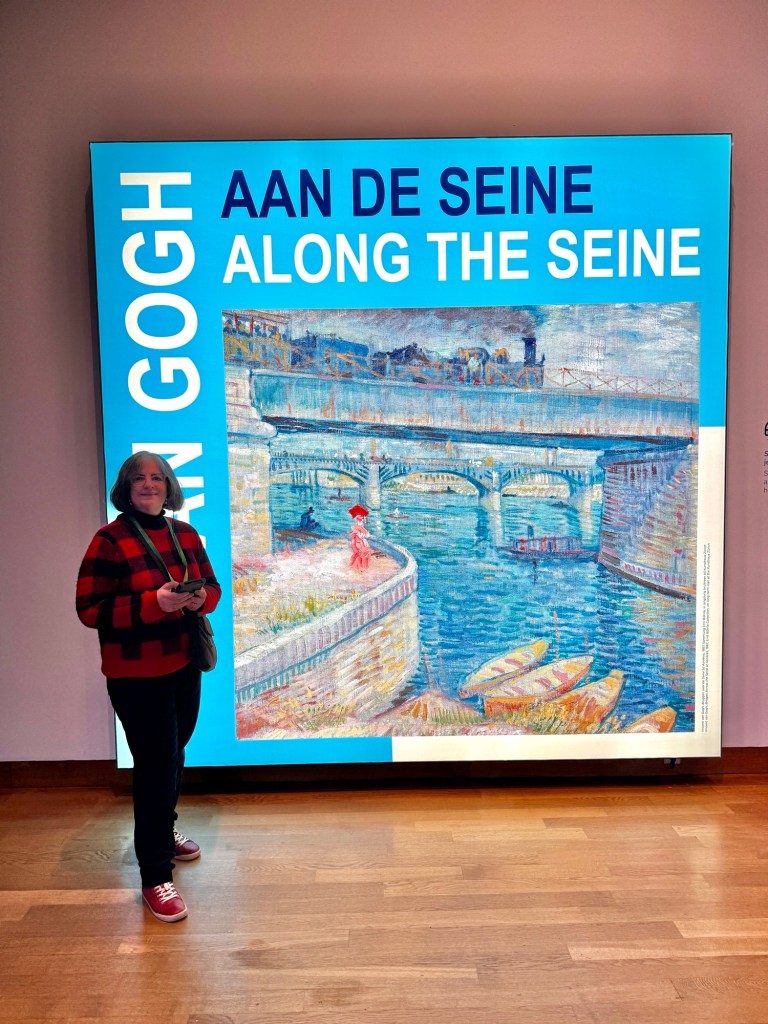
The exhibit included works by Van Gogh and his contemporaries who often worked together and experimented with the same styles and themes. There were also examples of studies the artists made leading up to a major work.
You can see Seurat’s La Grande Jatte at the Art Institute of Chicago. This exhibit had several smaller paintings where he tried out different shapes and placement of the people in the scene. Once he was satisfied, he completed his masterwork.
I also liked the painting A Woman Walking in a Garden by Van Gogh. She seems to be gathering flowers on a pretty spring day and is caught mid-stride glancing up at the painter. I like that the background trees are horizontal slashes of blue, and the green meadow in the foreground is painted with vertical green and yellow slashes, with some other colors as well. The colors of the woman’s clothes stand out and make her the focal point of the scene.

In the permanent collection of the museum, we were able to take photos. Here are some favorites:
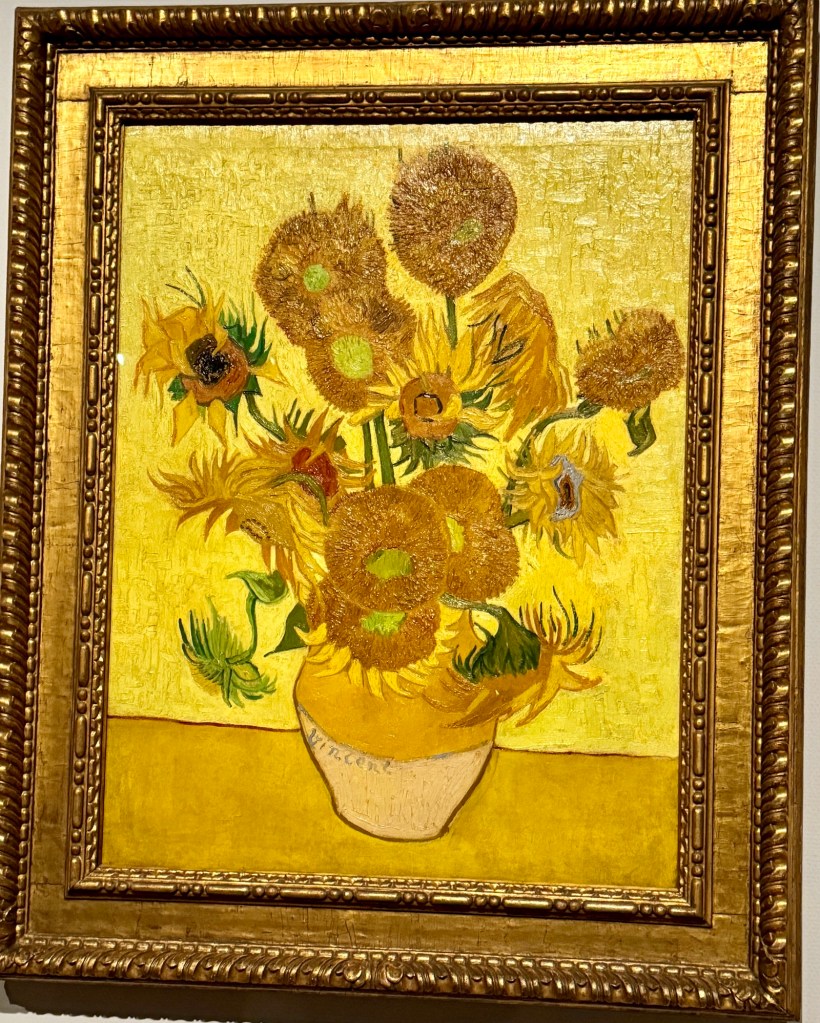
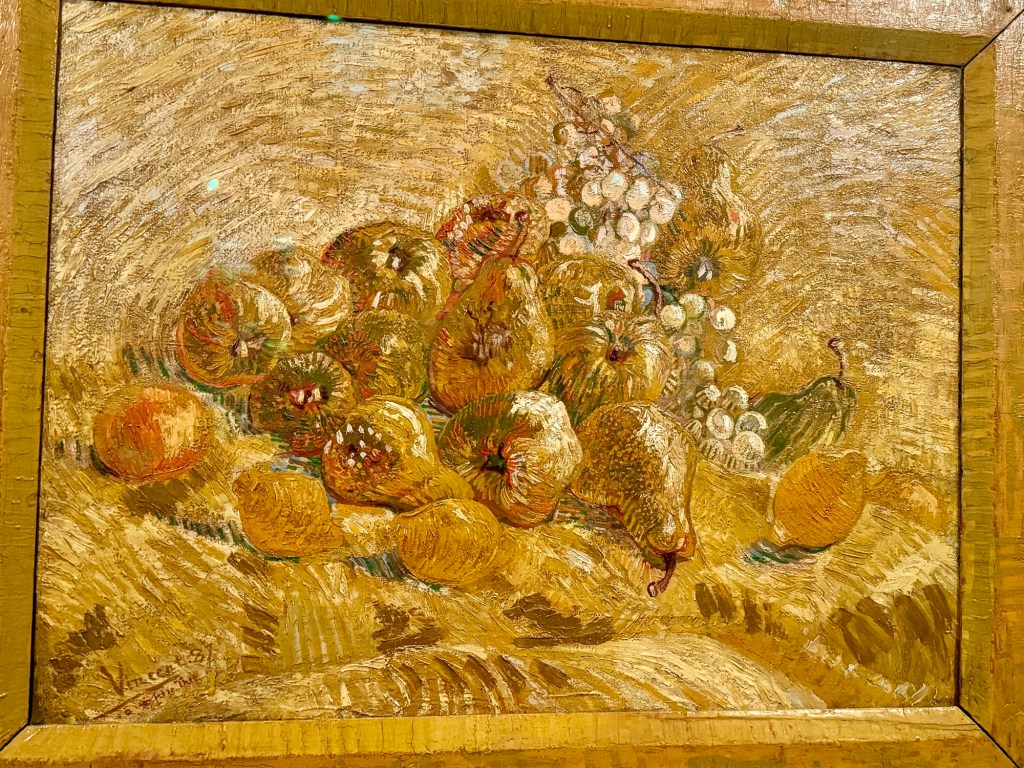

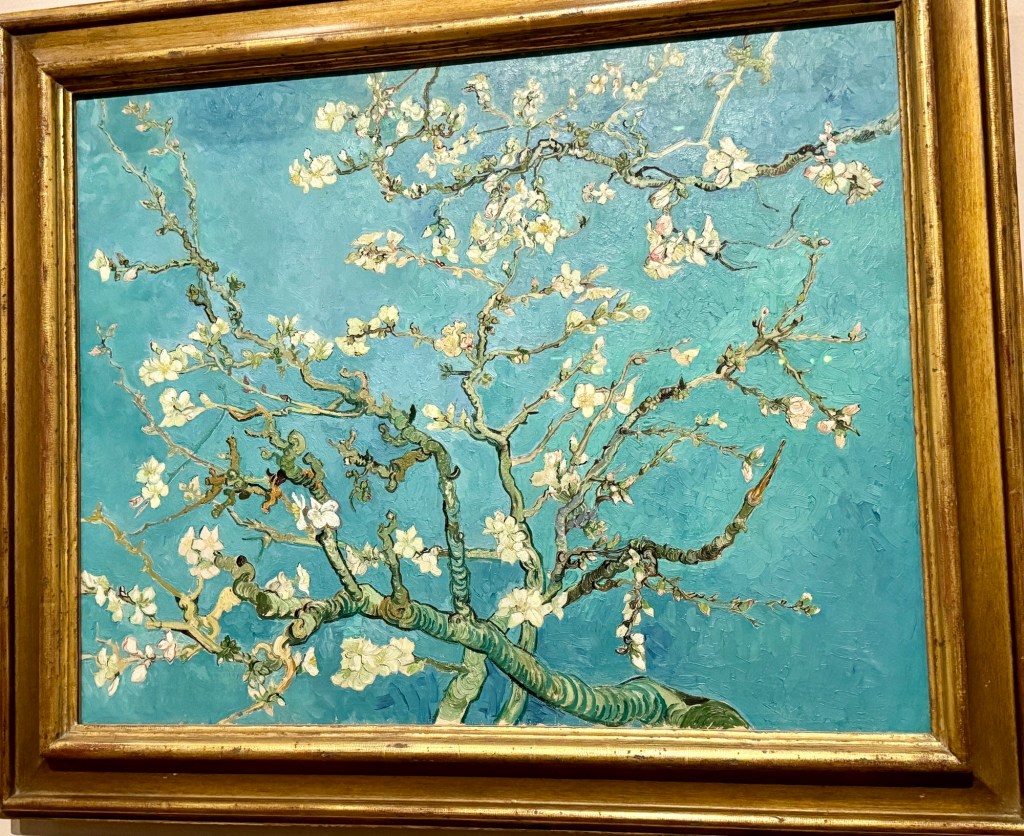
Vincent Van Gogh died of a self-inflicted gunshot wound. What a loss for the world. Throughout his mental illness, Theo and Jo supported him unconditionally. Their love and caring is evident in the more than 300 letters they sent each other. The Almond Blossom painting and excerpt from Theo’s letter about naming his son Vincent Willem brought tears to our eyes.
Our next museum was also great, but not as mind-blowing or emotional as the Van Gogh. (I could have also started getting museum fatigue.) We visited the Rijksmuseum, which holds centuries of art. We focused on the highlights – key Dutch masters.


Here is one other thing I want to share from the Rijksmuseum – a much too small acknowledgment of the Dutch role in the slavery of African people.

As we only saw the museum highlights given our short time in Amsterdam, there may be other acknowledgements of the Dutch reliance on the slave trade to build their country’s wealth. I just felt that this was downplayed way too much.
I’ll save our final Amsterdam museum experience for the end of the post, and here are some scenes from this lovely city. It rained most of the time we were there, but we still greatly enjoyed walking along the canals and squares.
Scenes from the Christmas market outside the. Rijksmuseum…

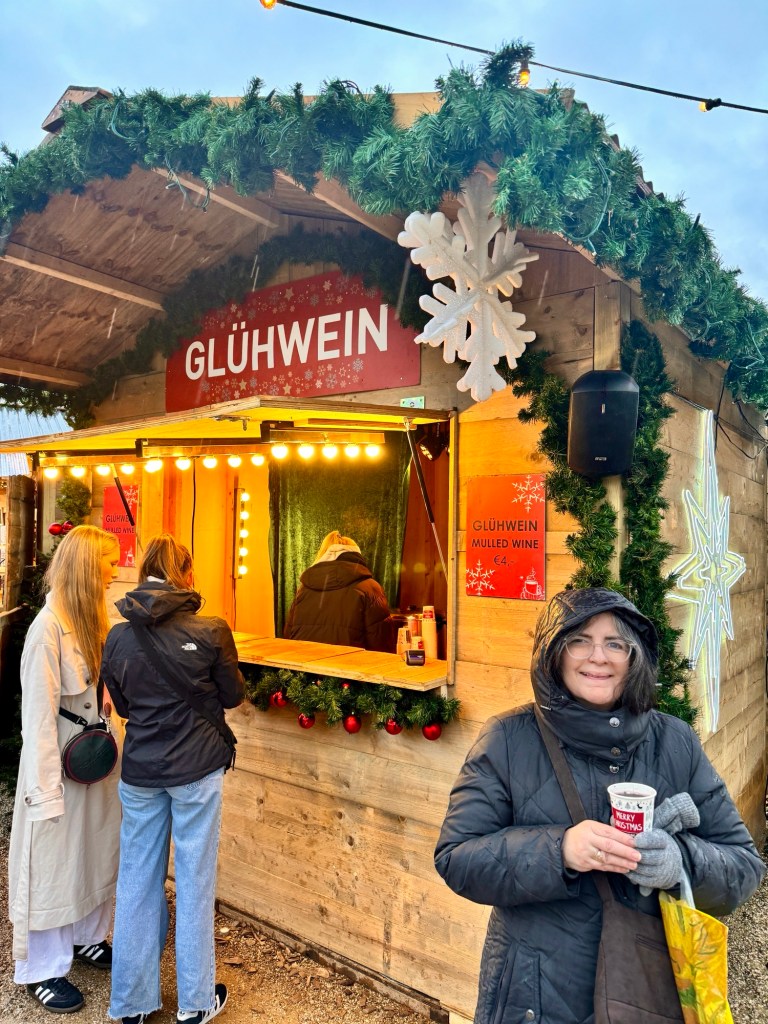
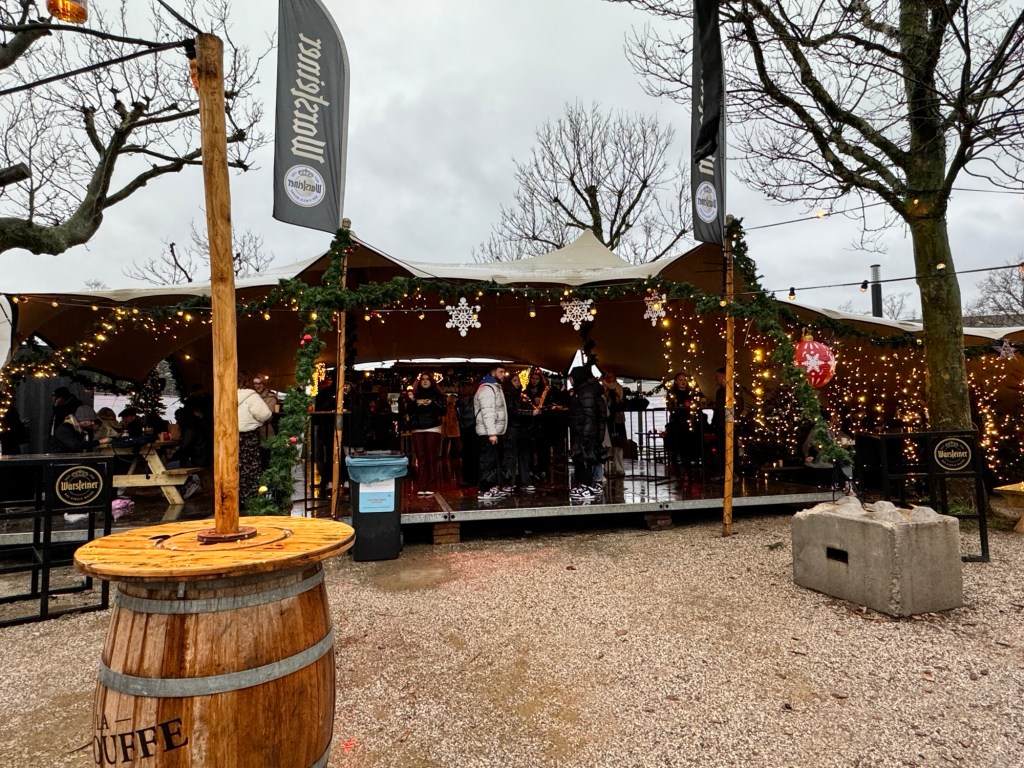
We had fried fish bites (kibbeling), gluhwein, fried bread with melted cheese on top, and other treats.
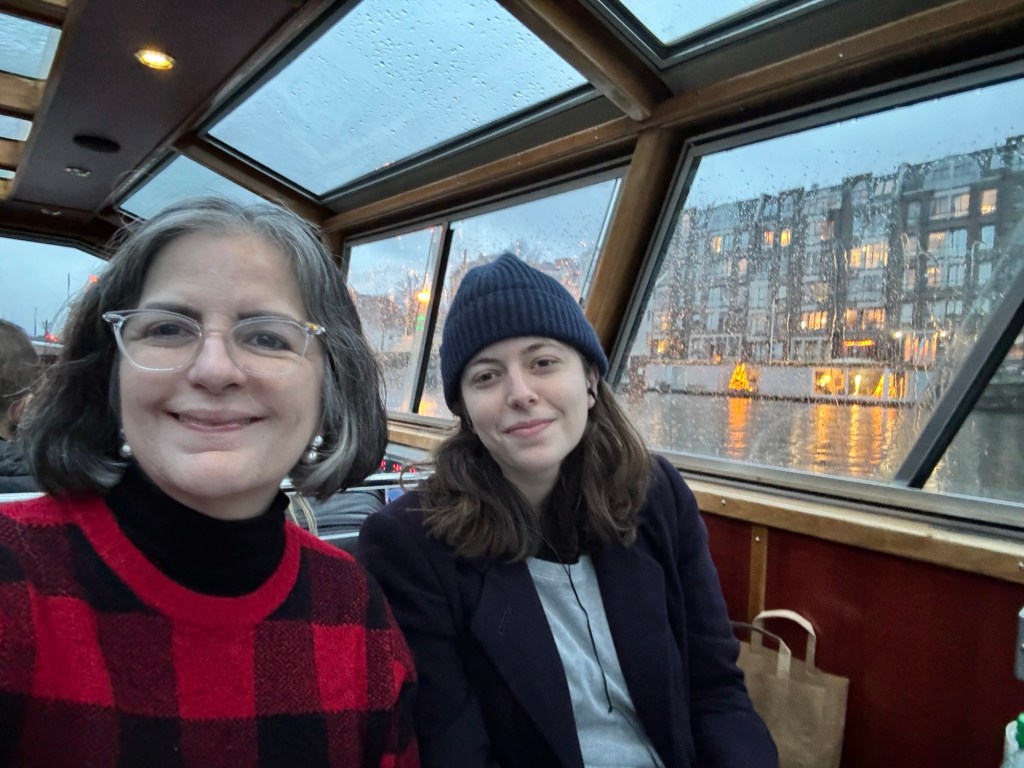
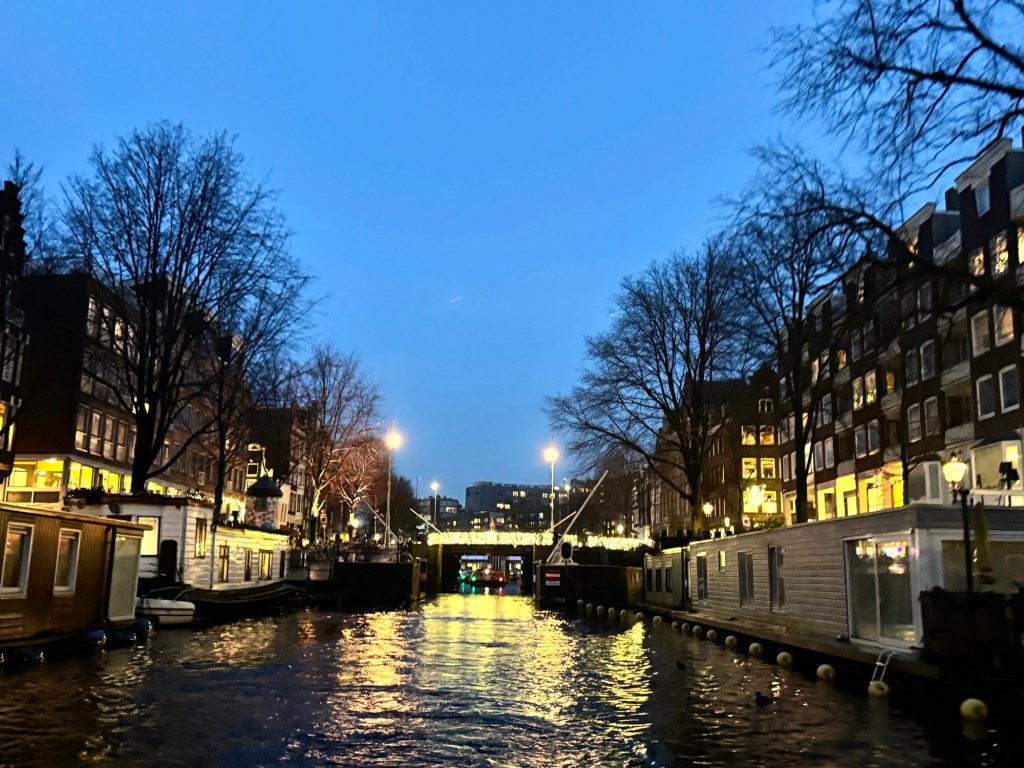
After that, we walked to our canal boat tour. It was still raining, but as dusk turned into evening, the sights were lovely. Scenes from the tour:
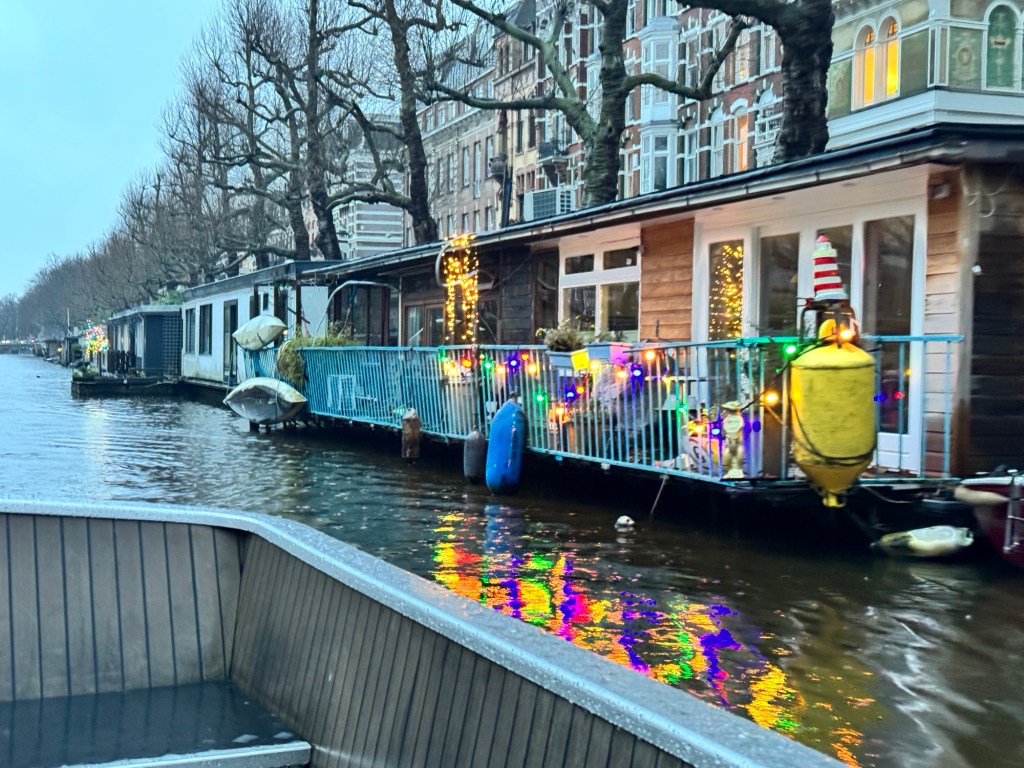
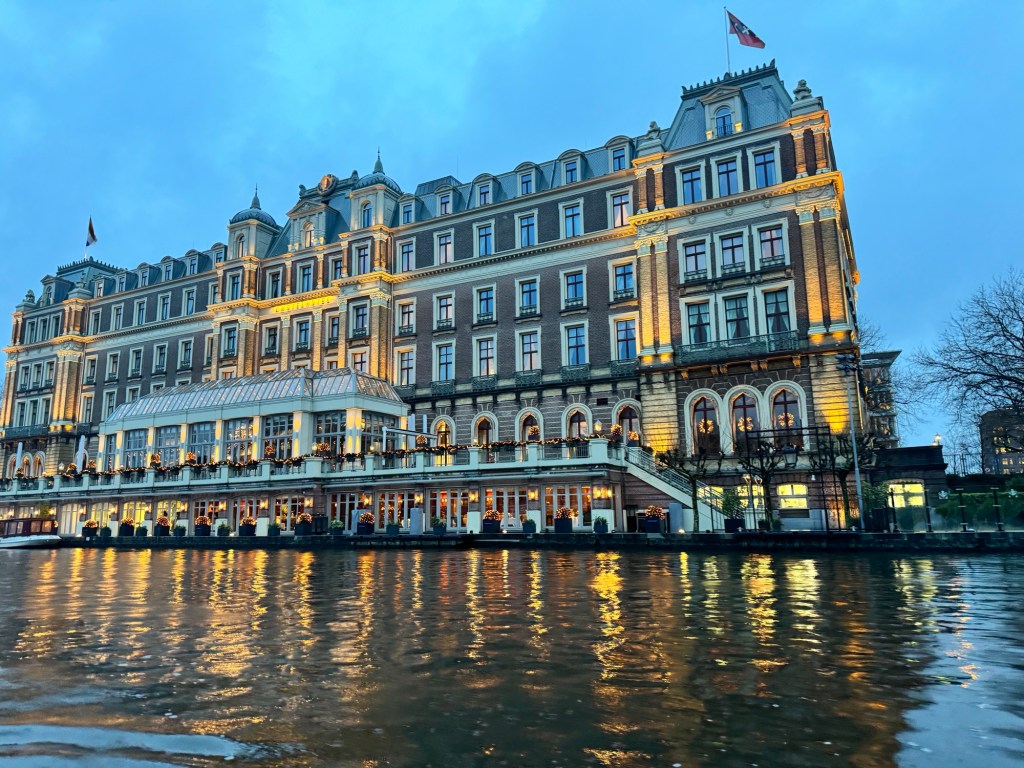

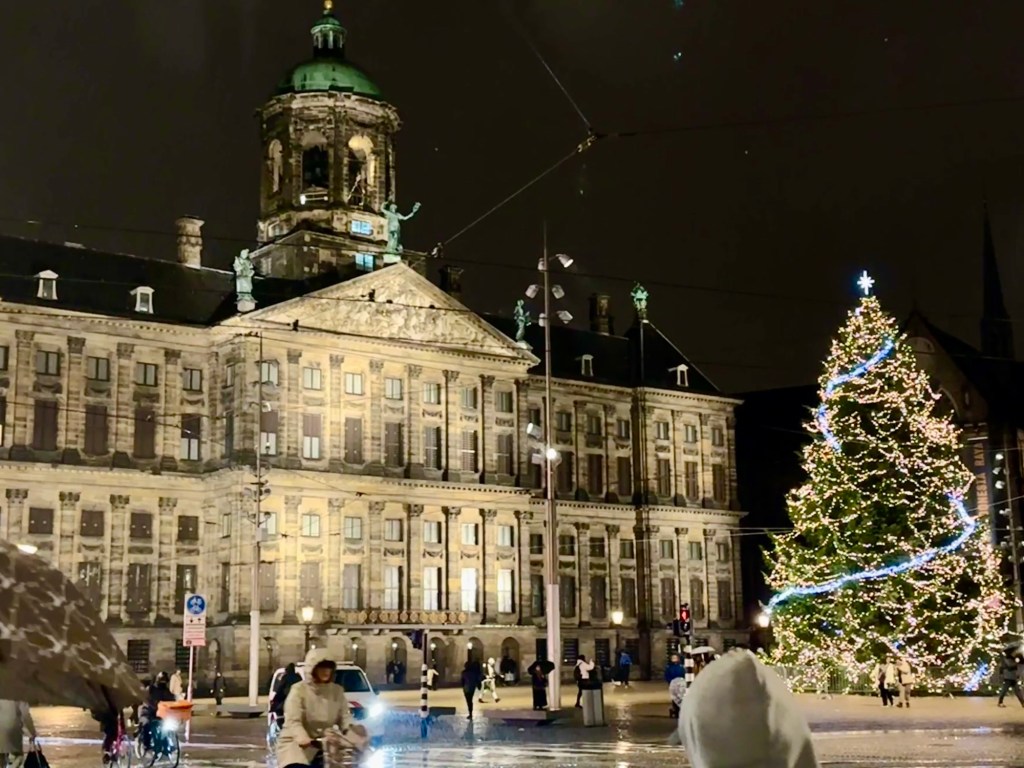
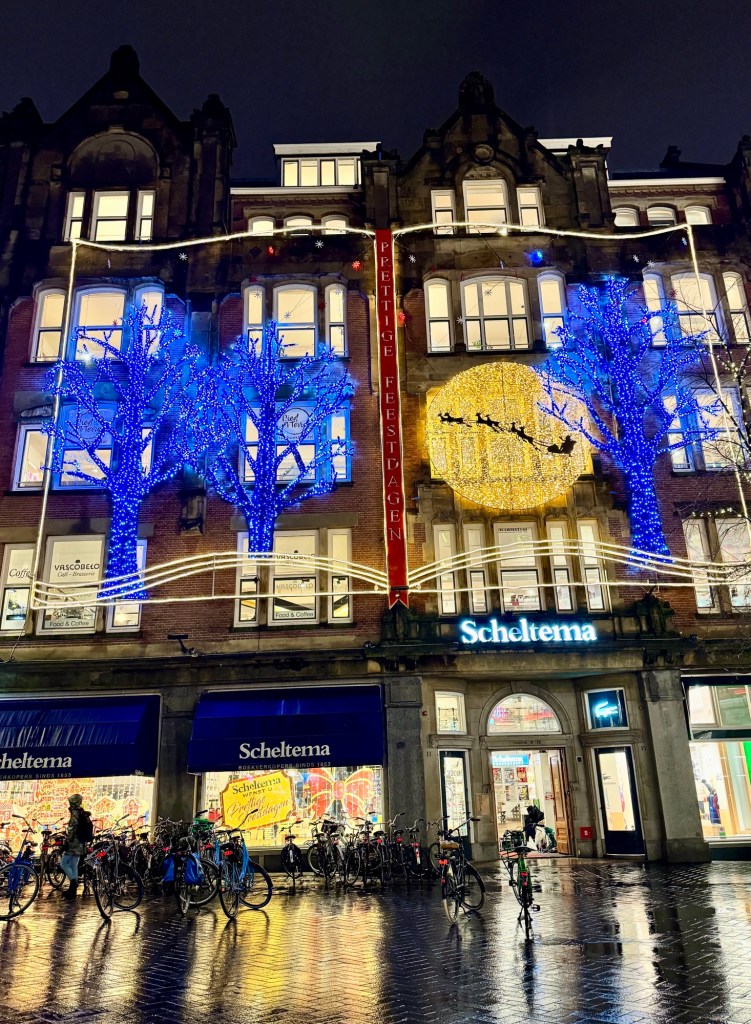
Amsterdam was also decorated for the holidays. We enjoyed seeing all the lights as we walked around town.
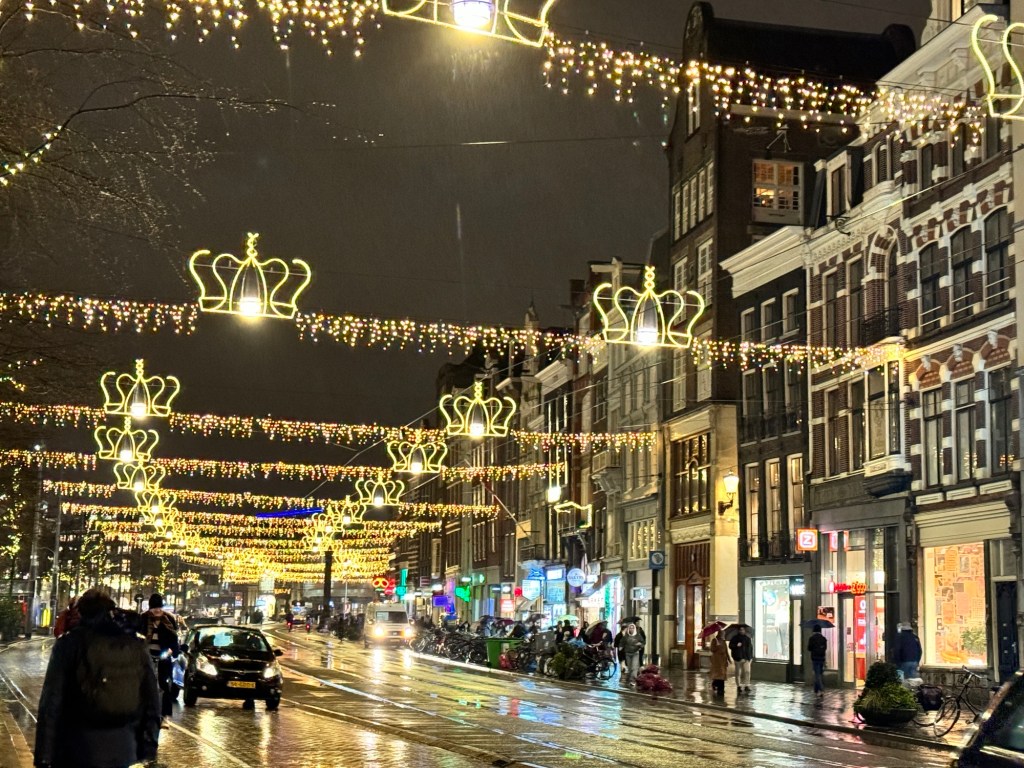
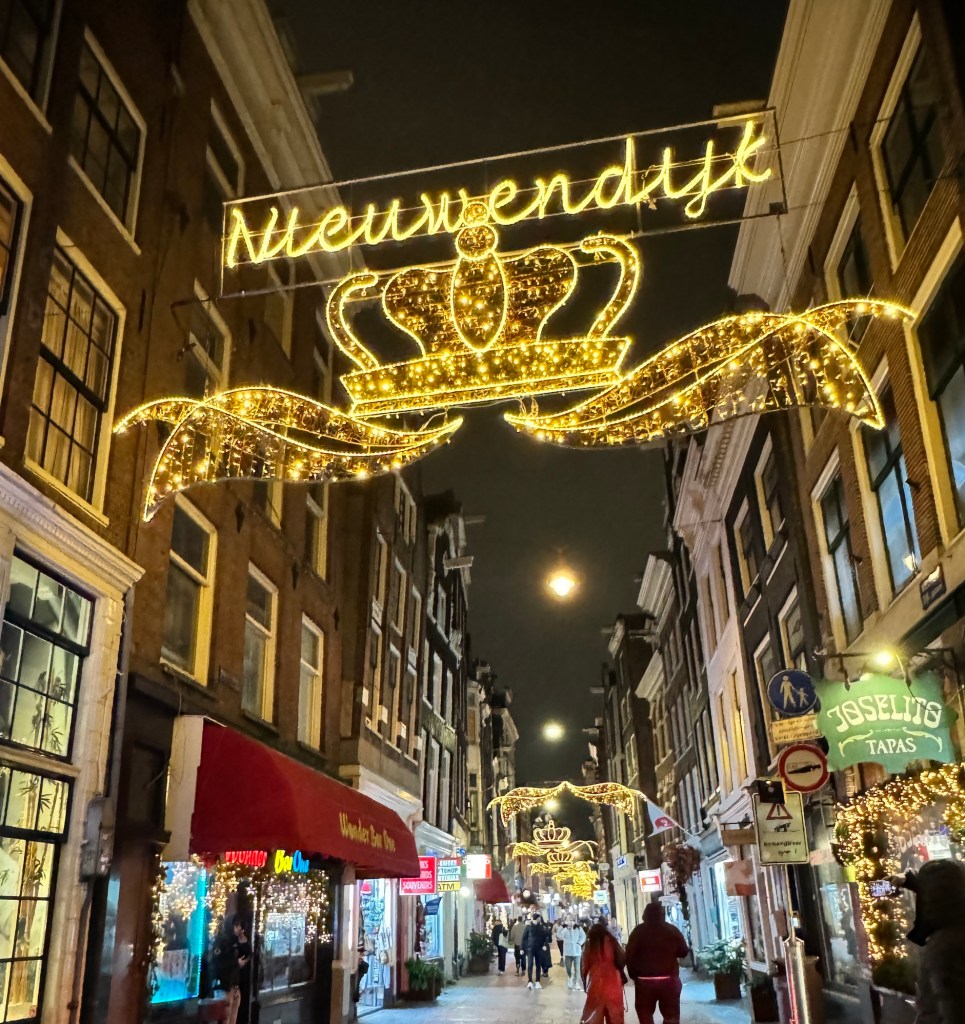
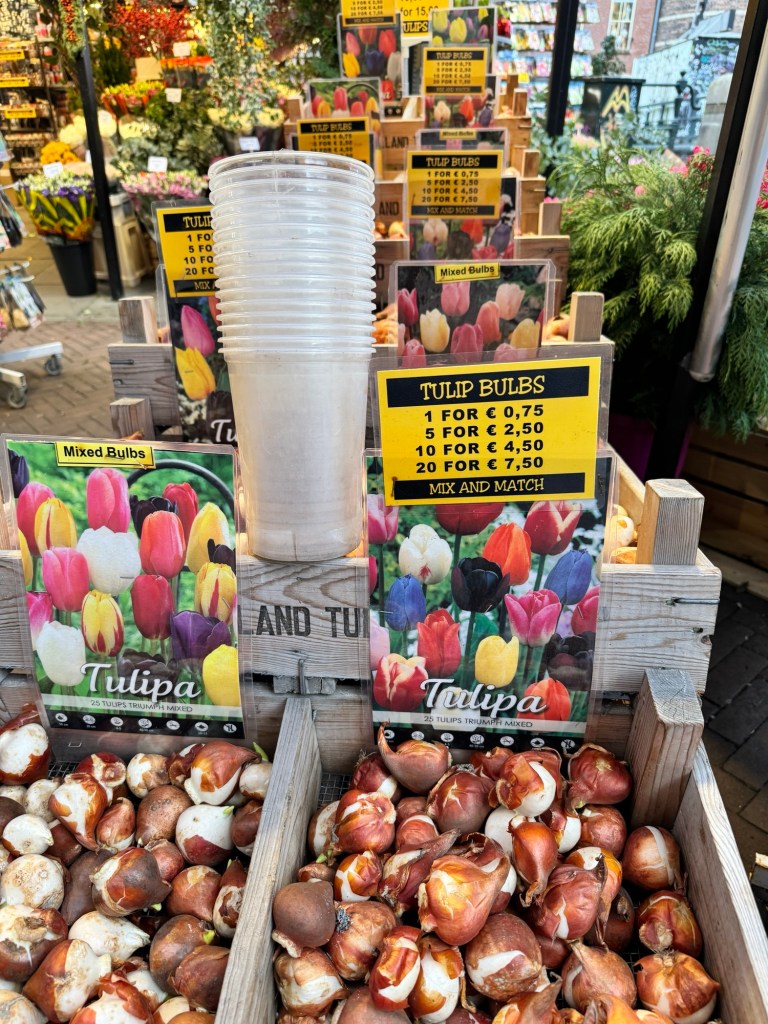
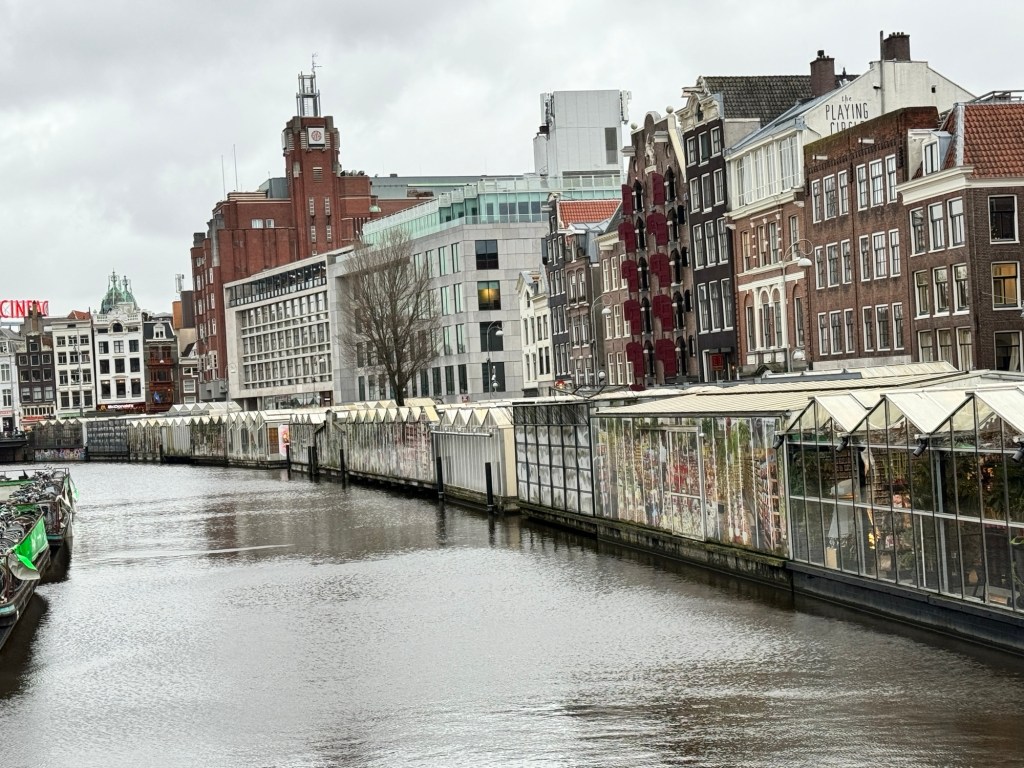
Other scenes from around town included the Bloemenmarkt (flower market) and the train station, with which we became very familiar.


Our final museum in Amsterdam was the Anne Frank House. We were not allowed to take any photos during the tour. Suffice to say, it was a powerful experience.
The visit started with an excellent 30-minute presentation by one of the museum’s education team members. There was a dual timeline showing the Frank family’s experiences on one side and the Nazi regime’s actions on the other side.
The classroom was full for the tour – Maybe 30 people in the room. We were surprised that only half the people raised their hands when asked if we’d read The Diary of Anne Frank. Even for those of us who have read the book, the presentation was a very good refresher and emphasized the critical importance of rejecting prejudice and political propaganda, and how important the words and actions of leaders are in influencing society’s treatment of those deemed “other.”
The secret annex within Otto Frank’s office building was very well-hidden behind a bookcase. The rooms in the annex were small, though each of the eight residents had a bed. They also had a small kitchen and bathroom.
They had to be careful about when to use the facilities and when to walk around, so as not to alert the office and warehouse workers of their presence. Of course, they had help from key employees of the company. They lasted 2 years before being discovered.
Of the eight annex residents, only Otto Frank survived the concentration camps. He published Anne’s diary and created the Anne Frank House. Years later, Steven Spielberg used proceeds from Schindler’s List to build the museum building.
Otto Frank, though fully supporting the Anne Frank House, could not bring himself to live in Amsterdam again. He settled in Switzerland. However, he hoped the Anne Frank House would be a force for unity and peace, reconciliation and human rights. That is his and Anne’s legacy.

 Travel Buddies
Leave a comment