Our second day in Dresden, we all slept in. We needed the rest! Nezzie had started with a cold, and the days before were quite active for all of us. I had planned Dresden as a more relaxing visit, and that was a good idea.
After emerging from our building, we were walking in the square and saw two Santas on bikes. I asked if I could photograph them. Not only did they agree, but they gave us candy, too!


After saying auf wiedersehen to the Santas, our next experience was touring the Frauenkirche, a Lutheran church that was completely destroyed in WWII. It was a riveting, inspiring visit.
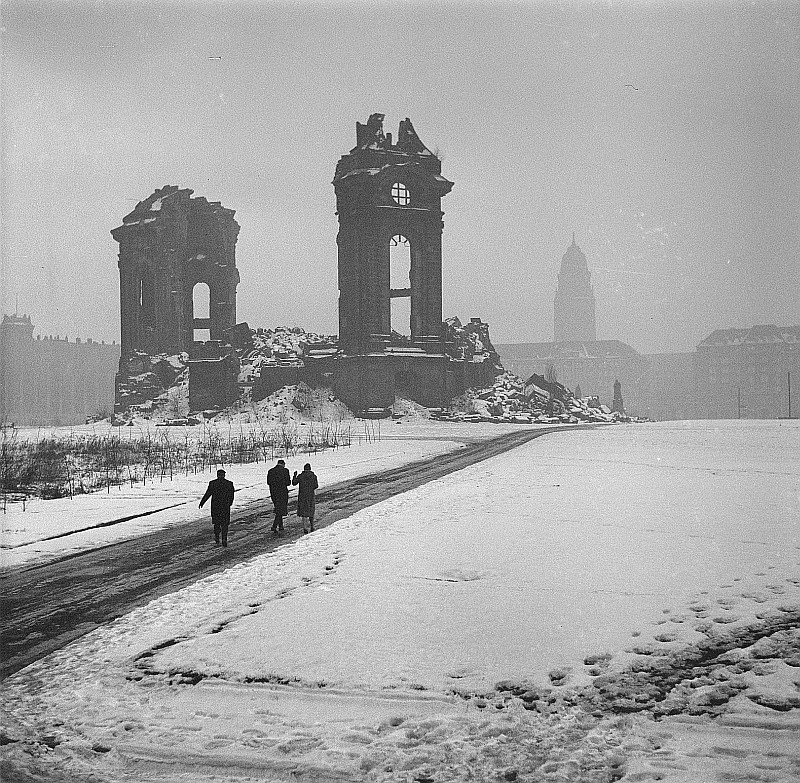
The rebuilding didn’t start until 1993, after German reunification. The planning and fundraising was an international effort, with most of the support coming from this area.
The work started with sifting through the rubble to use as much of the original church as possible. They also used the architect’s original plans from the early 1700s, when the old church was knocked down and replaced by the Lutheran Frauenkirche.
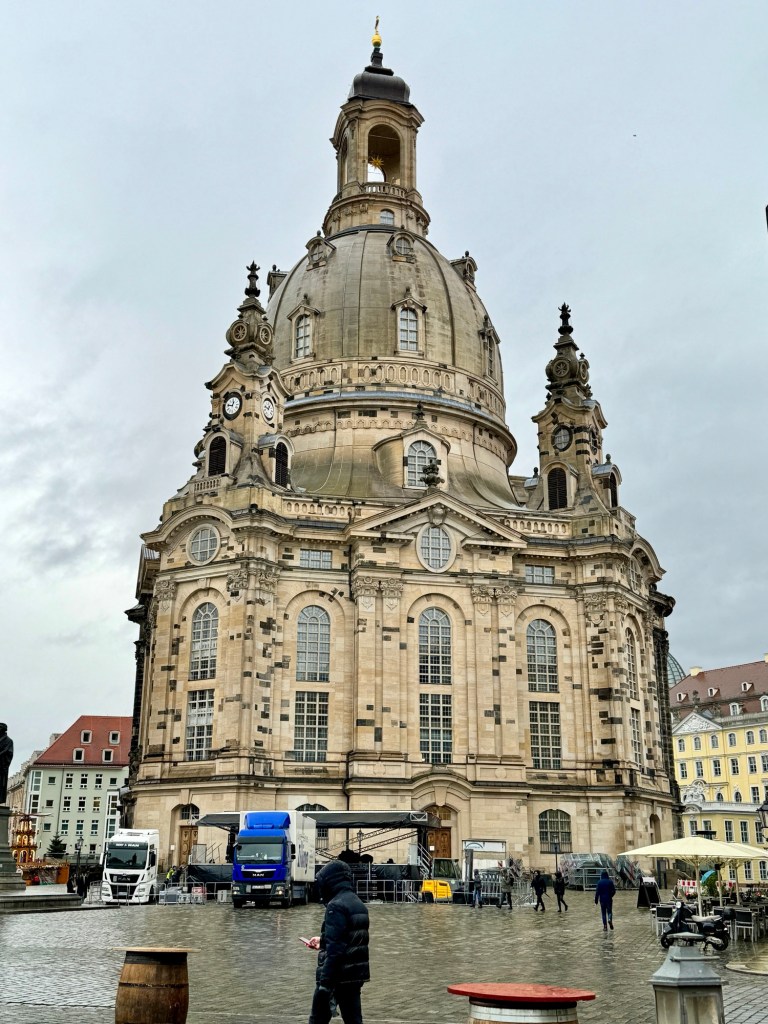

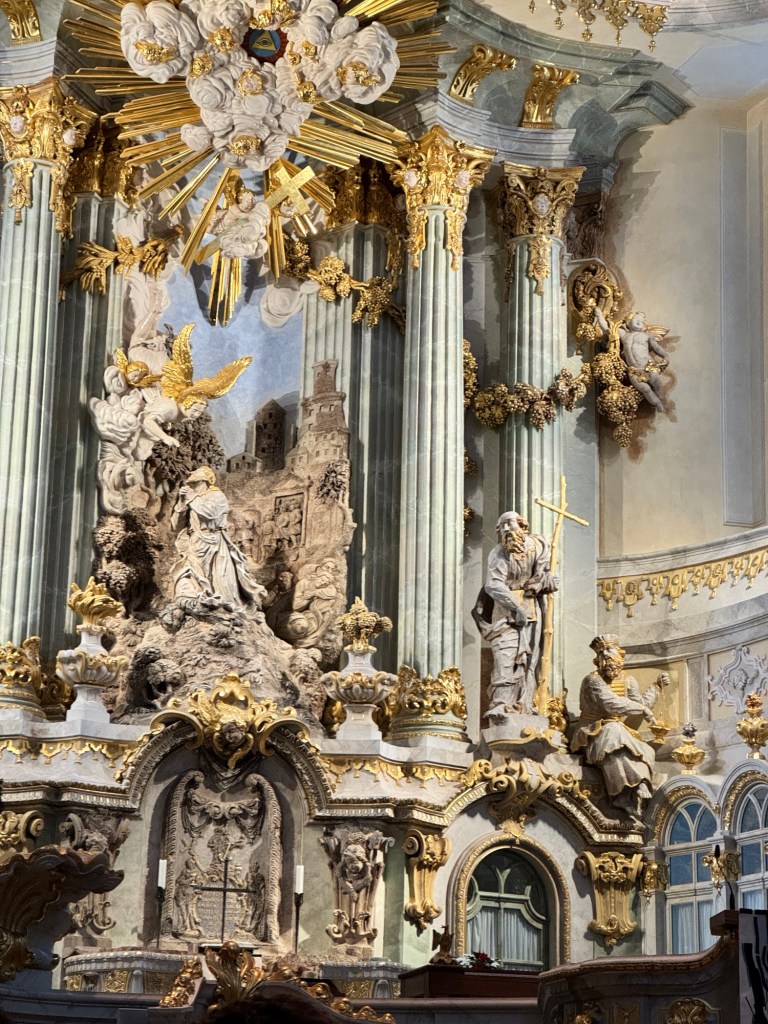
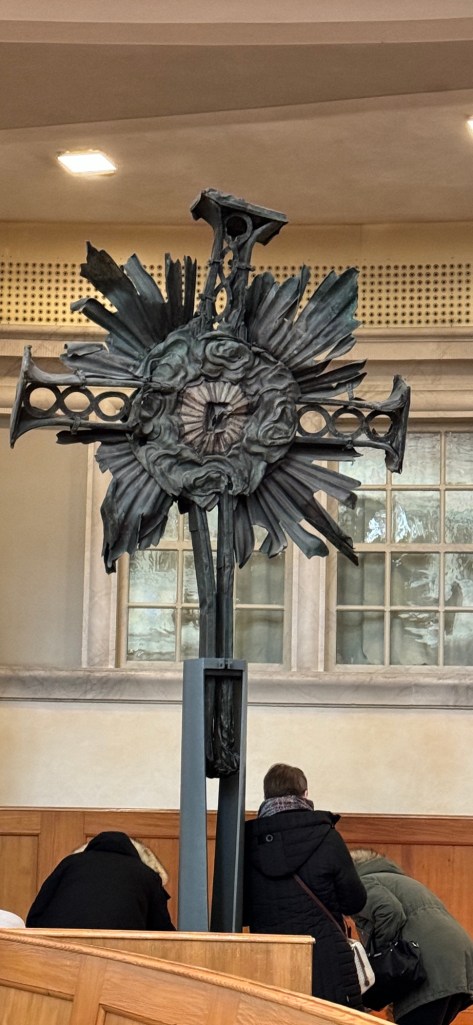

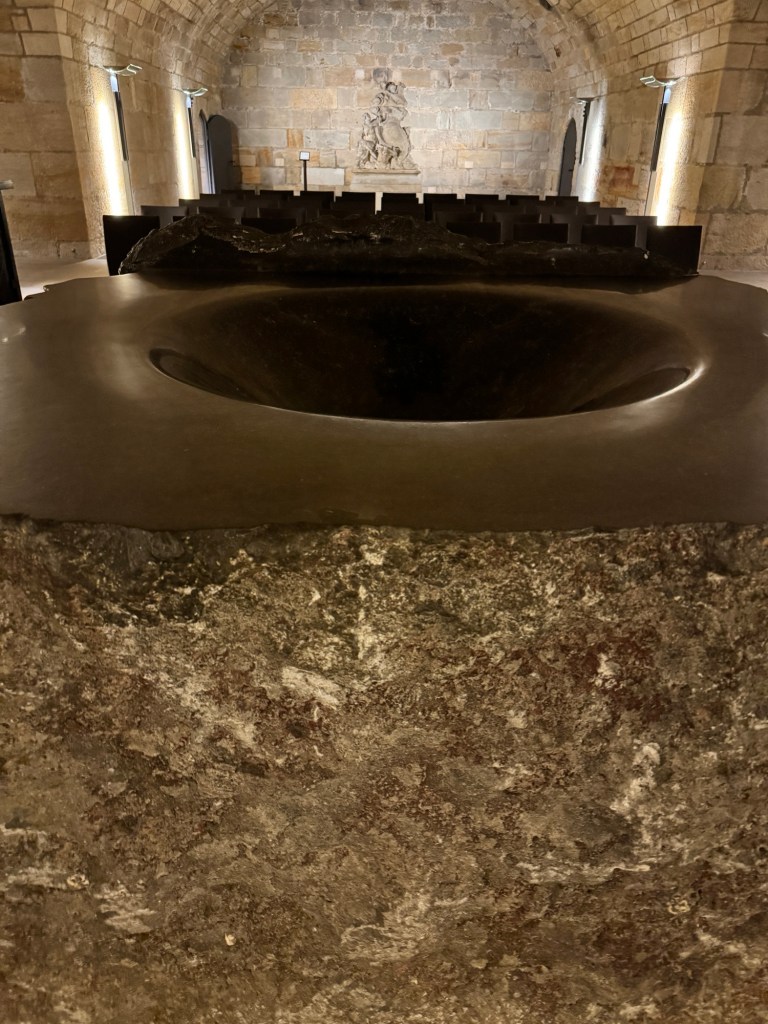

The church renovation was completed in 2005, after 12 years of painstaking work. The Frauenkirche is now part of the community of the cross of nails. It is a worldwide network of more than 200 churches devoted to healing the wounds of war and promoting reconciliation. To represent this, the Frauenkirche altar has a basic cross of nails in the center. Scroll back up to the altar detail photo to see it.
This was a powerful experience for us, and we talked a lot about it on our walk leaving the church.
Our final activity of the day was meeting Mathias, who hosts Columbus runners coming to Dresden as part of its city marathon and half-marathon. Dresden and Columbus are sister cities, a program for fostering cultural exchange.
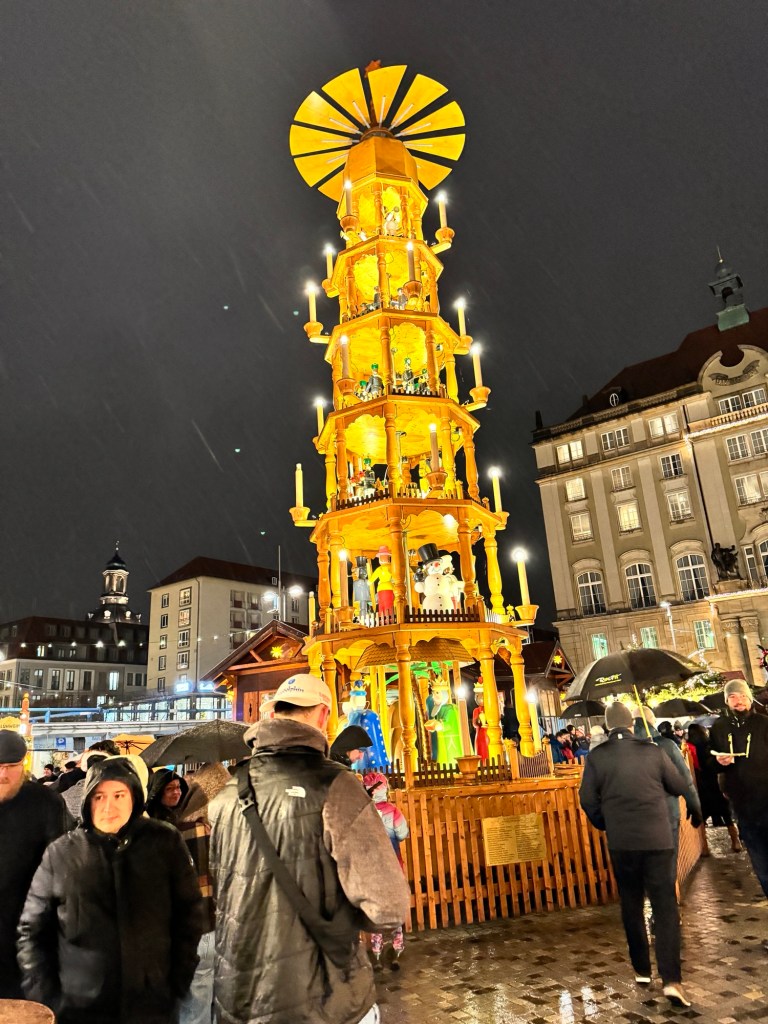
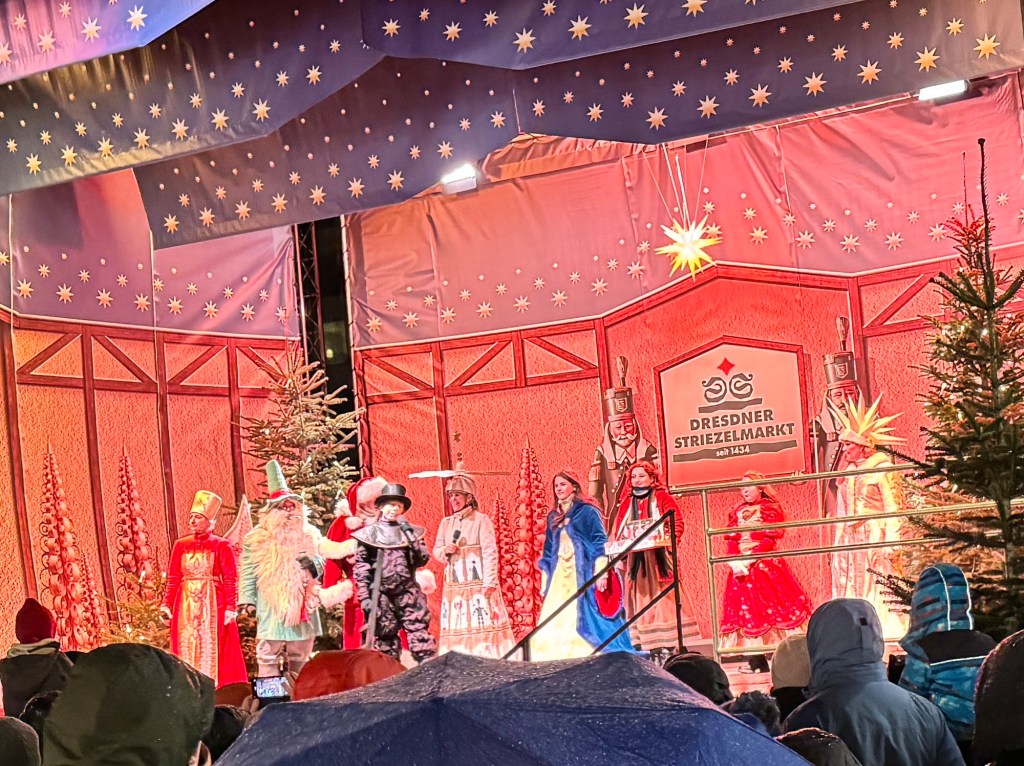
Mathias joined us for an evening excursion to Striezelmarkt, Germany’s oldest Christmas market dating from the 1400s. It was quite a sacrifice for him, as the weather was blustery, cold and rainy. But Mathias said it was the right weather for Striezelmarkt so visitors could truly enjoy the glühwein and bratwurst.

Just past that was the Striezelmarkt. It was very fun walking around the market with Mathias, hearing about Dresden Christmas traditions.
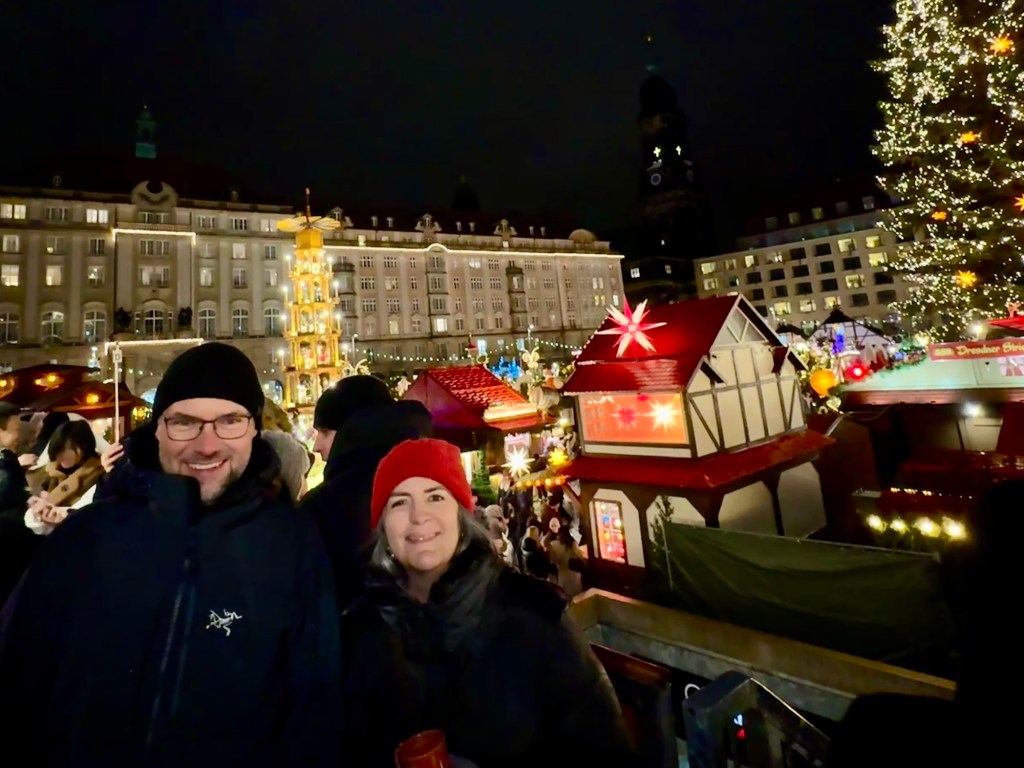


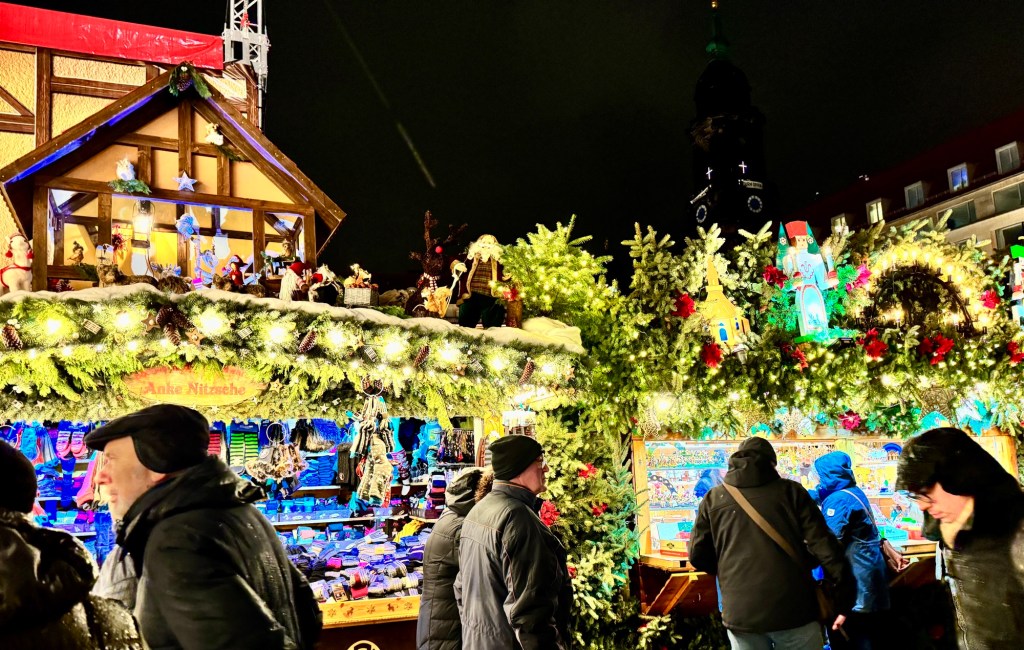
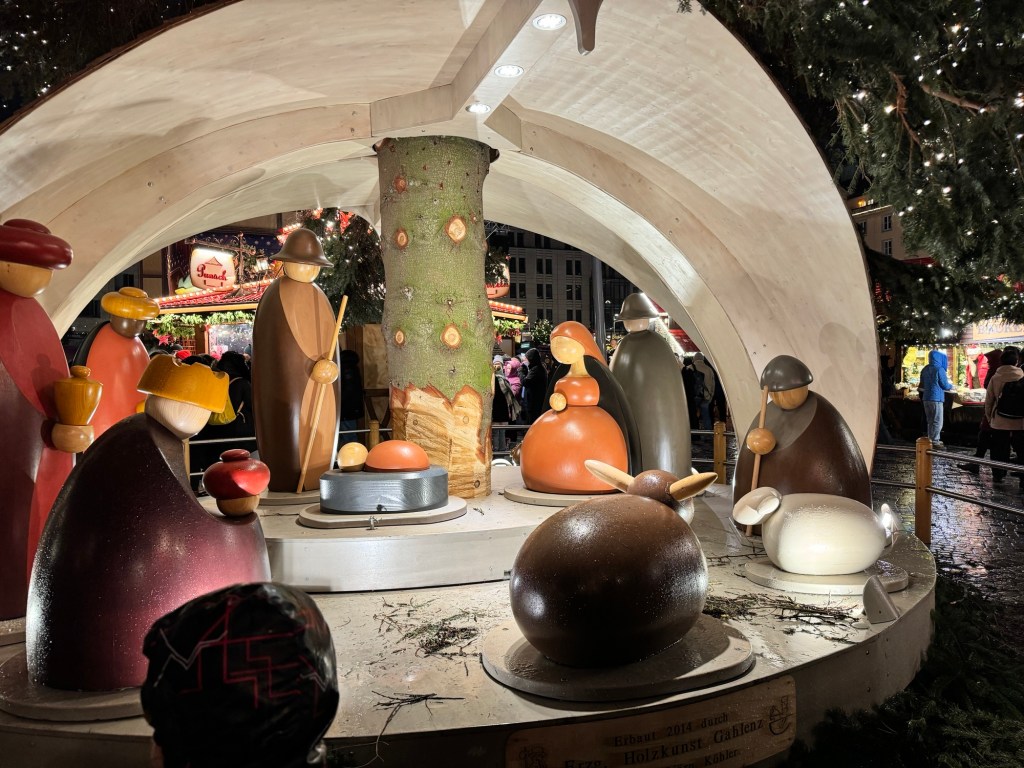

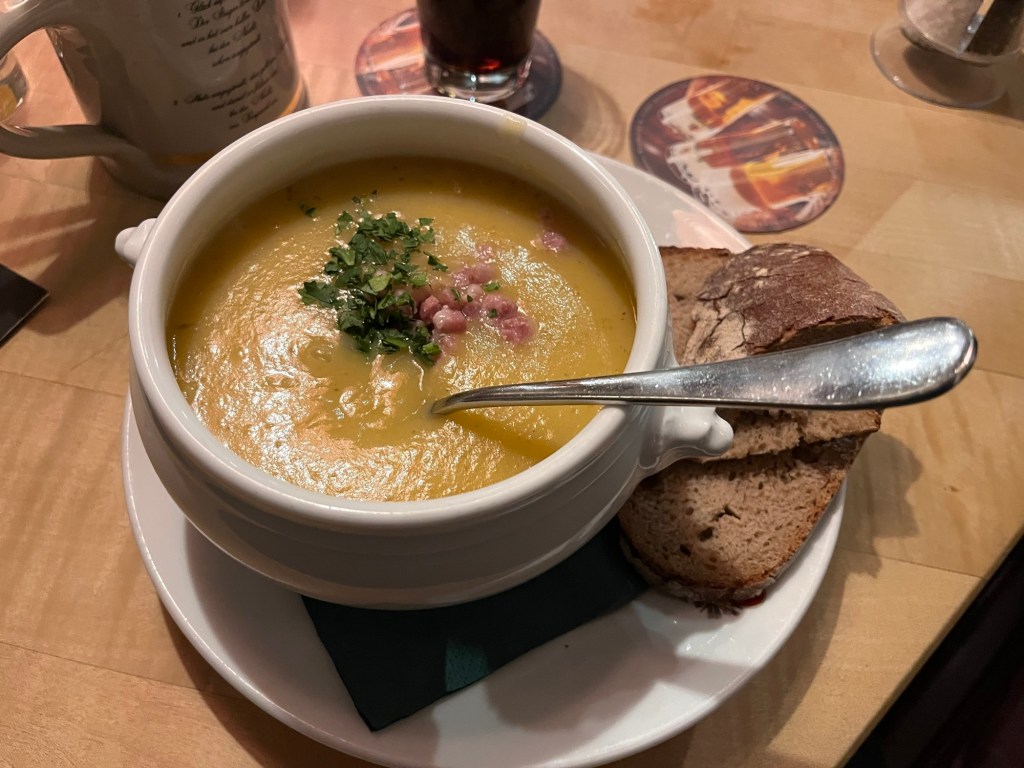
We ended our evening with Mathias over a hearty dinner of tasty potato soup with bacon (a Saxony traditional food) and a bit of dark German beer. Conversation and company were lively.
I’m very grateful for the Dresden Sister City program. I contacted them before leaving Columbus, and they connected us with Mathias. After returning to Columbus, I hope to attend one of the organization’s stammtisch gatherings.
The next post will be our final in Dresden before we celebrate Christmas in Prague.
 Travel Buddies
Leave a comment