We arrived home last night, but I do have one more itinerary post to share. Then I may have some follow-up posts to come.
On Sunday, Will and I visited Toledo as a day trip. This city used to be the capital of Spain until King Philip II moved it to Madrid in the 1500s. Why?
- He realized that the Catholic Church, particularly the bishop, was too powerful in Toledo, owning too much land and wealth.
- He wanted a big town square instead of a big town triangle, and the Toledo bishop said no.
- The king wanted a bigger palace, and the walled city of Toledo at the top of a steep hill would have made that challenging.
- The queen didn’t like the climate.
So they and the entire government moved to Madrid. Toledo declined as a power center. With no new development, the town remained pretty much as it was until the 20th century.
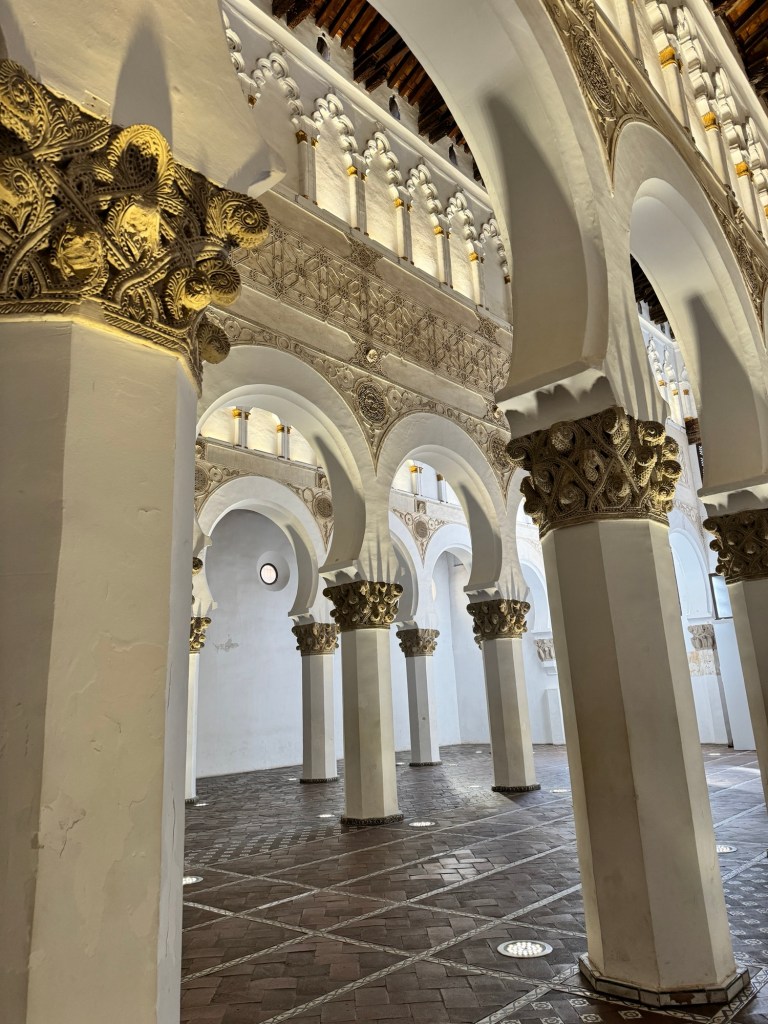
Important to note: for hundreds of years before that, Spain was part of a Moorish kingdom. The term “Moor” is a European word to describe North African Muslims. I don’t know if Muslims use that term to describe themselves or where it arose. I bring this up because you can still see Moorish architectural influences in Toledo, particularly in the keyhole arches everywhere from the train station built in 1919 to a convent built in the 1200s.
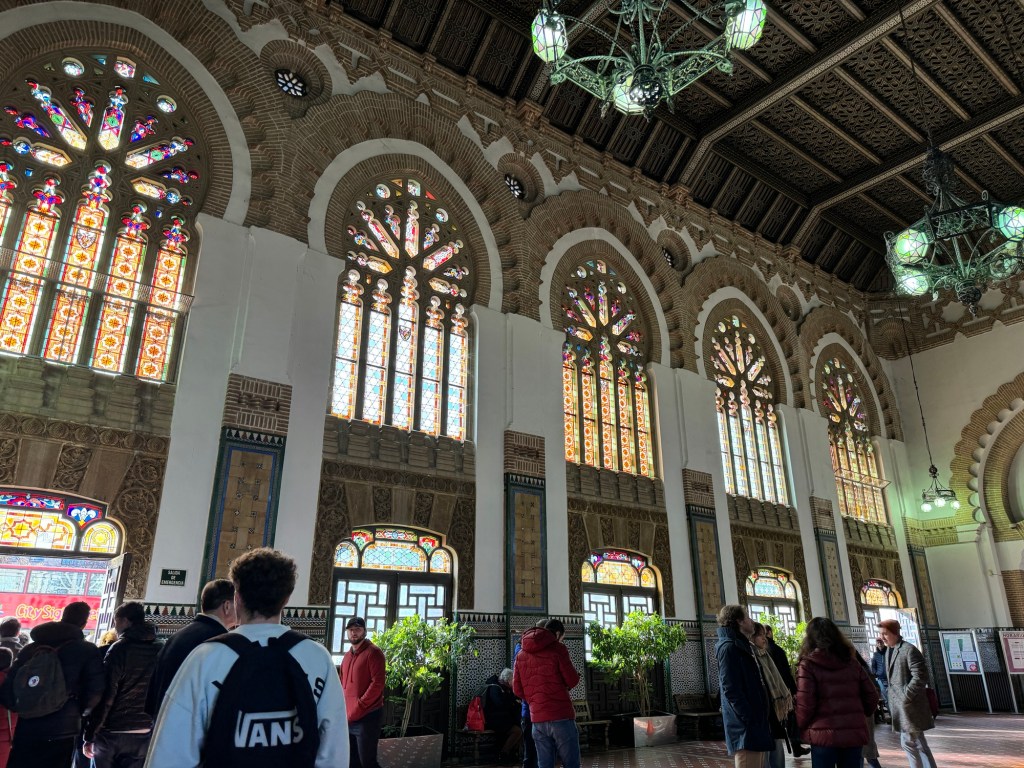
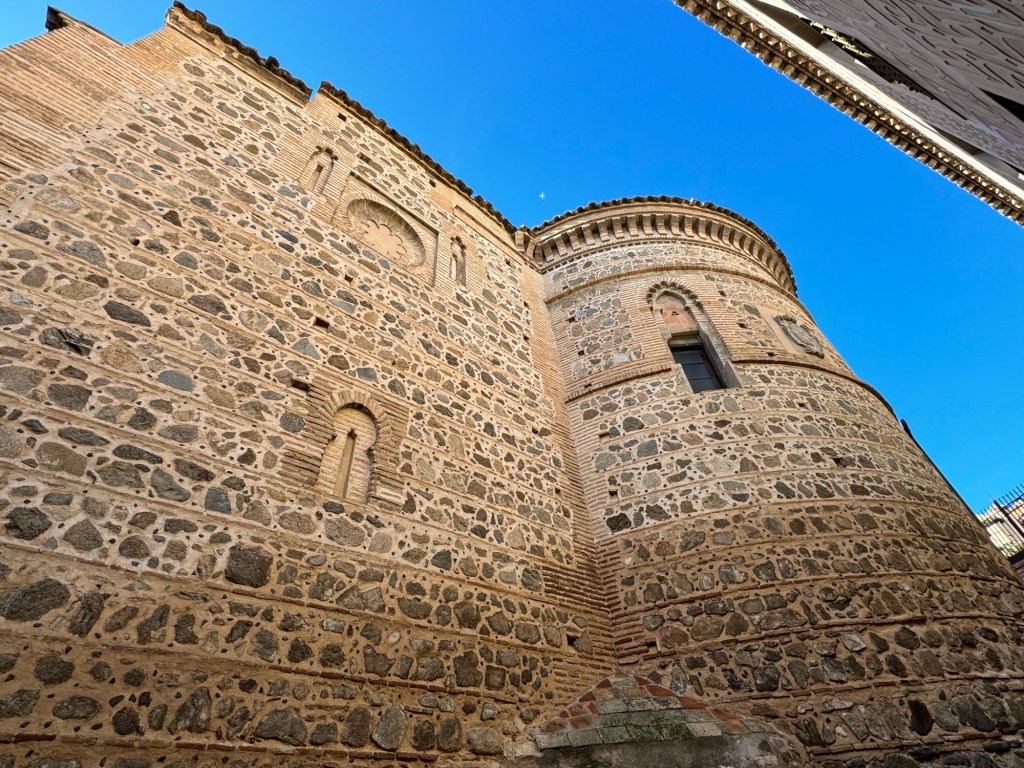
Flash forward to today, and the architecture of the walled city seems preserved in time, but with Starbucks, souvenir shops and electric lights. The city has also expanded past the walls into suburbs, but it is still a relatively small city of 80,000 people.
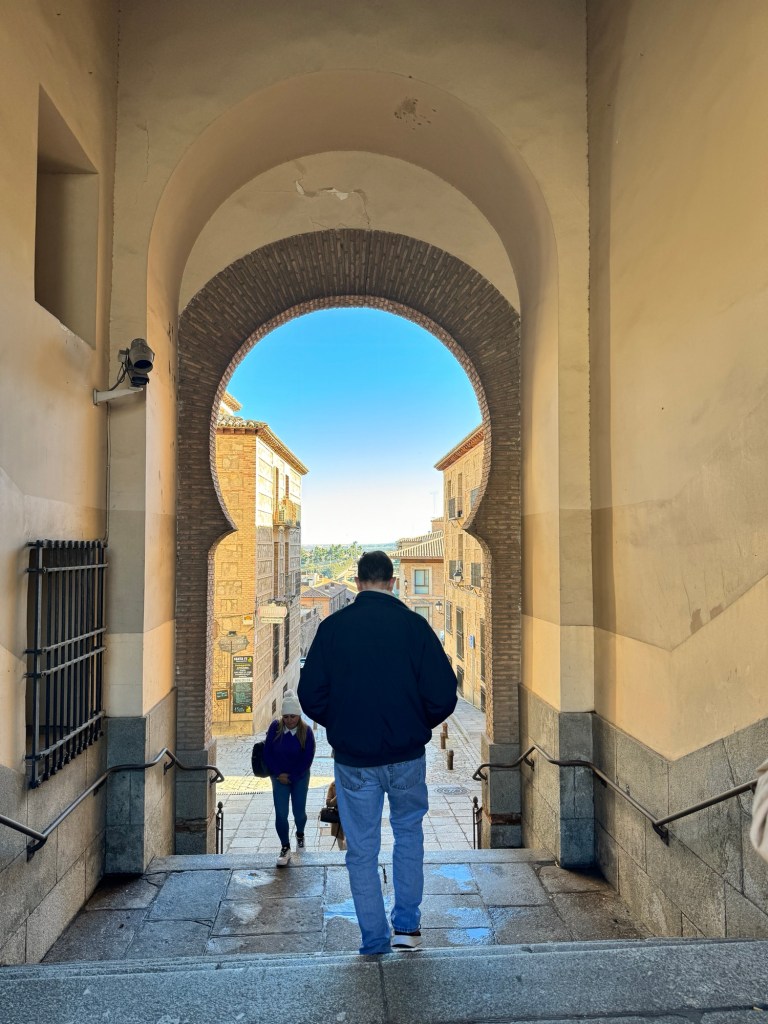
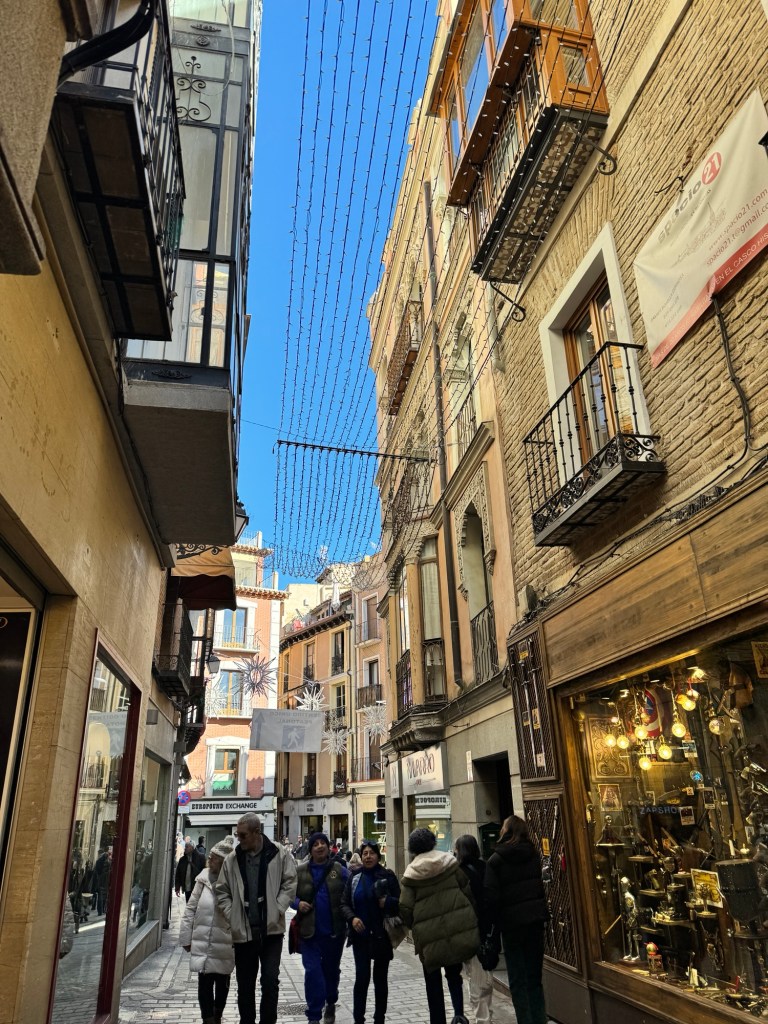
Thanks to our handy Rick Steves walking tours, we enjoyed walking through this town where everything is uphill. My thighs and calves got a workout.
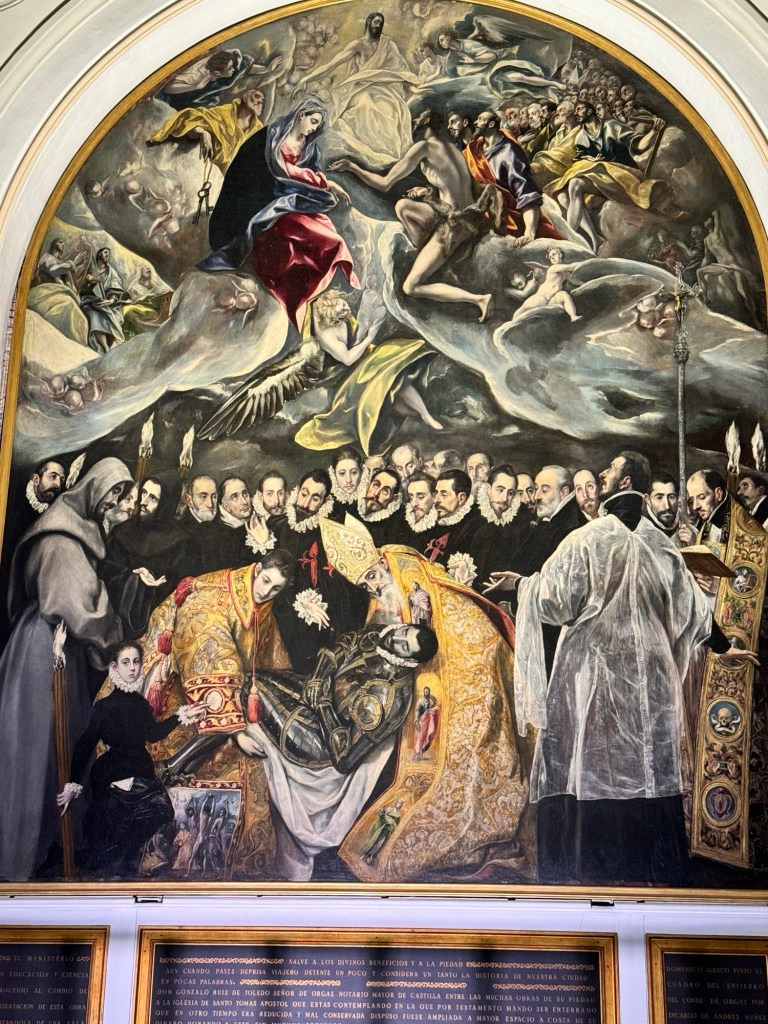
One of the key sights in Toledo is El Greco’s Burial of Count Orgaz. It hangs in the small Santo Tomé chapel. It’s breathtaking when you walk into the chapel and see this nearly 16-foot-tall masterpiece.
We also walked through Toledo’s old Jewish quarter. Today, two synagogues still exist as historical buildings. We were able to see one of them. The Santa Maria la Blanca synagogue was built in the early 1200s in the Moorish style and possibly on the site of a mosque. Jews were forced out less than 200 years later. It was taken over by Catholics. The Catholic Church still owns the property, hence the Catholic name, but it may be the oldest intact synagogue in Europe.

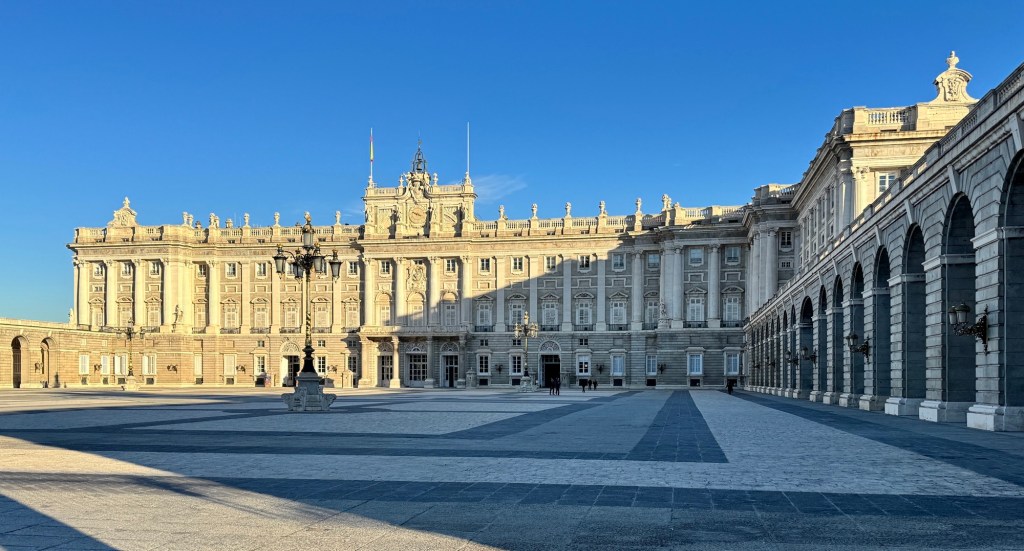
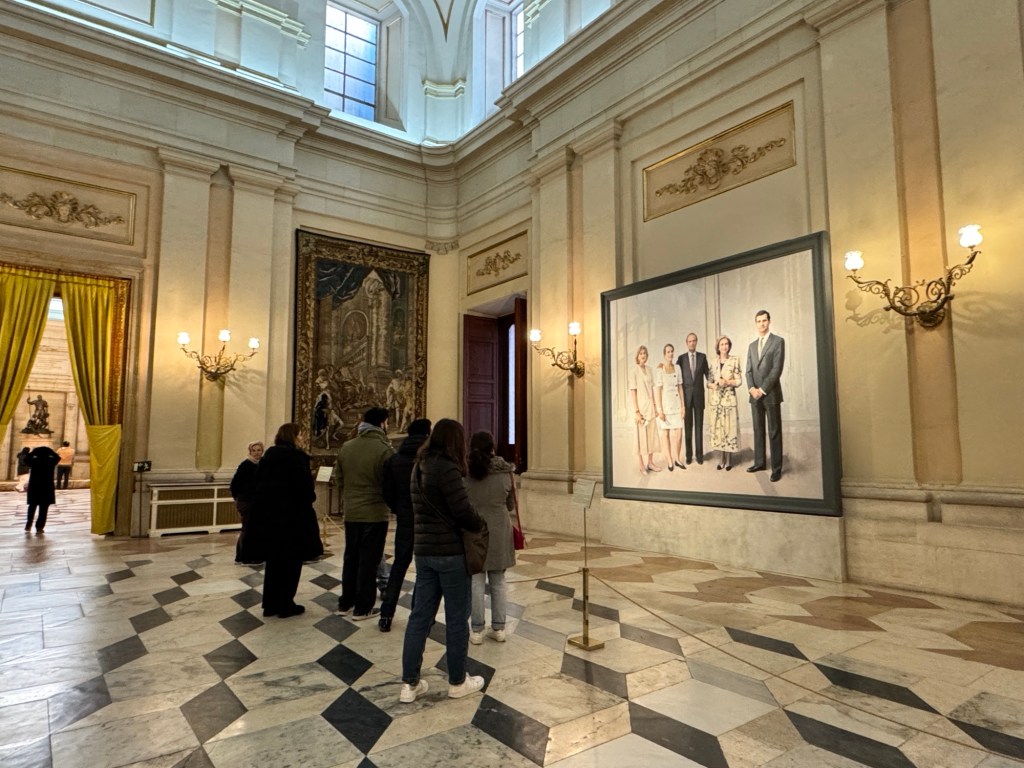
After returning from Toledo, we had one more day in Madrid. On that day, we saw two key sites, the royal palace in Madrid and the Museo Nacional Centro de Arte Reina Sofía (home of Picasso’s masterpiece Guernica), known informally since 1992 as the Reina Sofia for Spain’s then-queen.
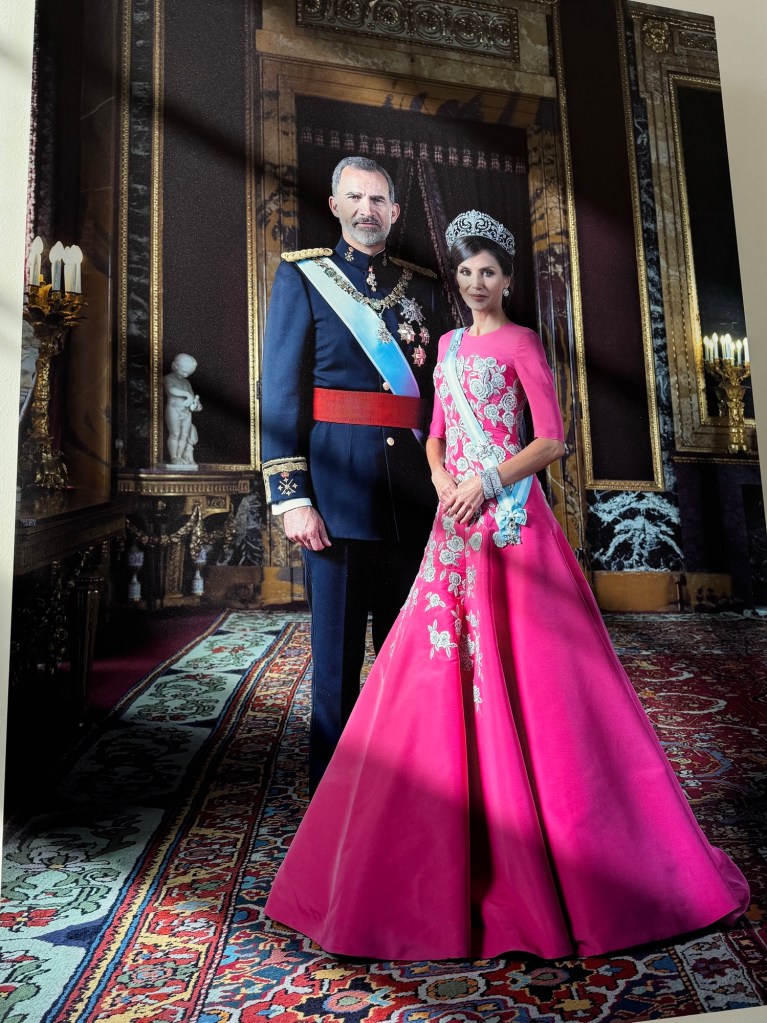
We also had lunch at an iconic Madrid restaurant next to the palace.
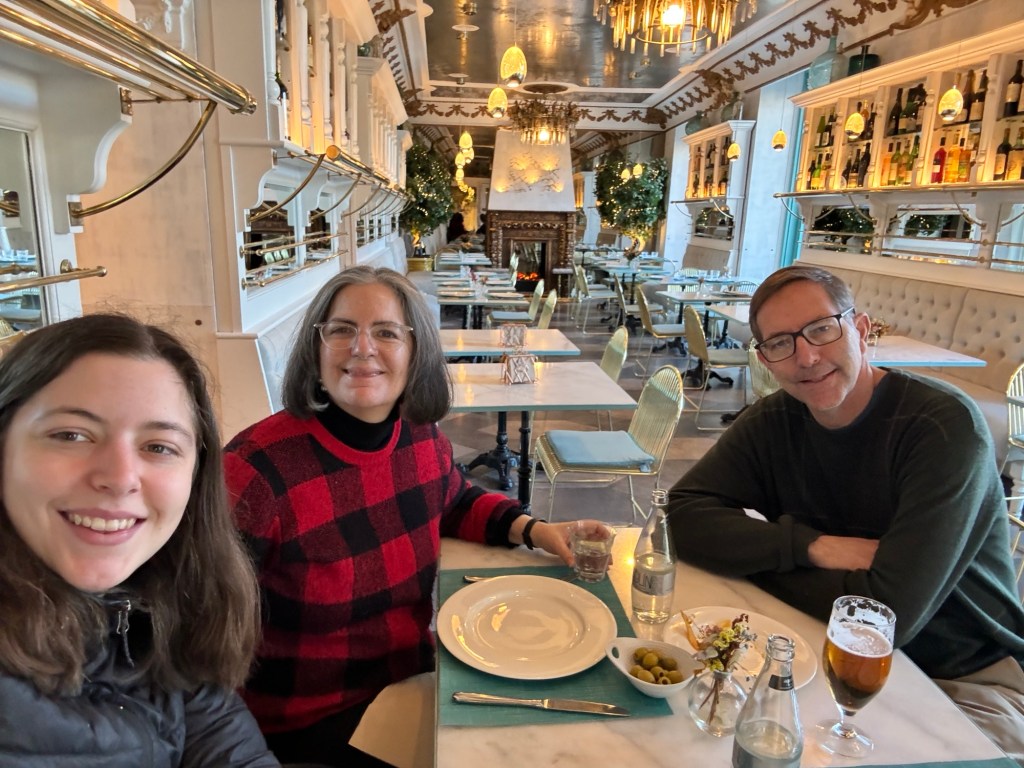
After lunch, we visited the Reina Sofia. Picasso’s Guernica has to be one of the most impactful anti-war works of art of the 20th century.

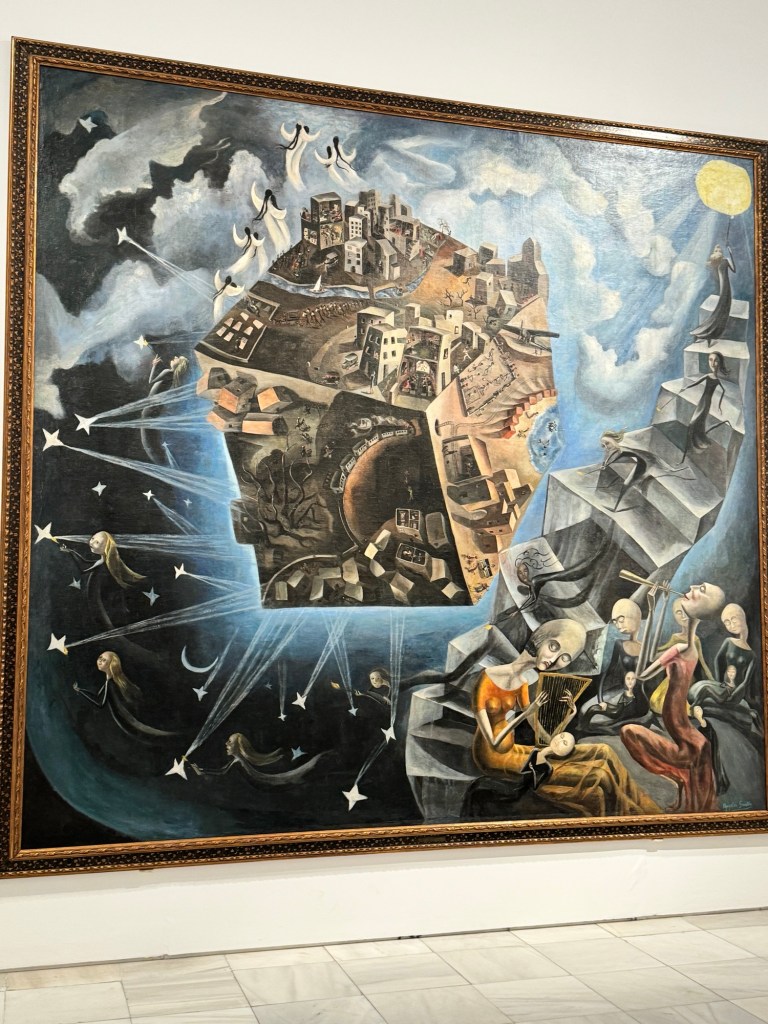
Nezzie and I also liked this 1929 work – A World by Angeles Santos. Santos was 17 or 18 years old when she painted this.
A few other scenes from our last day …


So our trip has officially come to an end. Thanks for following along. But I’m not done yet with the blog! I’ll have at least one or two more posts in the coming days to kind of wrap things up.

 Travel Buddies
Leave a comment