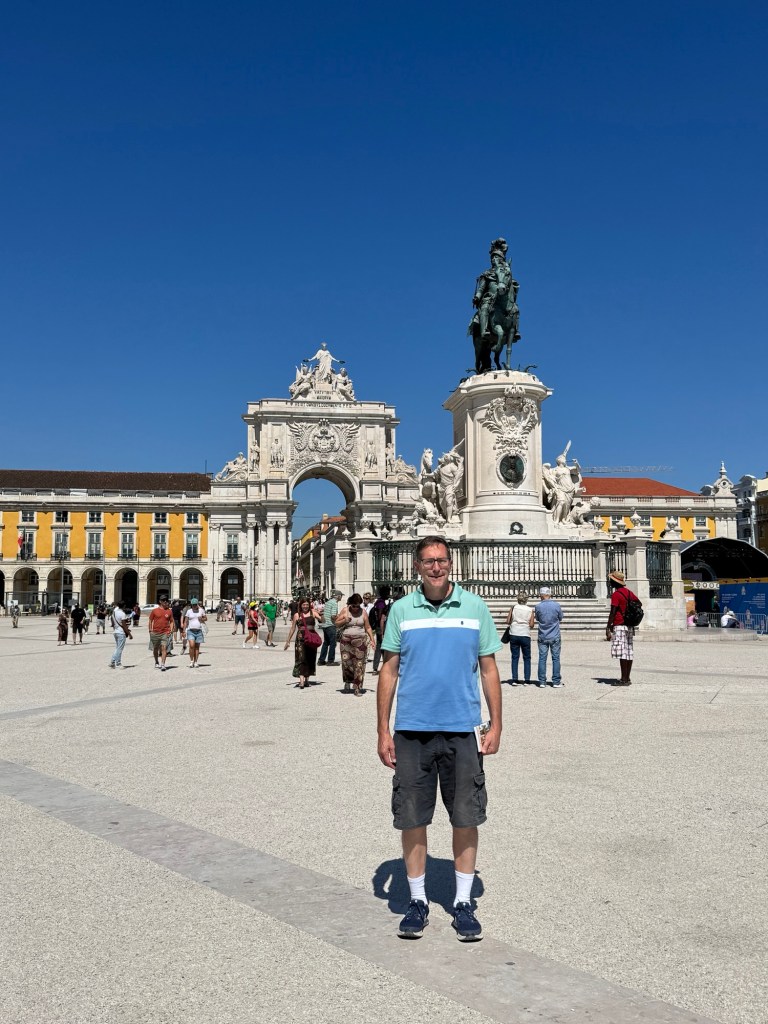
After leaving the tile museum, we took a taxi to the Praca de Commercio, Lisbon’s big riverfront town square. That was the start of Rick Steves’ self-guided Baixa walking tour.
The Baixa area is basically downtown Lisbon and was completely rebuilt after the 1755 earthquake and tsunami. The area now has lively pedestrian streets and shops, as well as tiled streets, sidewalks, squares and building facades.
The Praca de Commercio is enormous, with the river on one side and three sides of buildings. These are mostly government offices and businesses catering to tourists.
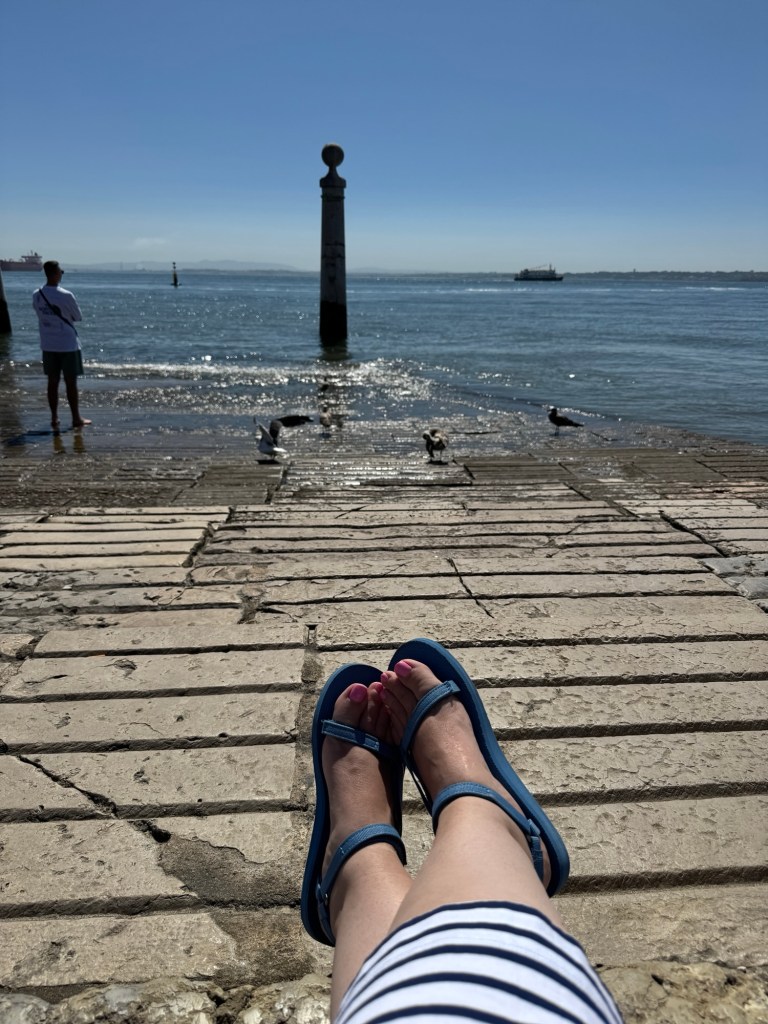
As Will pointed out in his Facebook post, boats used to dock here. Now, it’s a nice place to have a seat, eat a snack and watch the river.
One fun business on the square is the Wines of Portugal Tasting Room.
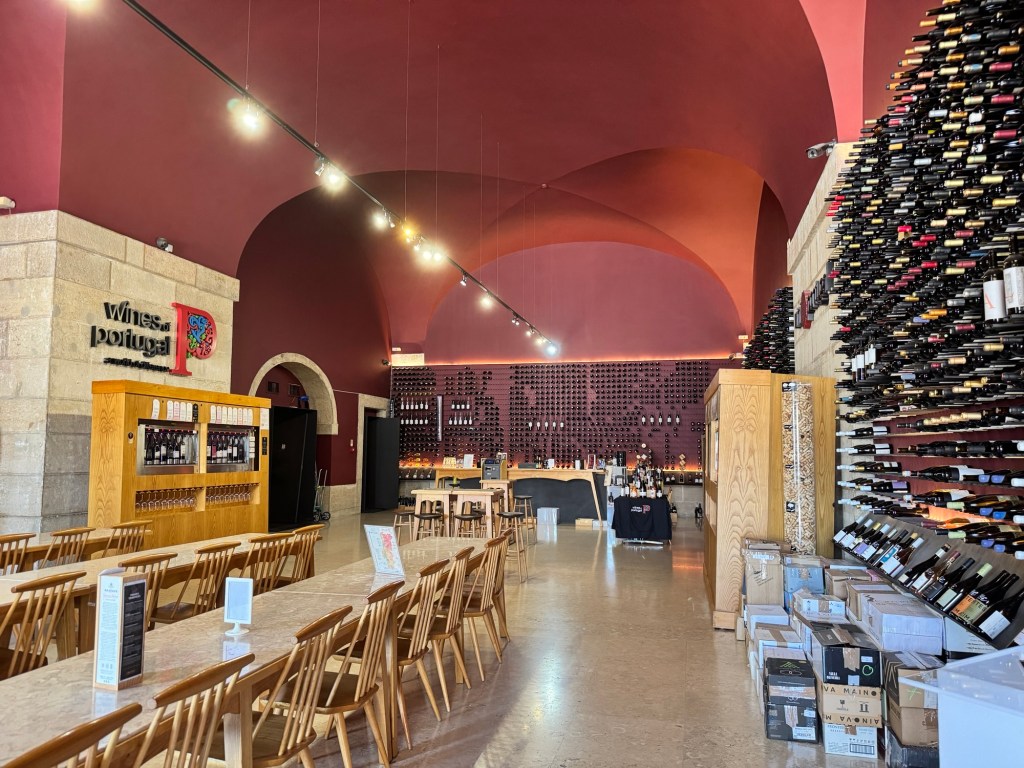
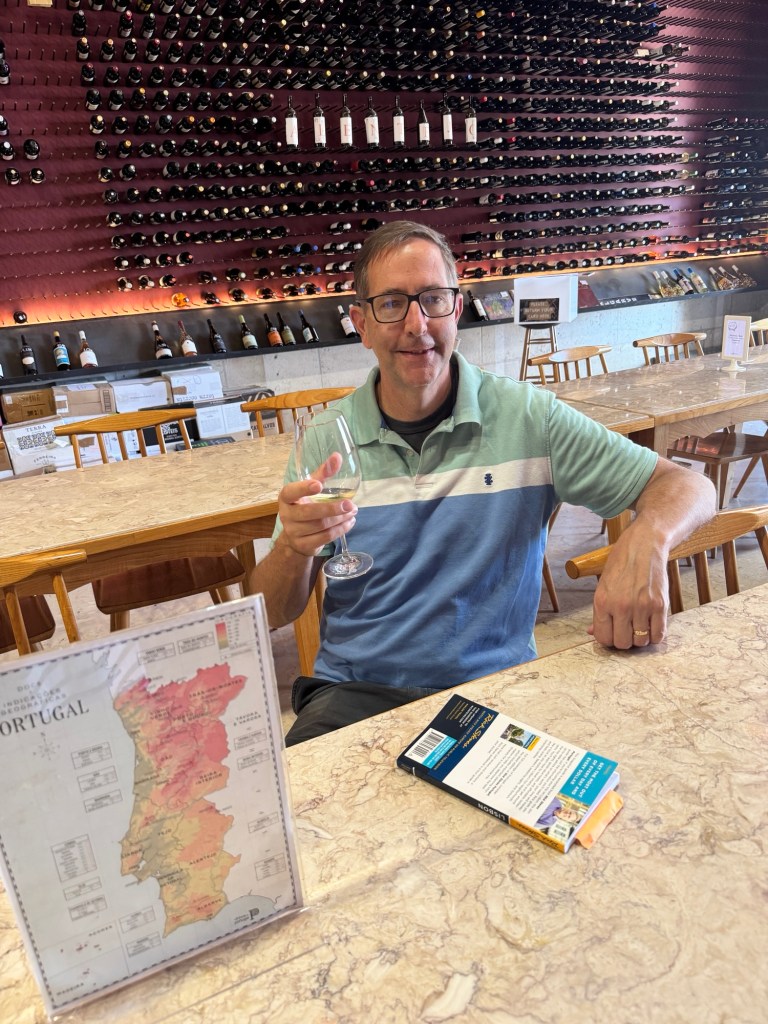
We stopped but only tasted a few wines since we wanted to keep going. Highly recommend.
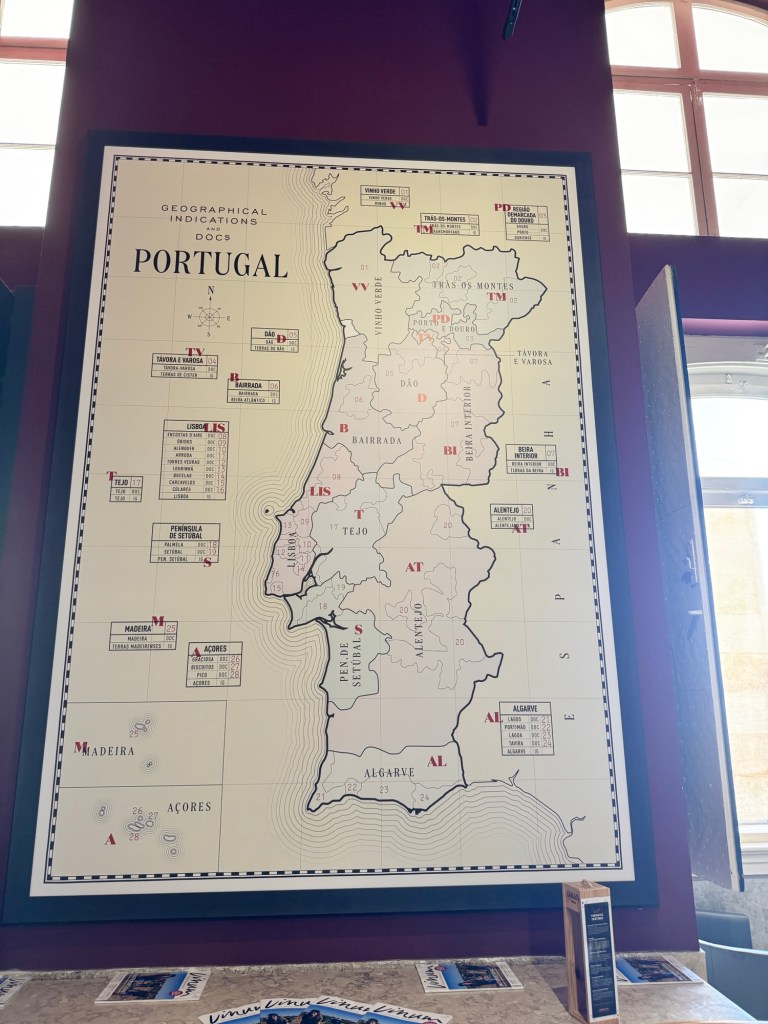
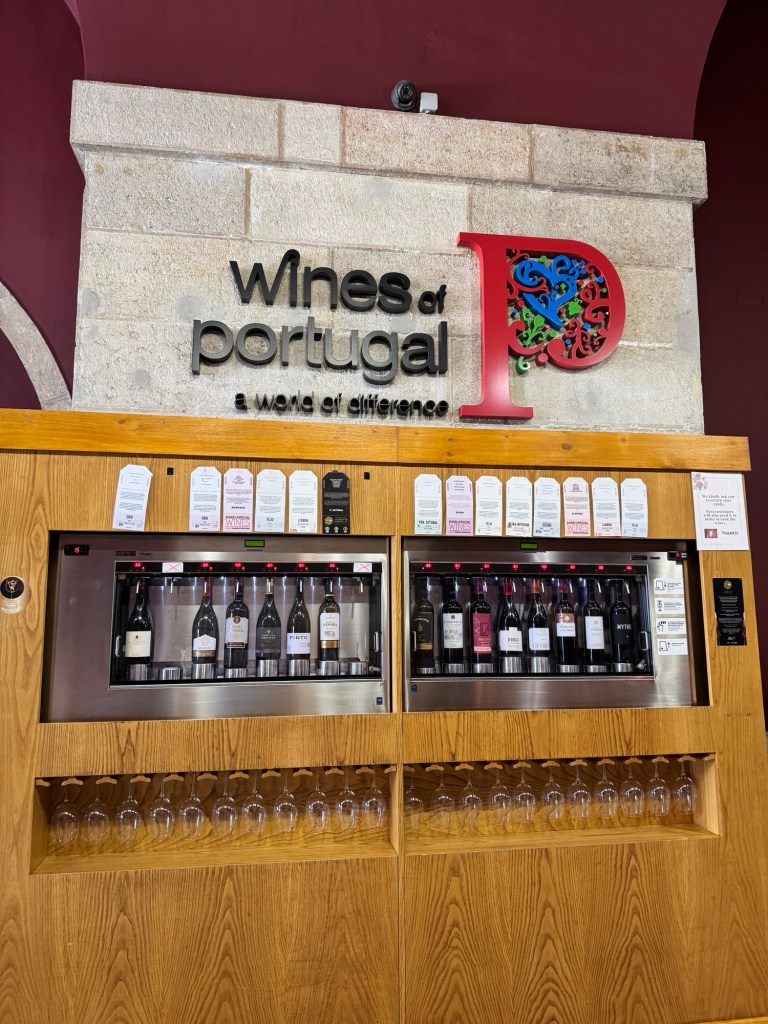
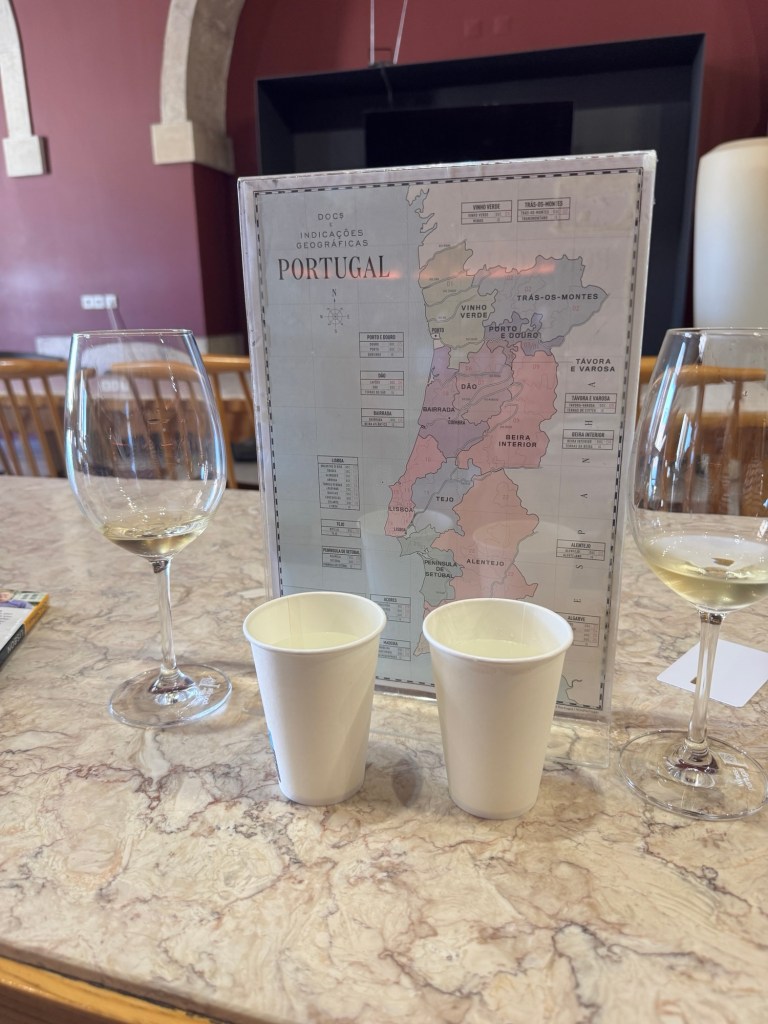
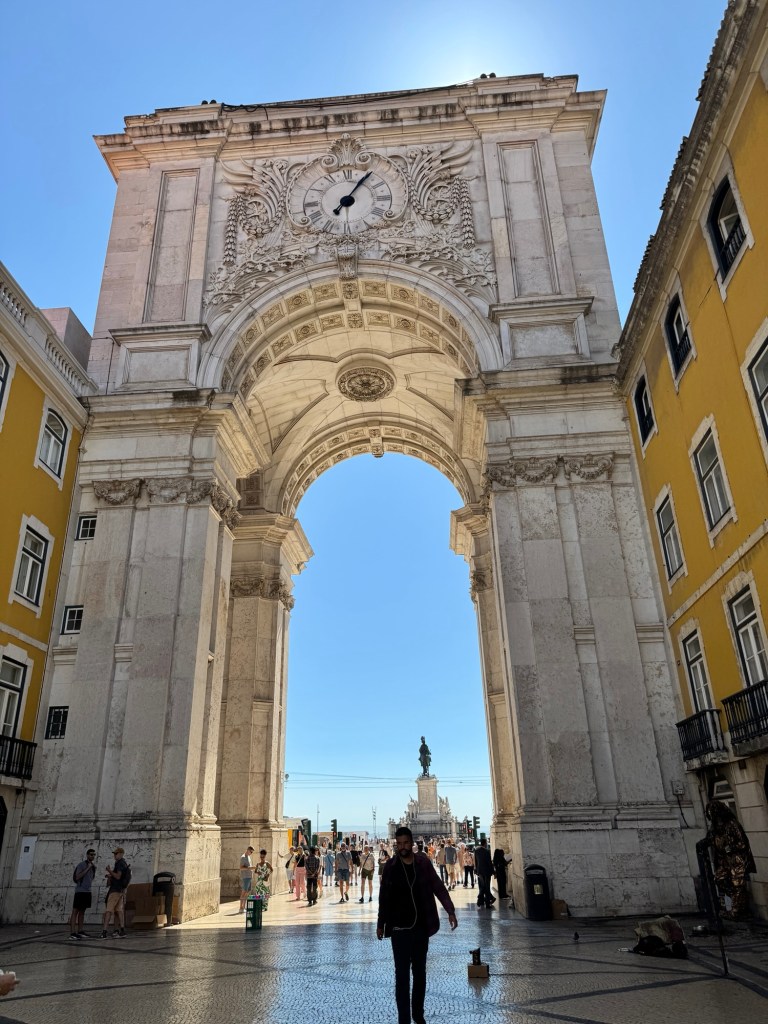
On to the rest of the walk. This is the Arch of Triumph looking back into the square.
As I was crossing a street, I paused to photograph the old, crenellated cathedral in the distance. It’s so sturdily built that it survived the 1755 earthquake. This was the first building that Christians built after retaking this land from the Moors. Maybe that is why it seems so much like a fortress from below.
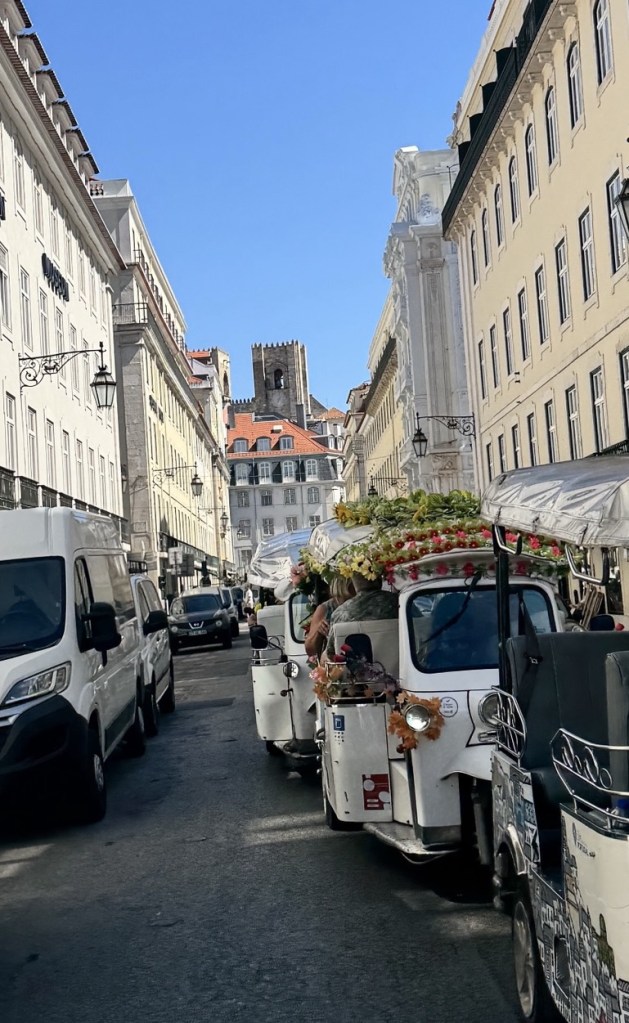
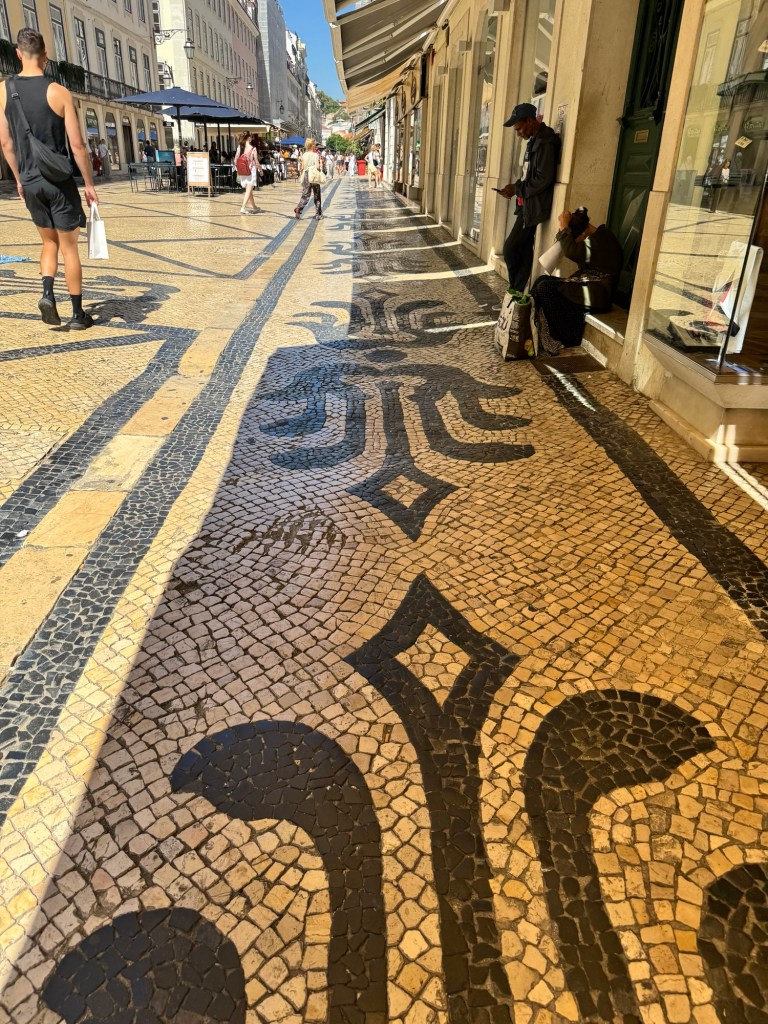
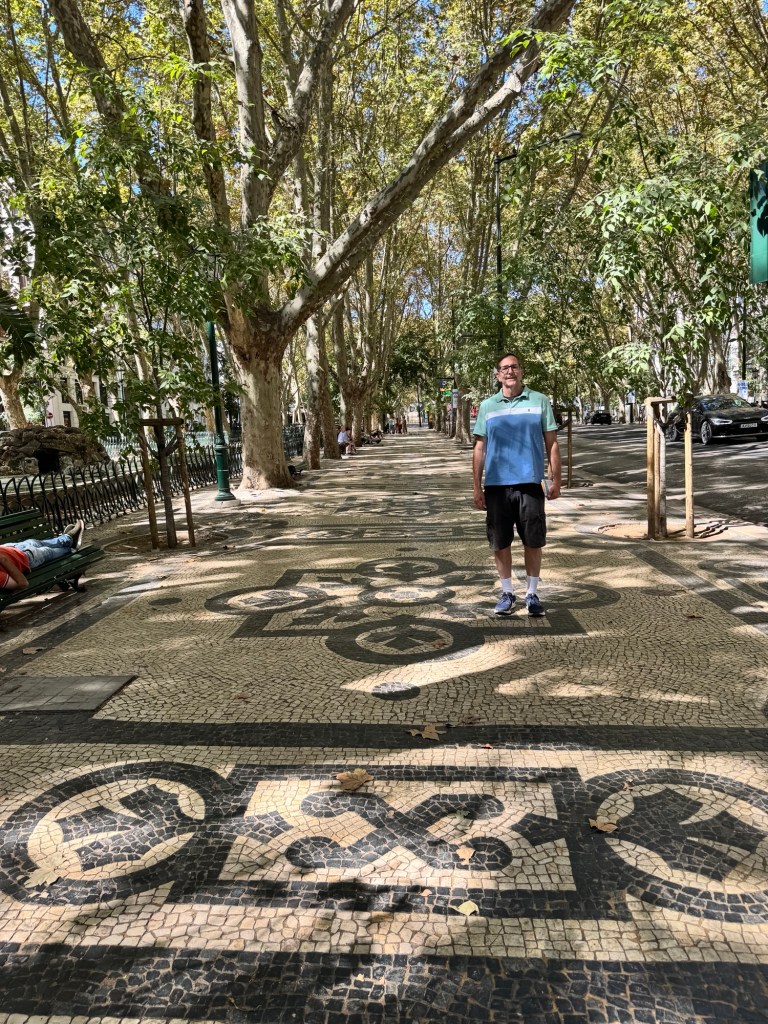
This rebuilt area is where the black and white street tiles began in Lisbon. Workers repurposed shattered limestone and basalt marble from buildings destroyed in the earthquake. Over time, this back and white tilework became even more widely used in Portugal and its colonies with more creative designs.
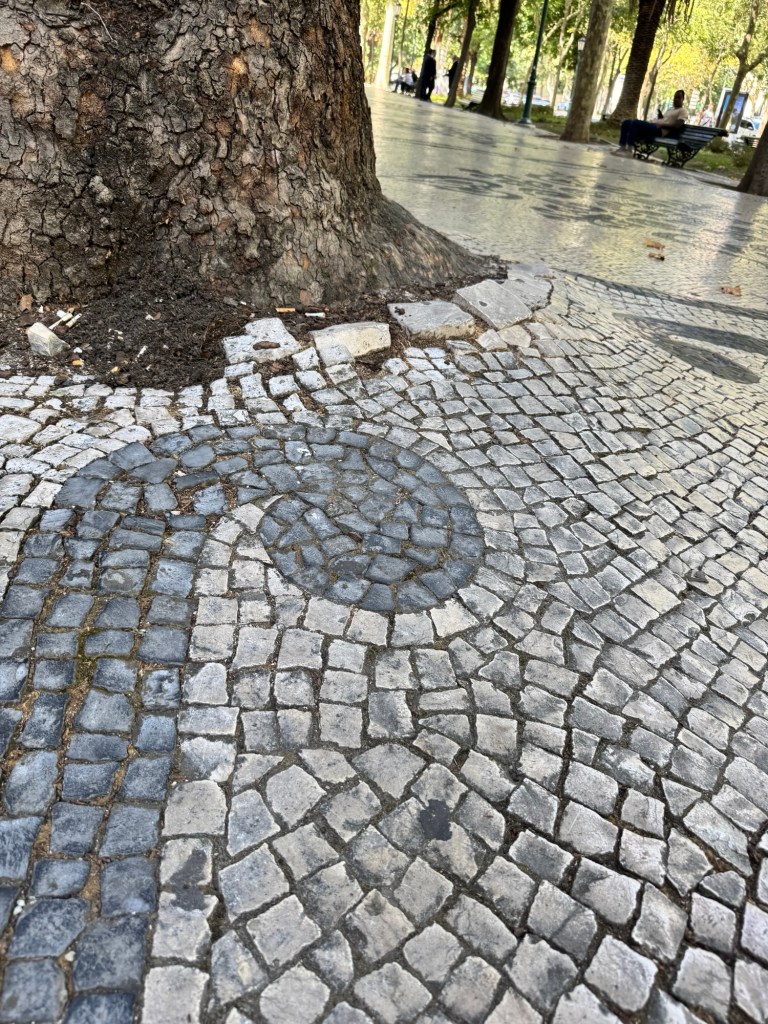
Interestingly, because the marble tiles are whole and separate pieces, they can shift as needed, for instance when tree roots grow.
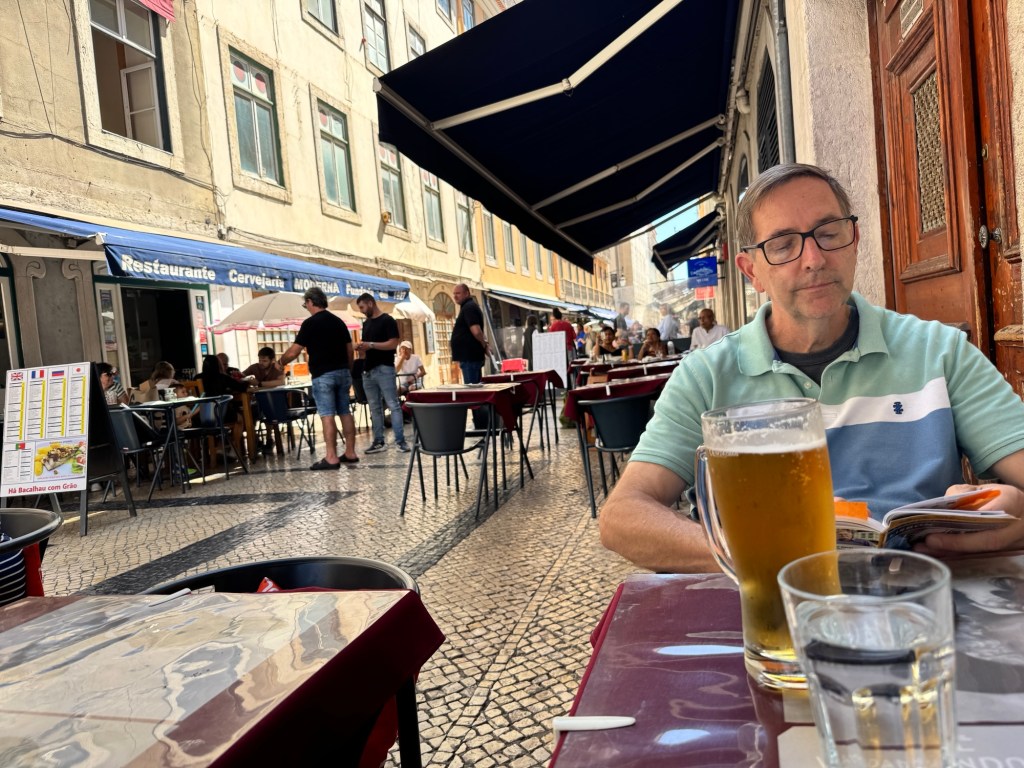
We stopped along the way for lunch and I had a delicious salad with Portuguese tomatoes and asparagus.
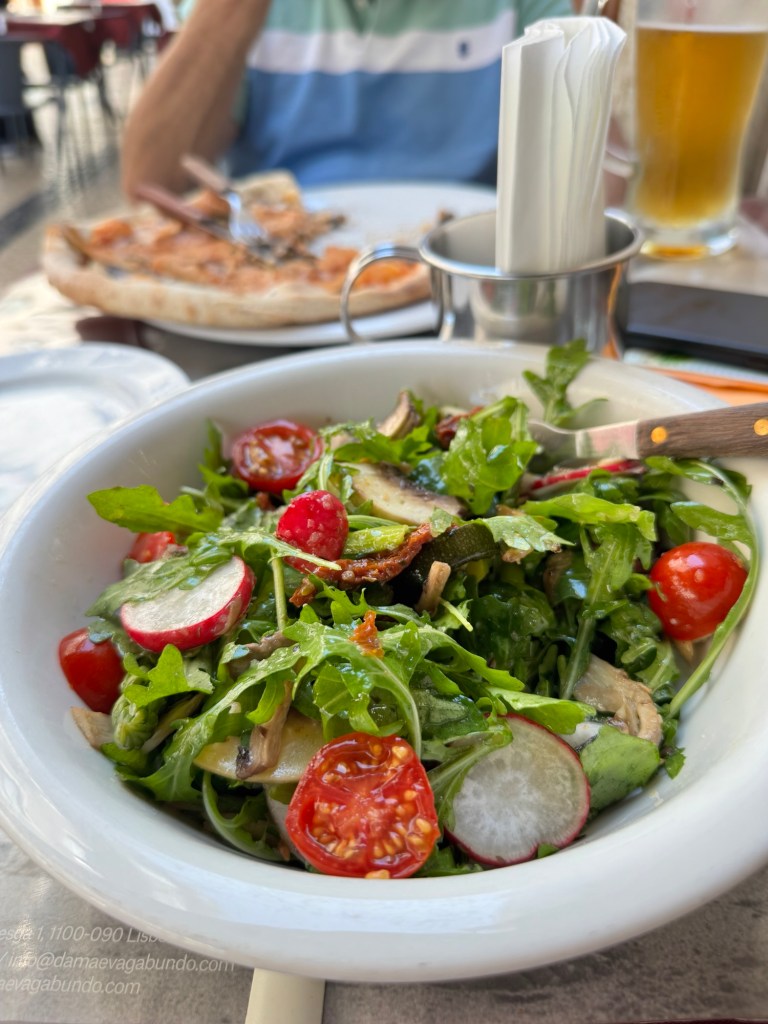
It was so relaxing, as you can see Will perusing our Rick Steves tour book.
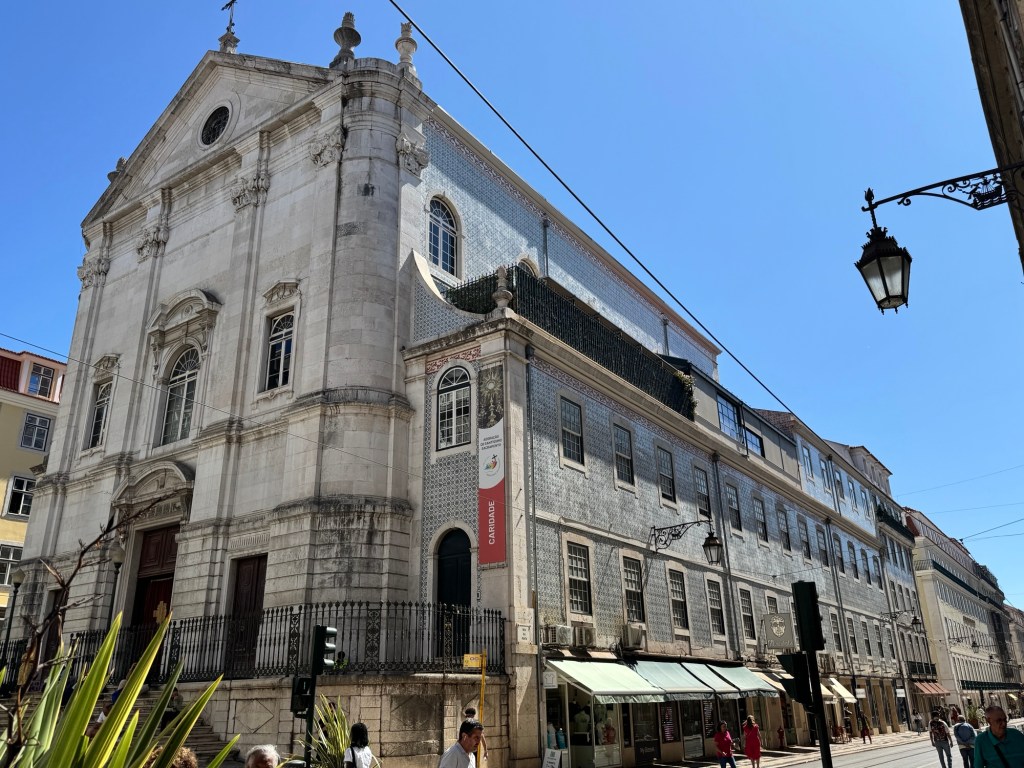
After lunch, we walked to the Church of St. Dominic (Sao Domingo). When Spain’s Inquisition spread to Portugal, this church was its headquarters. In 1506, this was the site of the horrifying Lisbon massacre, when Portuguese Christians murdered thousands of Jews who had converted to Christianity.
Will: Converted Jews who had been expelled from Spain were originally accepted in Portugal. But they were later blamed for a plague.
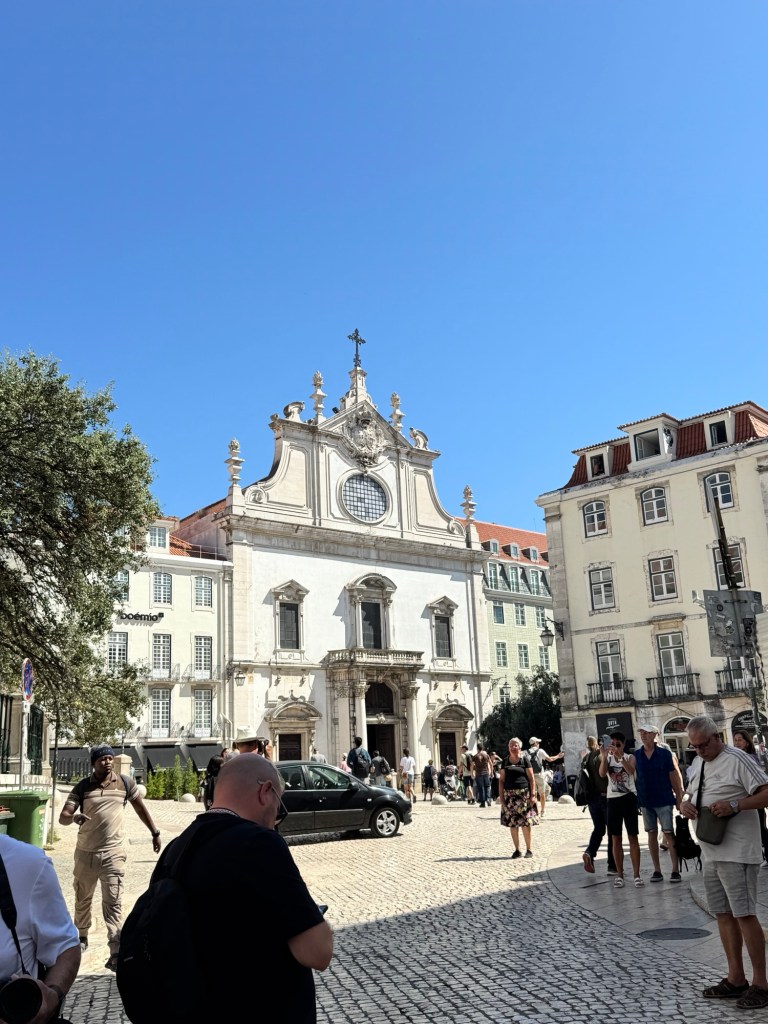
It is a bustling, thriving square now, but I think it’s important to remember the atrocities of history so we can hope to avoid them in the future. And ask forgiveness for evil done in the name of Christ.
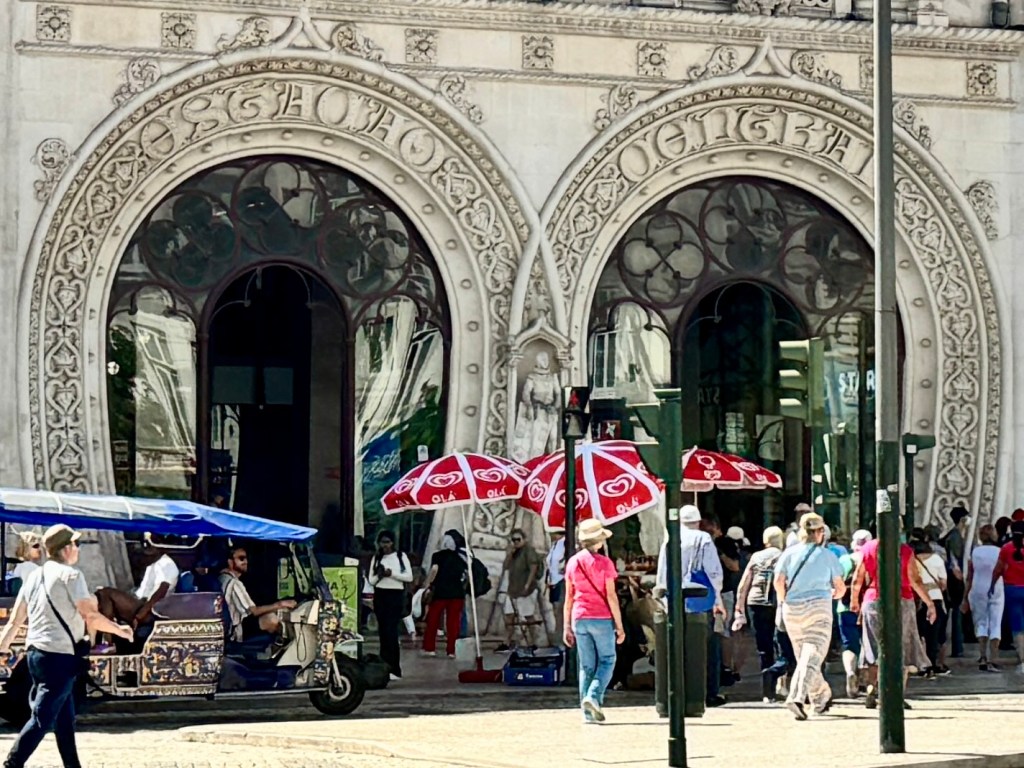
Continuing our walk, the nearby Rossio train station was built in the 1880s and is known for its ornate facade and horseshoe arches.
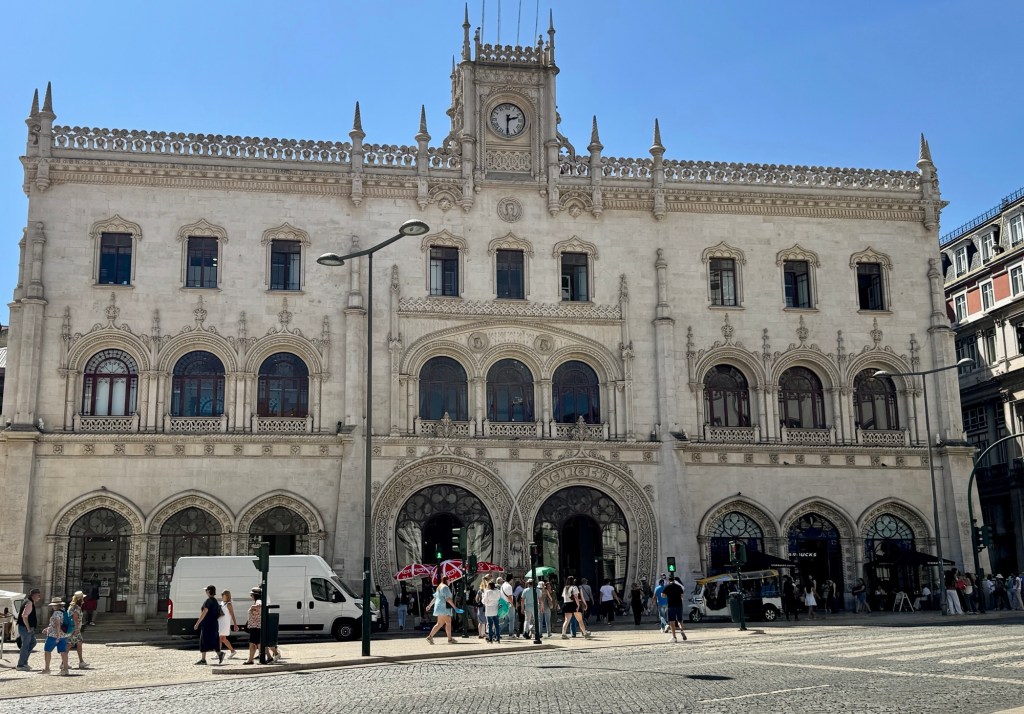
In May 2016, a 24-year-old Portuguese man climbed the small statue of King Sebastian between the horseshoes for a selfie. Both the man and the statue toppled to the ground. The statue that is there today is a replica.
The Avenida da Liberdade is the end of the walking tour. This elegant, tree-lined boulevard was a royal promenade before the 1755 earthquake. Afterward, it was the Marques de Pombal’s rebuilding centerpiece.
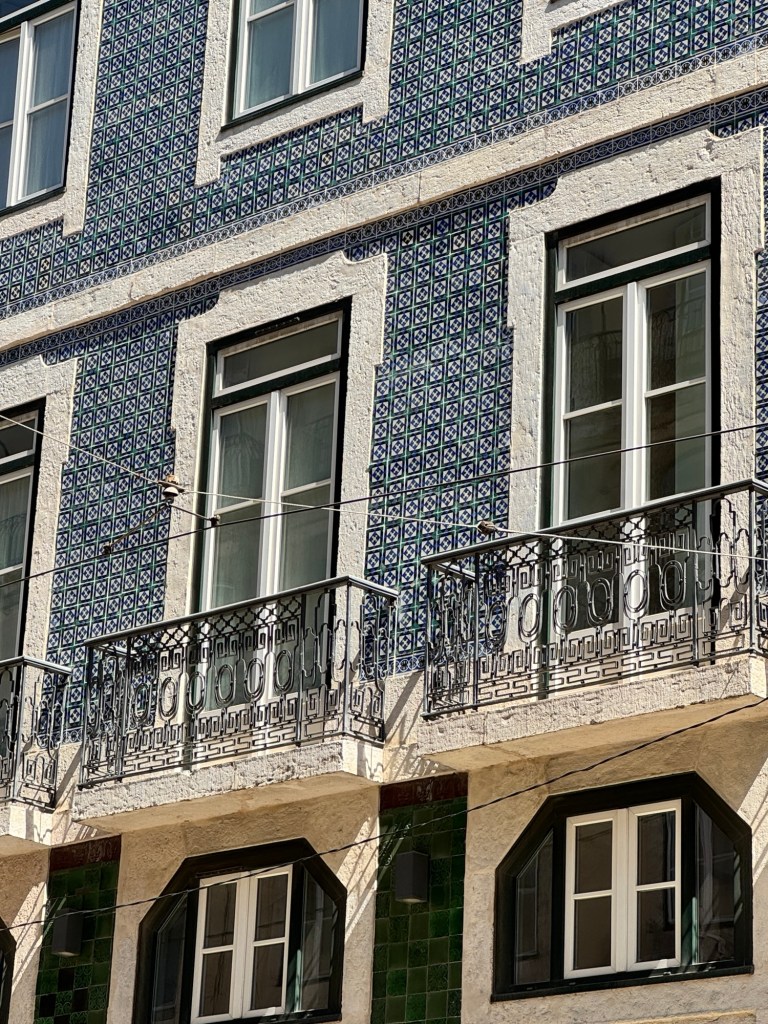
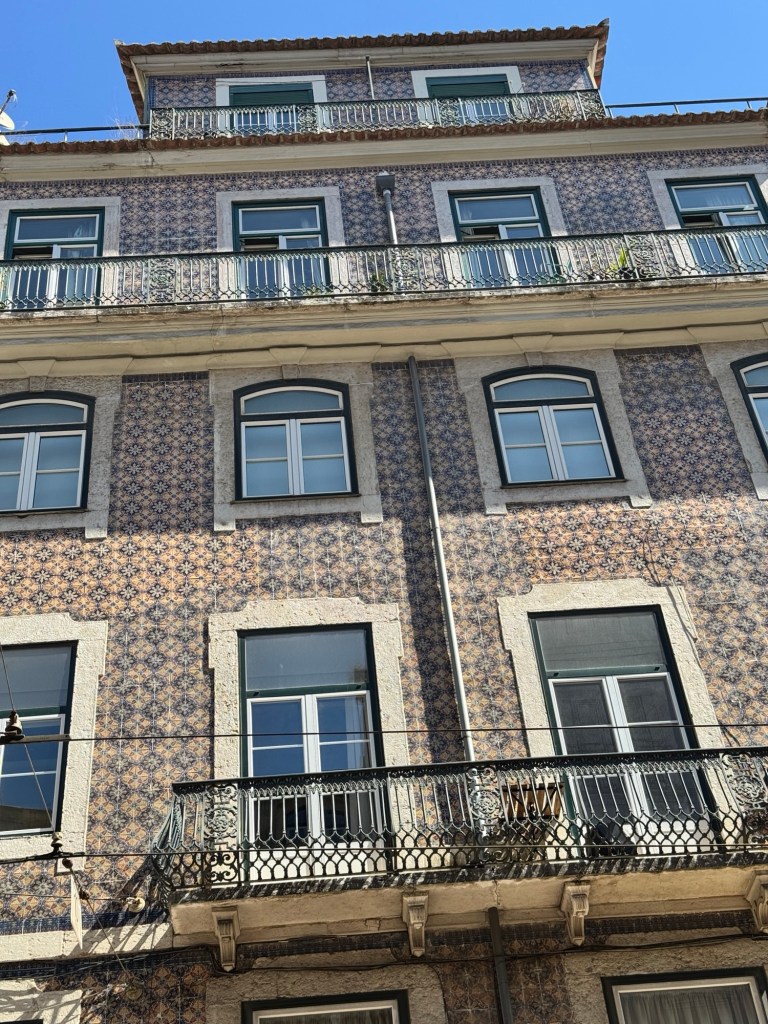
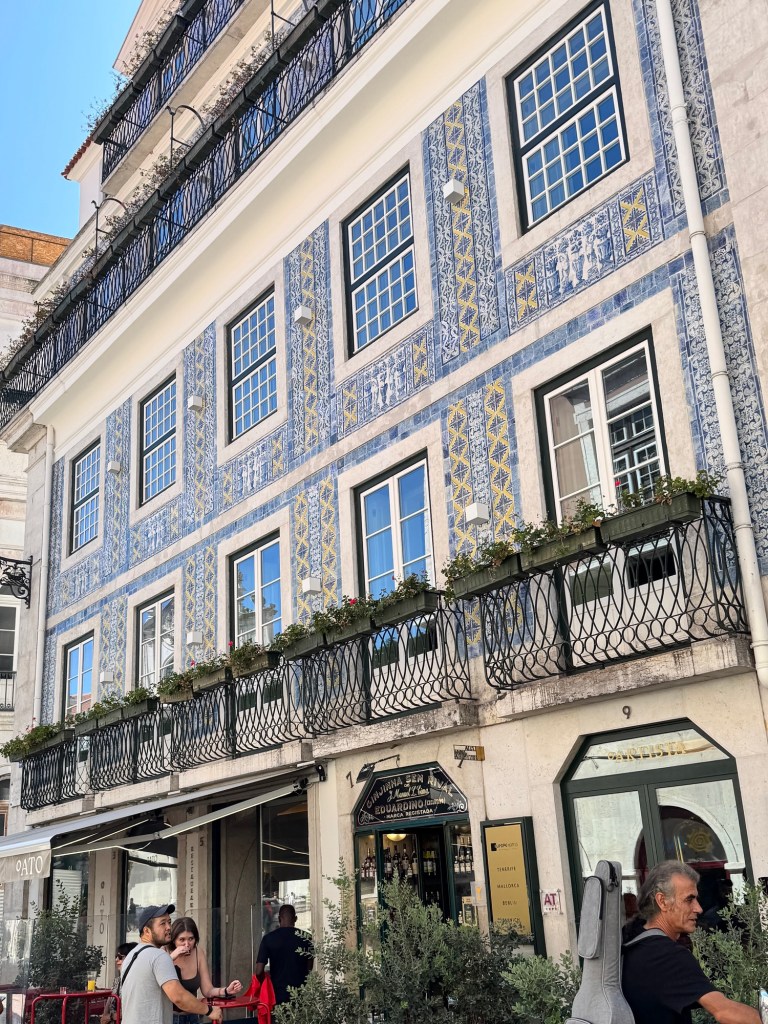
All throughout this walk, we saw evidence of the “pombaline” tile named for the Marques, as mentioned in my tile post. Click photos to scroll through the gallery.
We also saw many examples of Lisbon’s iconic crow-and-caravel symbol, mainly on light fixtures.
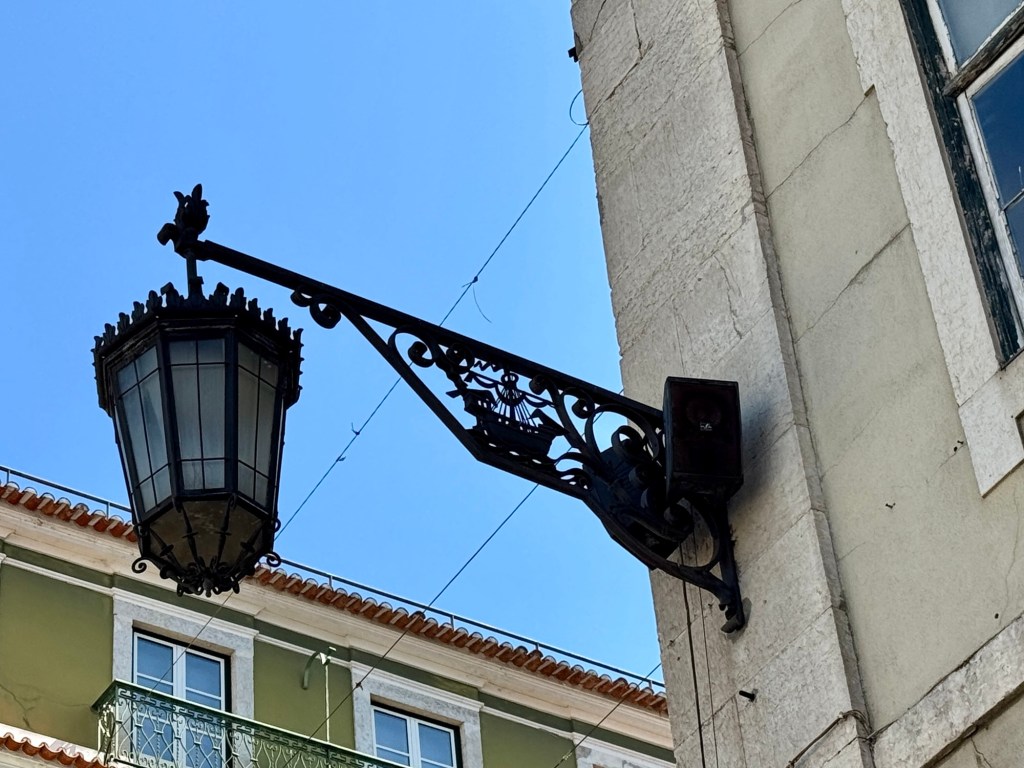
This symbol stems from the 12th century legend of St. Vincent, whose remains were transported to Lisbon by ship (a caravel) and followed by (or guided by, depending on the source) two faithful crows.
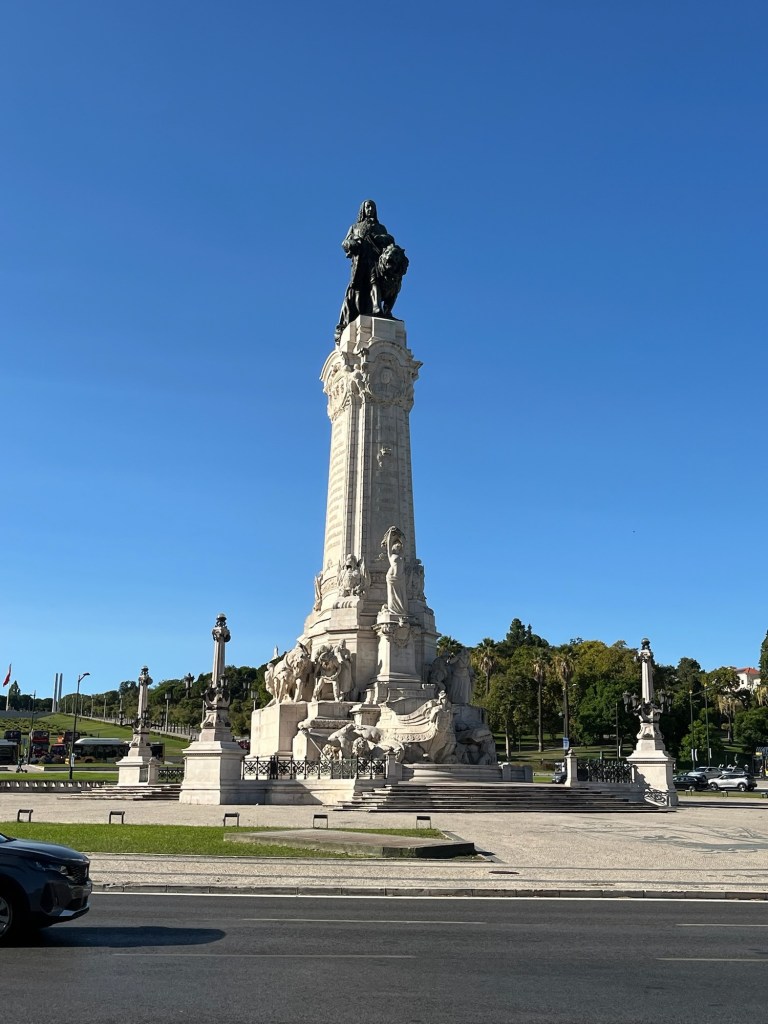
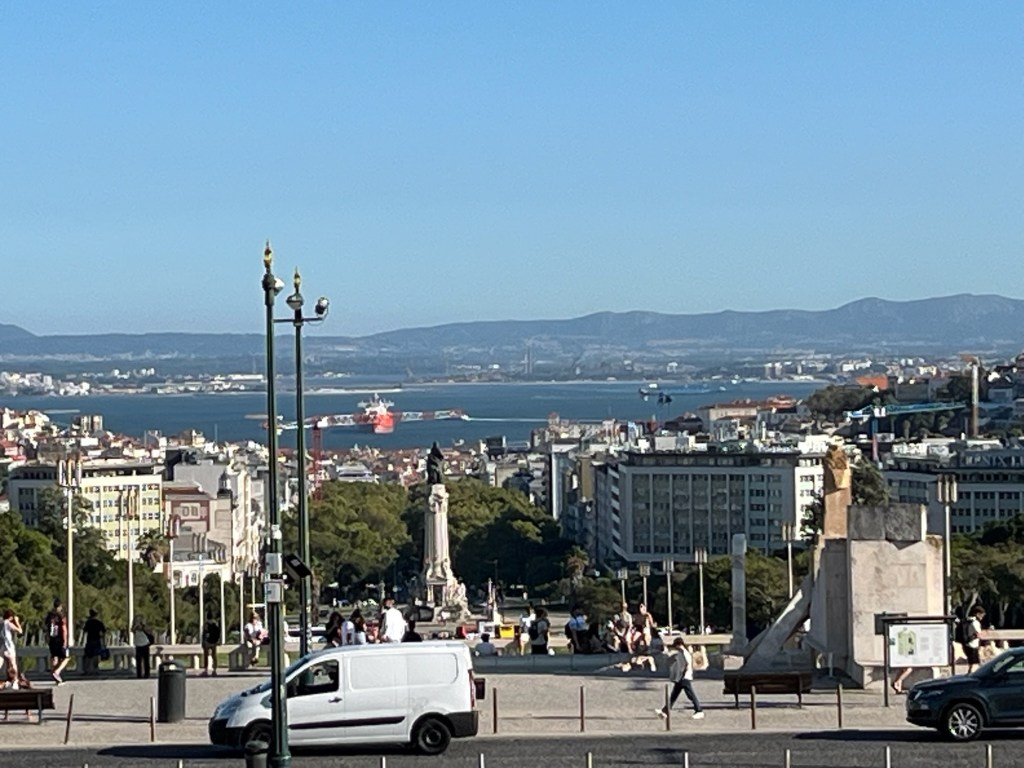
After the walk, I stayed at the hotel for some blog time while Will took a longer walk. Here are some of his photos from that walk.
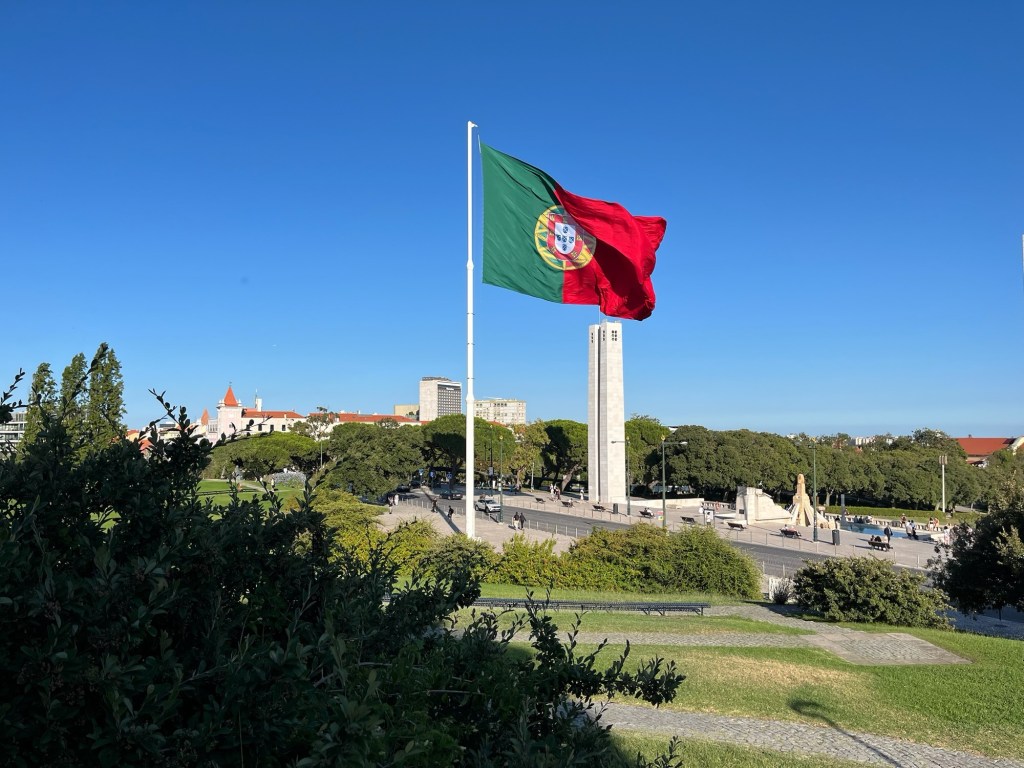
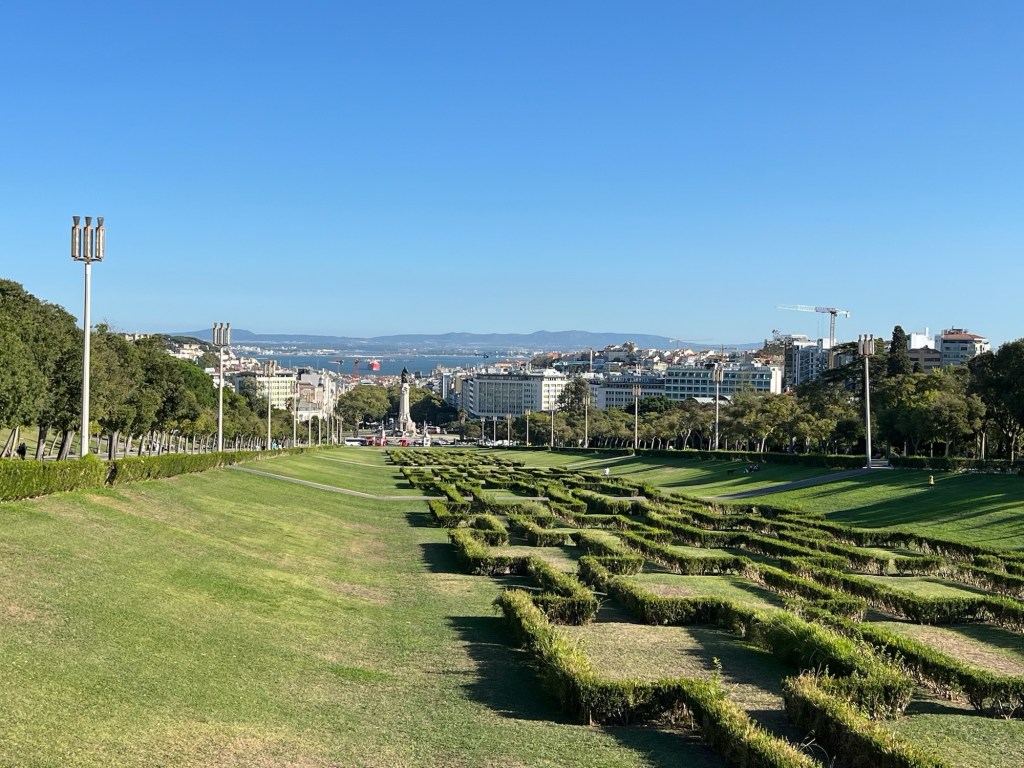
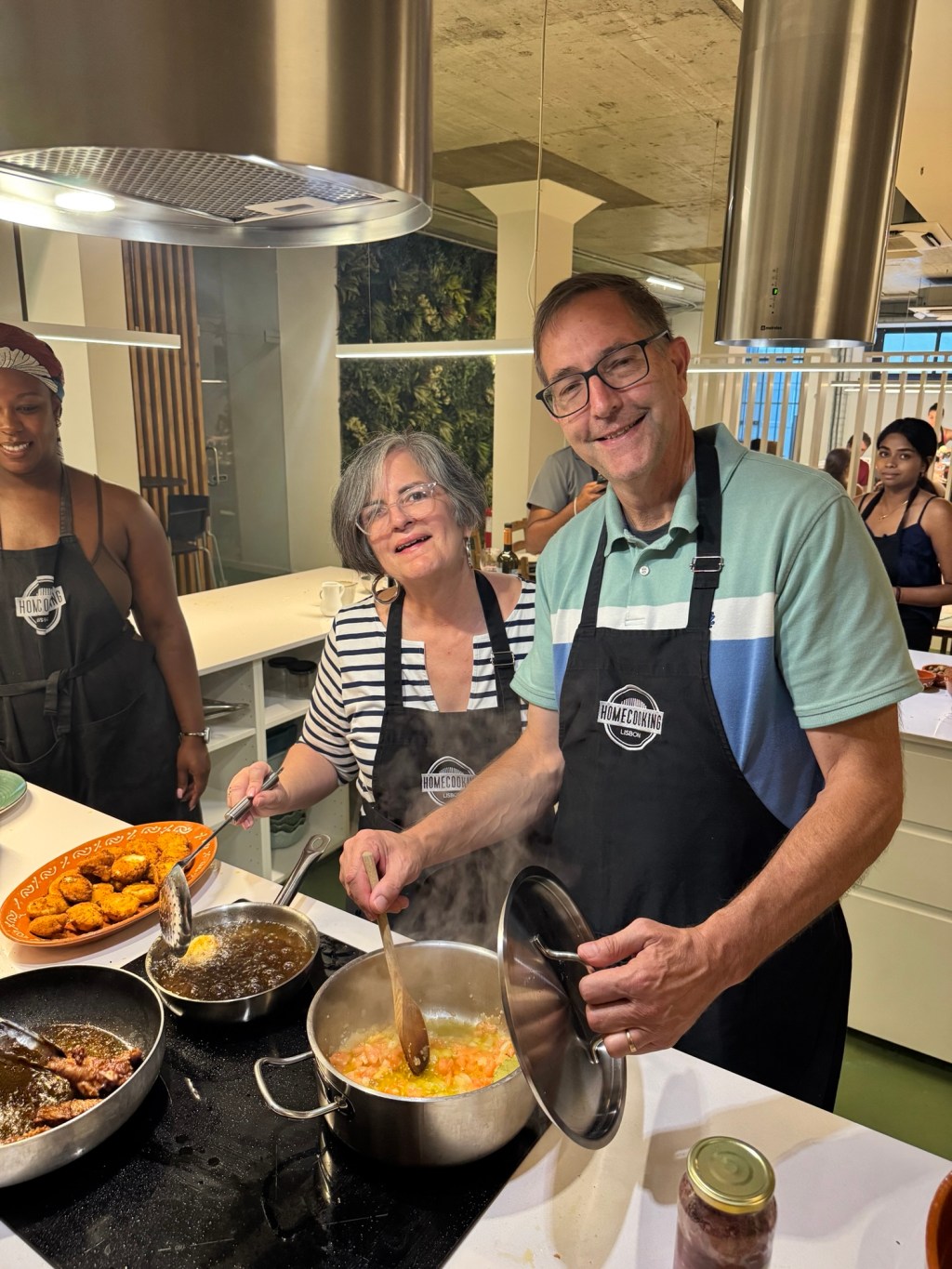
That night we went to our Portuguese cooking class. The instructor, Teresa, was gregarious and informative.
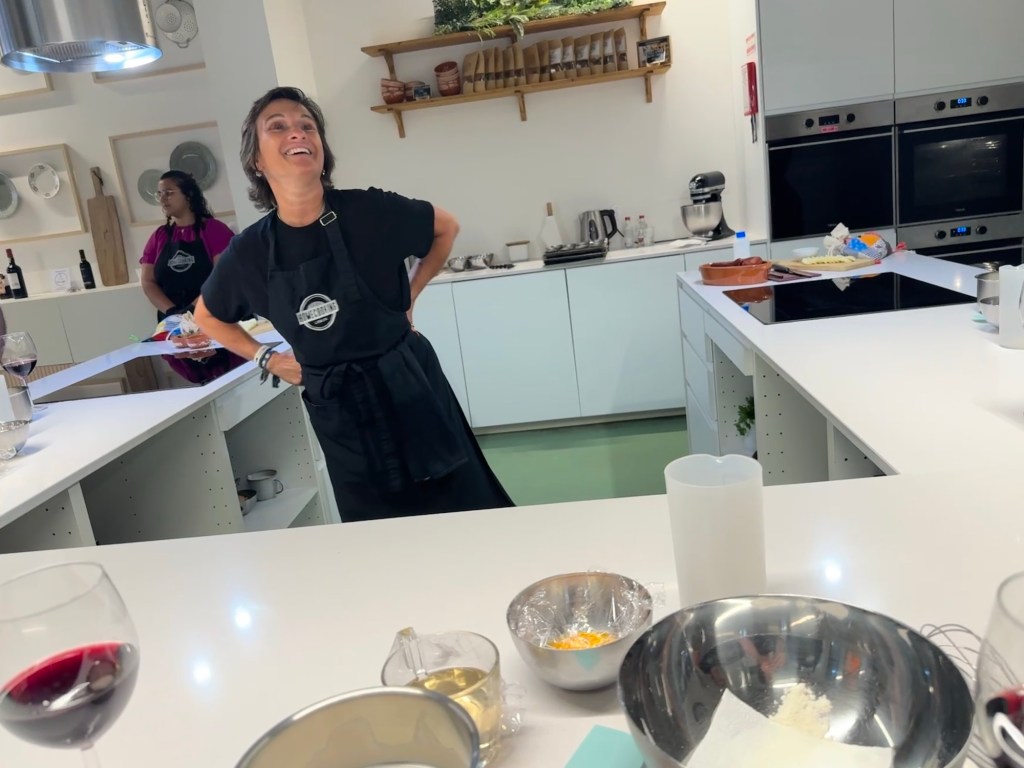
First, we made pastel de nata, a custard pastry.
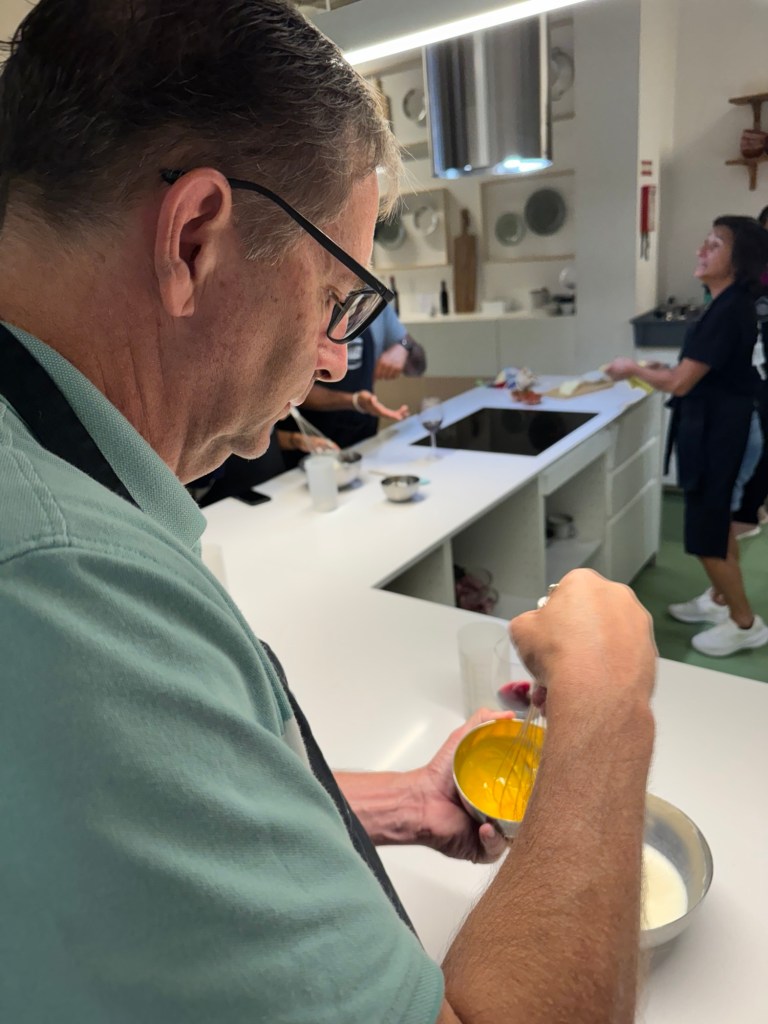
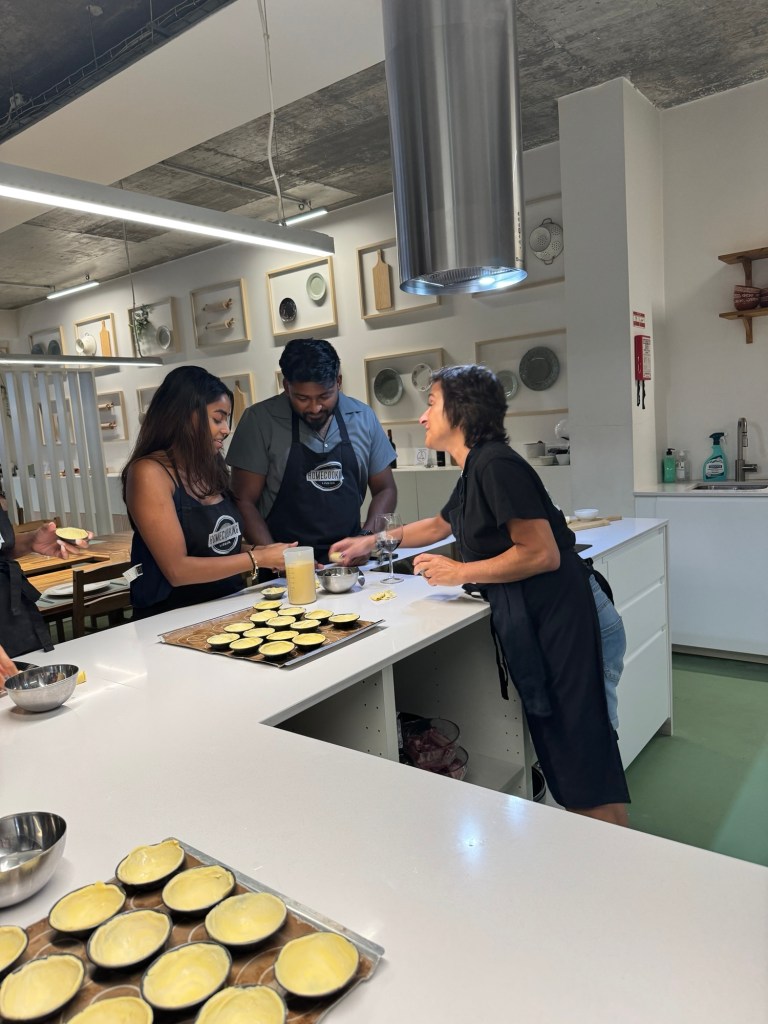
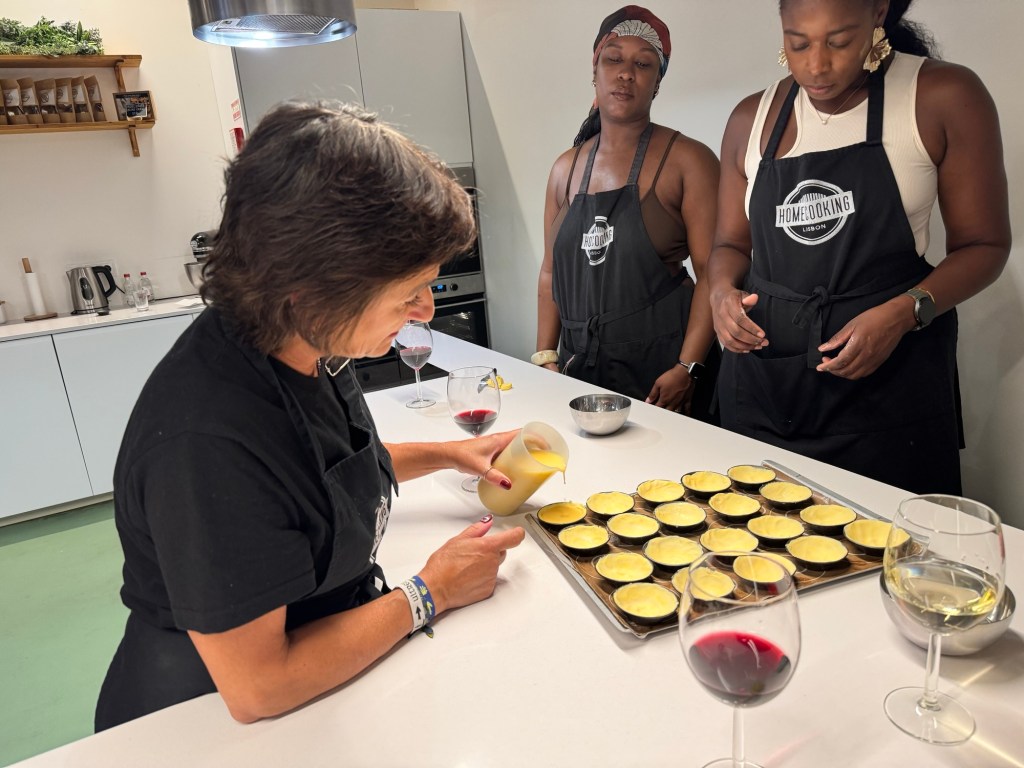
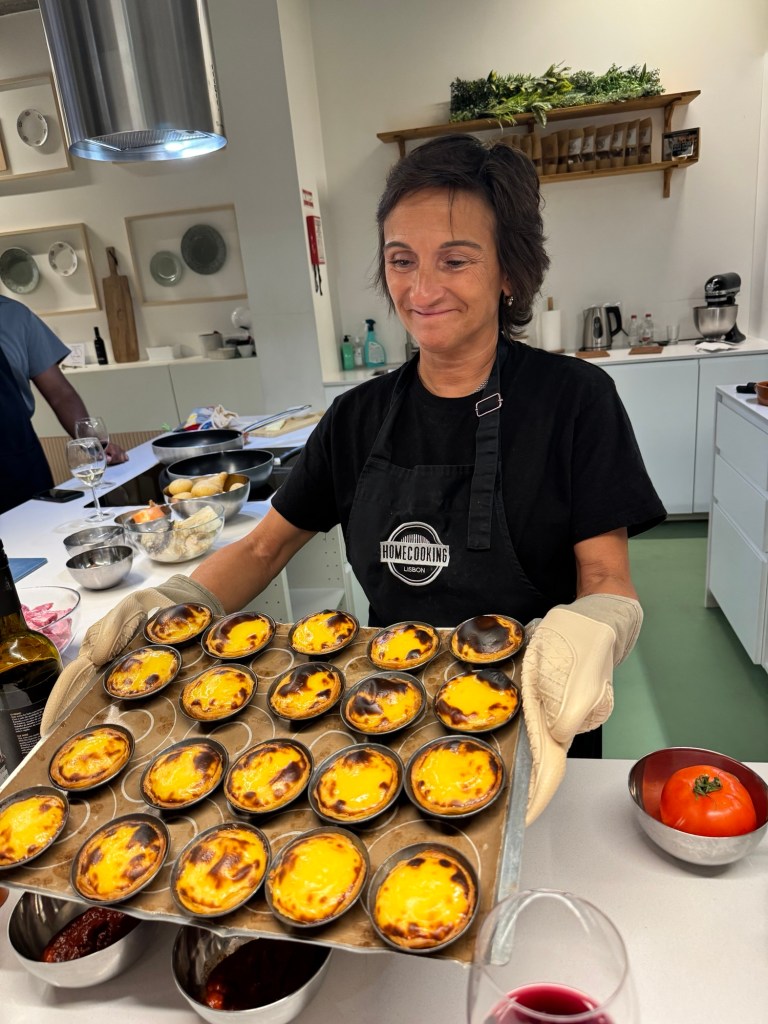
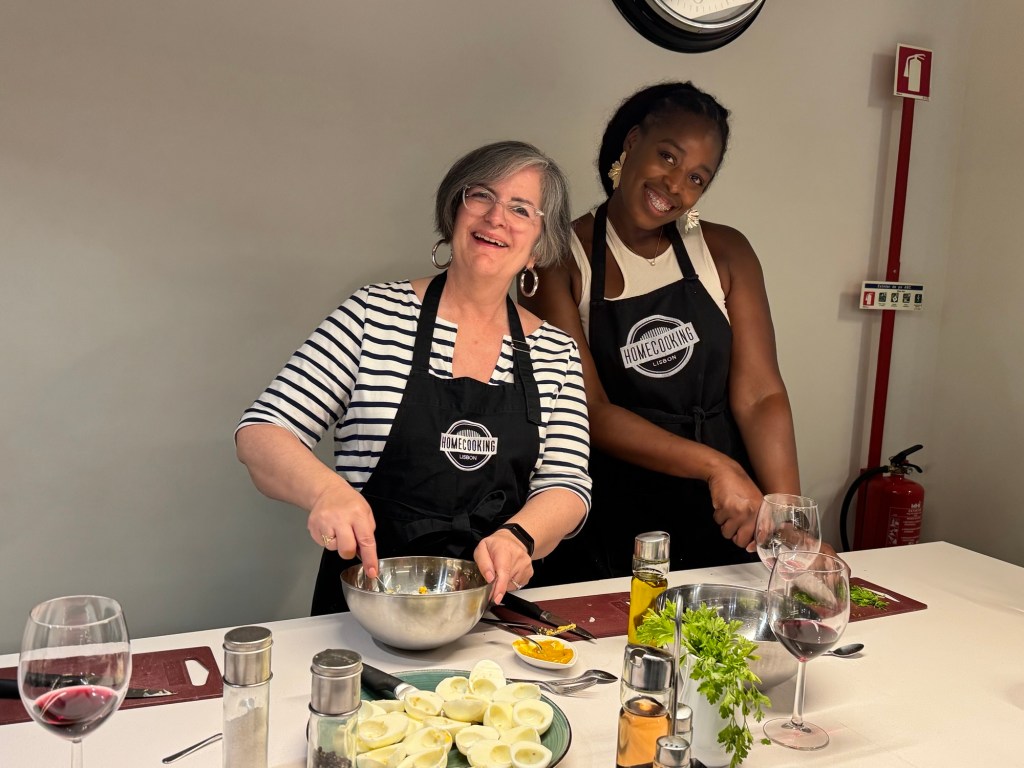
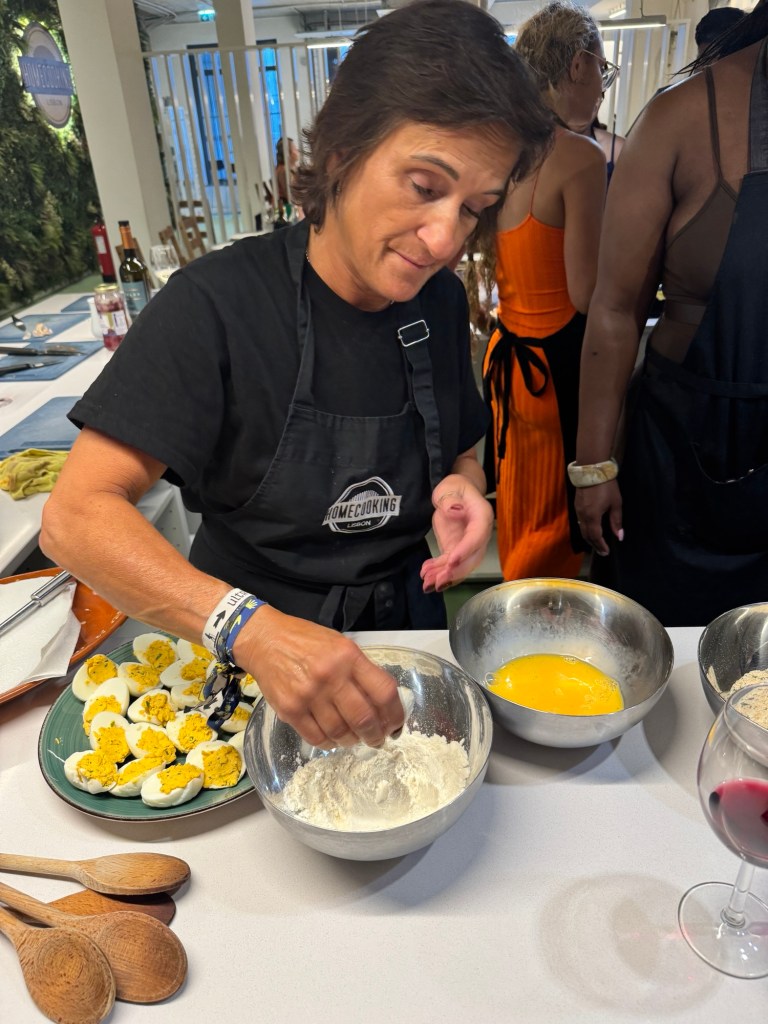
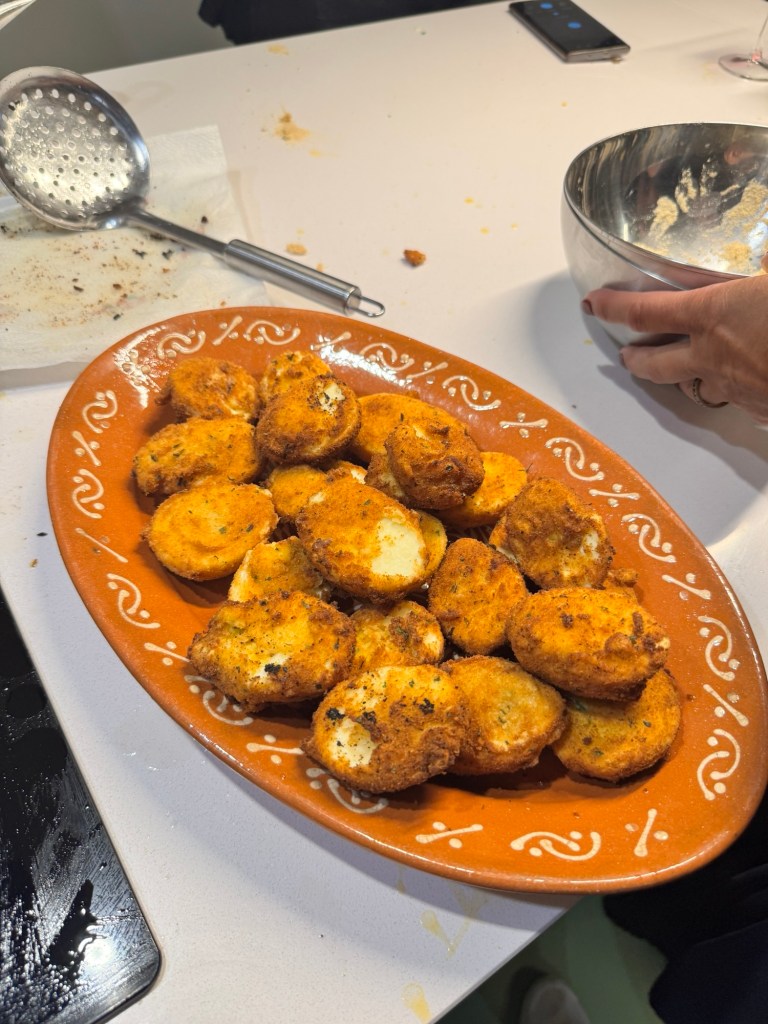
Then we split up into groups, with each group assigned a dish. I helped make these deep-fried deviled eggs called Ovos Verdes. Teresa said this is a common dish served at picnics and parties, partly because it keeps week without refrigeration. This version uses olive oil, not mayo, in the yolk mixture.
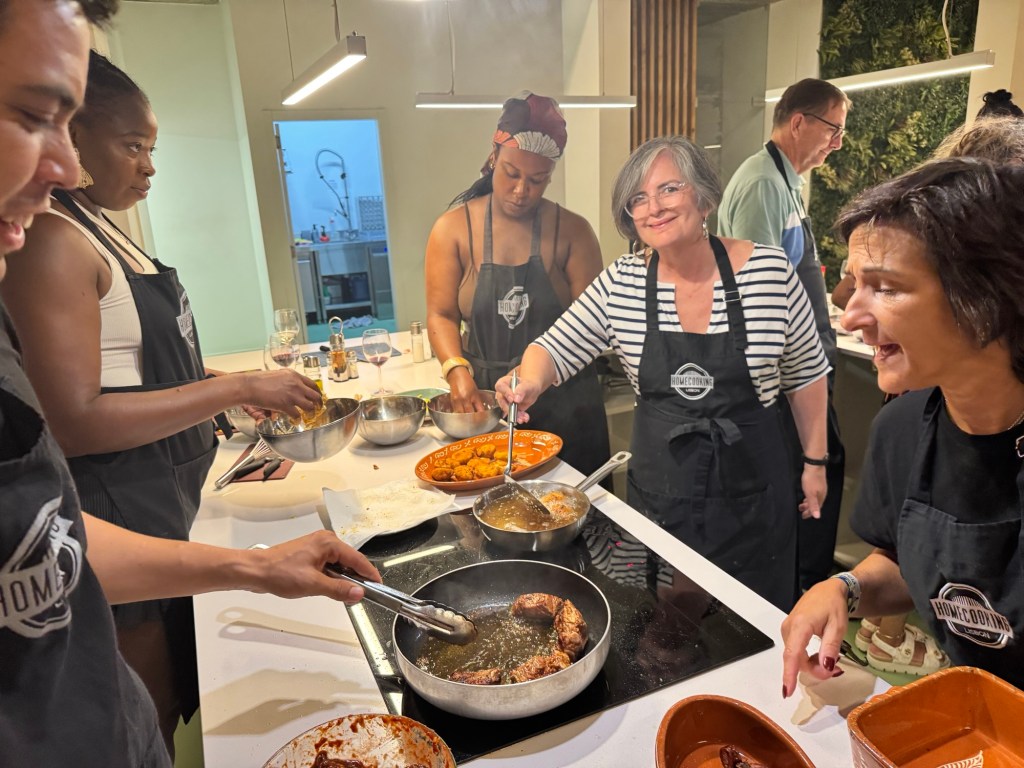
Will helped make what was essentially red beans and rice.
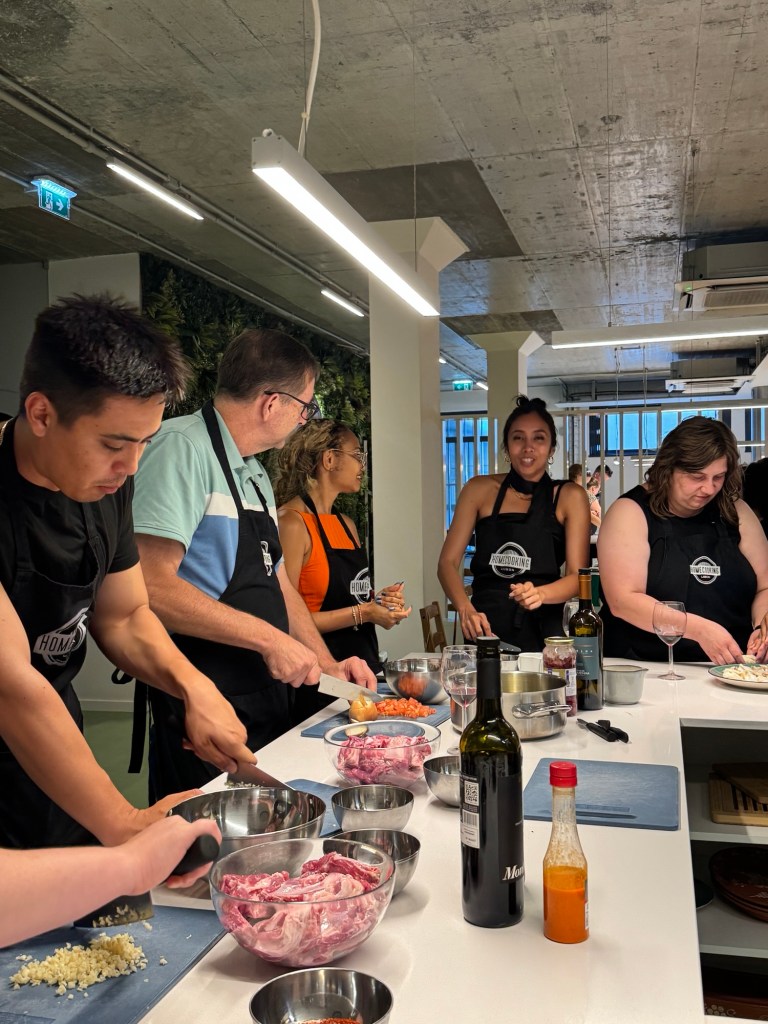
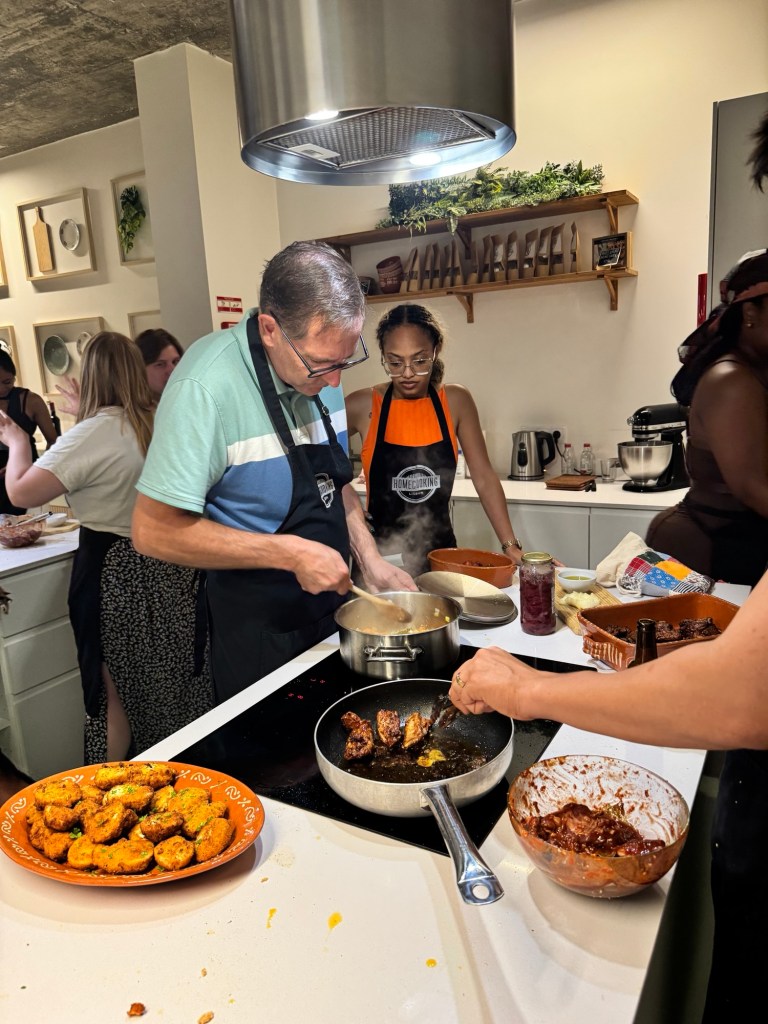
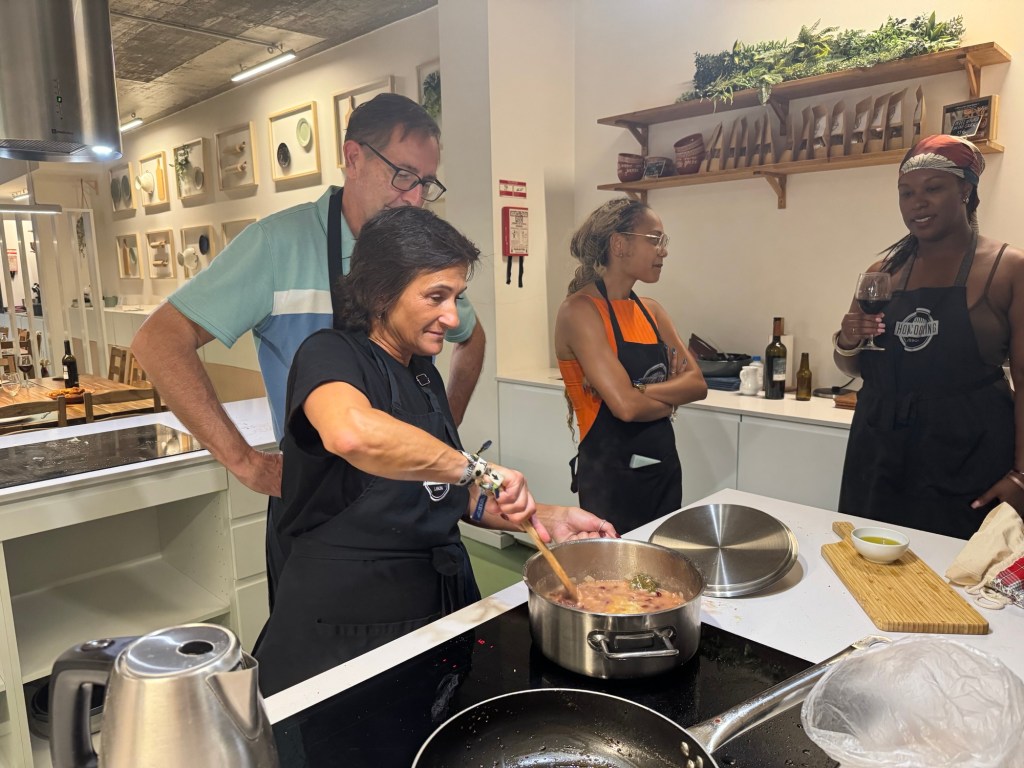
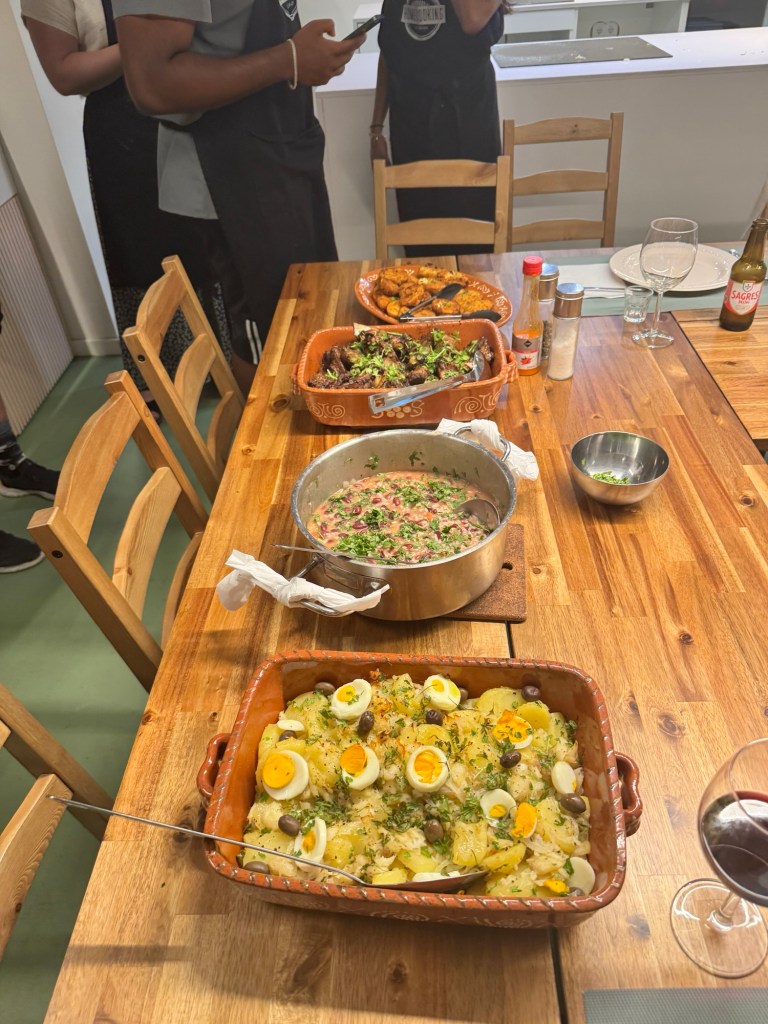
Other groups make a potato/fish dish and pork ribs. Here are our finished products:
We also had sausage, cheese and olive oil with bread. Teresa set the sausage on fire before cutting it.
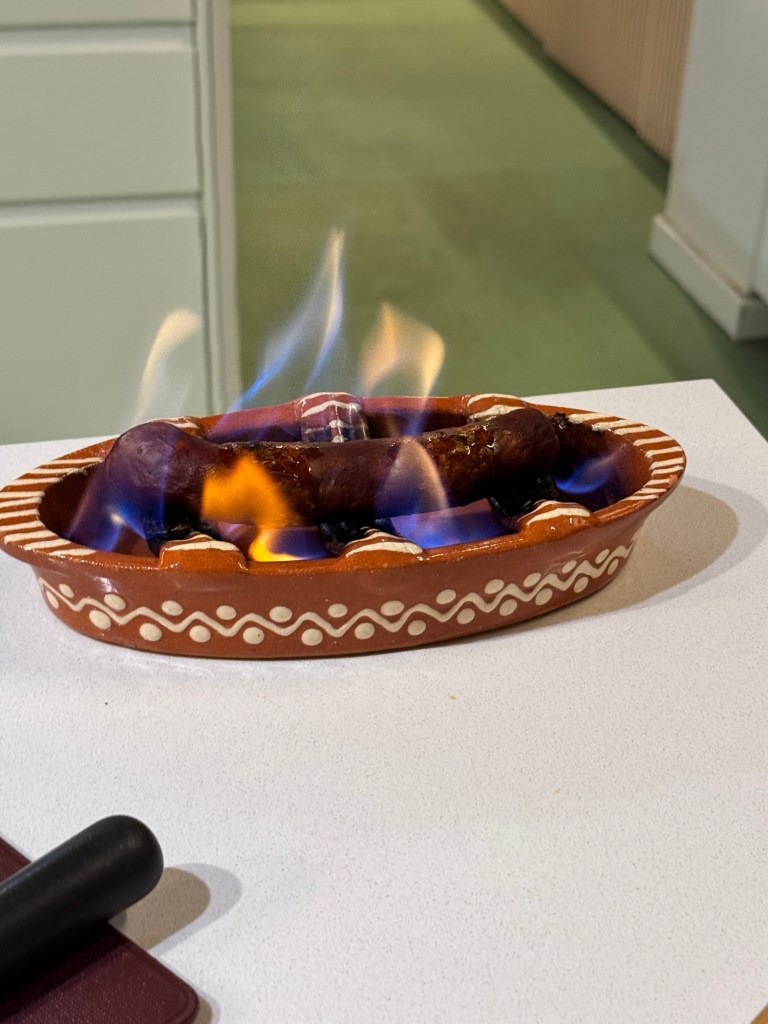
Today, these sausages are made with pork or chicken. Pork is the original version, but during the Inquisition, Jewish and Muslim families started using chicken. That way, investigators would see the hanging sausage and assume they were Christians eating pork.
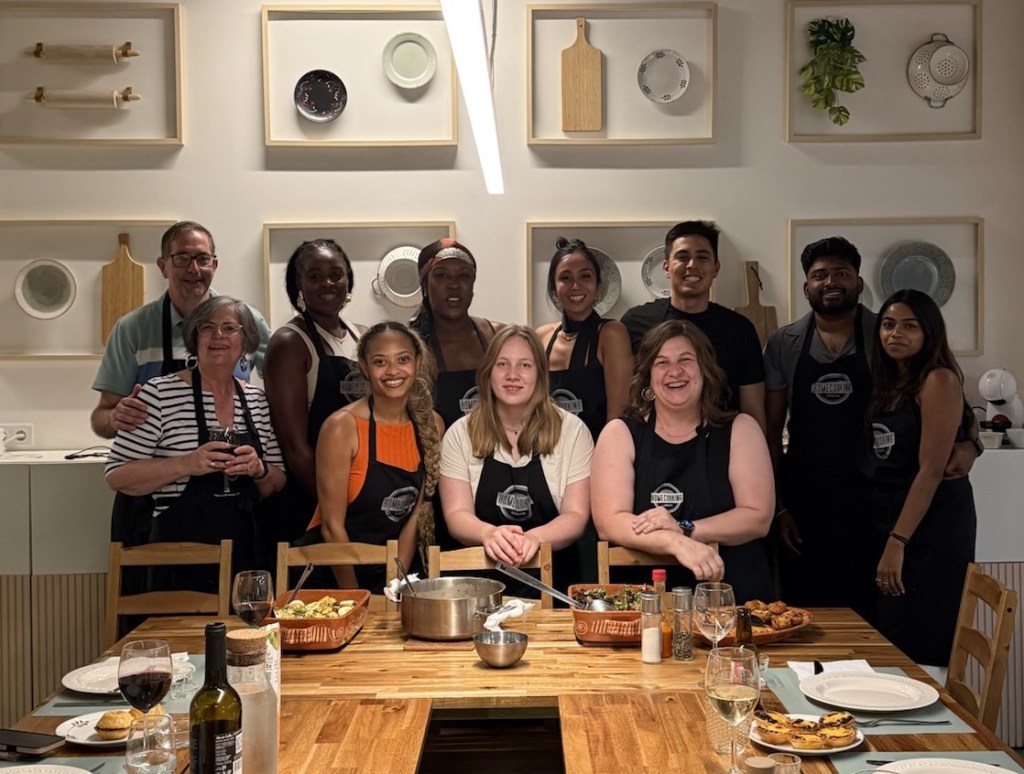
At the end of the evening, we took a group photo.
All in all, this was an incredible trip. While we are happy to be heading home, we both think return trips to Ireland and Portugal are in our future!
Stay tuned for two more posts – outtakes that didn’t make it in the daily posts and travel tips and recommendations by me.
 Travel Buddies
Leave a comment