We did a lot of sightseeing in Budapest. On one of those days, we did more than 16,000 steps doing two self-guided walks, one in Pest and one in Buda.
One thing you quickly realize is that many of Budapest’s most known sights were built in 1896. Why? That was the millennial anniversary of the settlement of Magyars in the Hungarian region.
At the time, the country was part of the Austro-Hungarian empire. Budapest was supposed to be the second capital, on a par with Vienna. They wanted to have a parliament and a castle that rivaled their sister city, leading to this building boom.
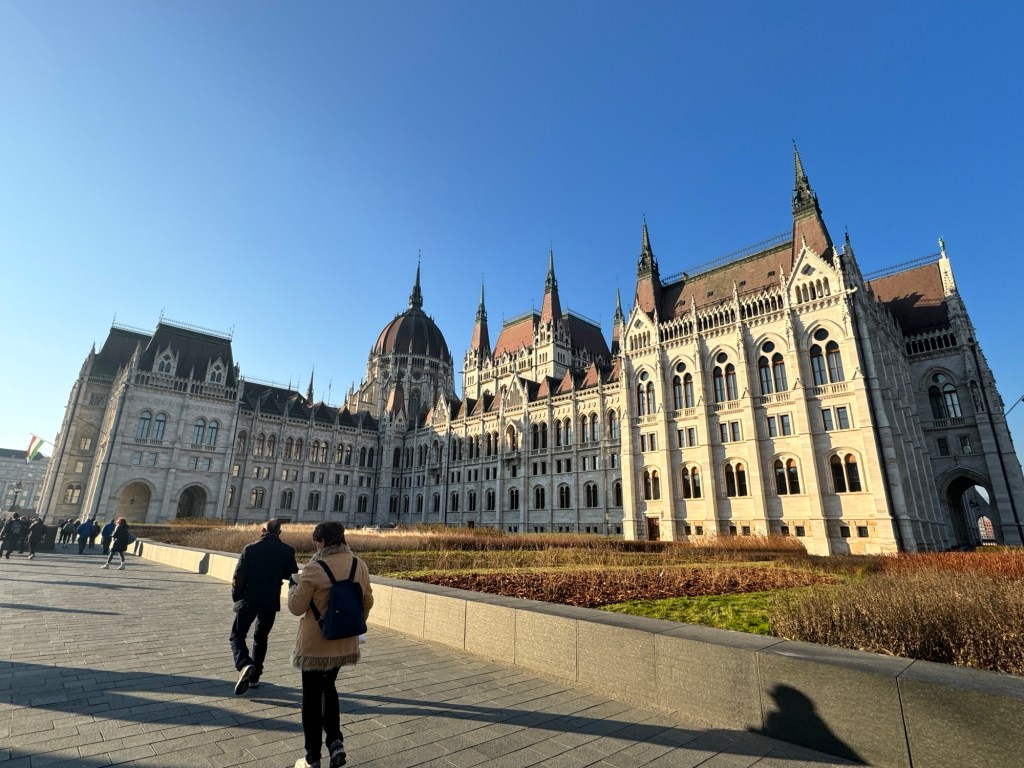
We started the day in Pest by touring the Hungarian Parliament building. Built when? 1896. Outside view:
Here is the central hall and the parliamentary room. Both are a little over the top.
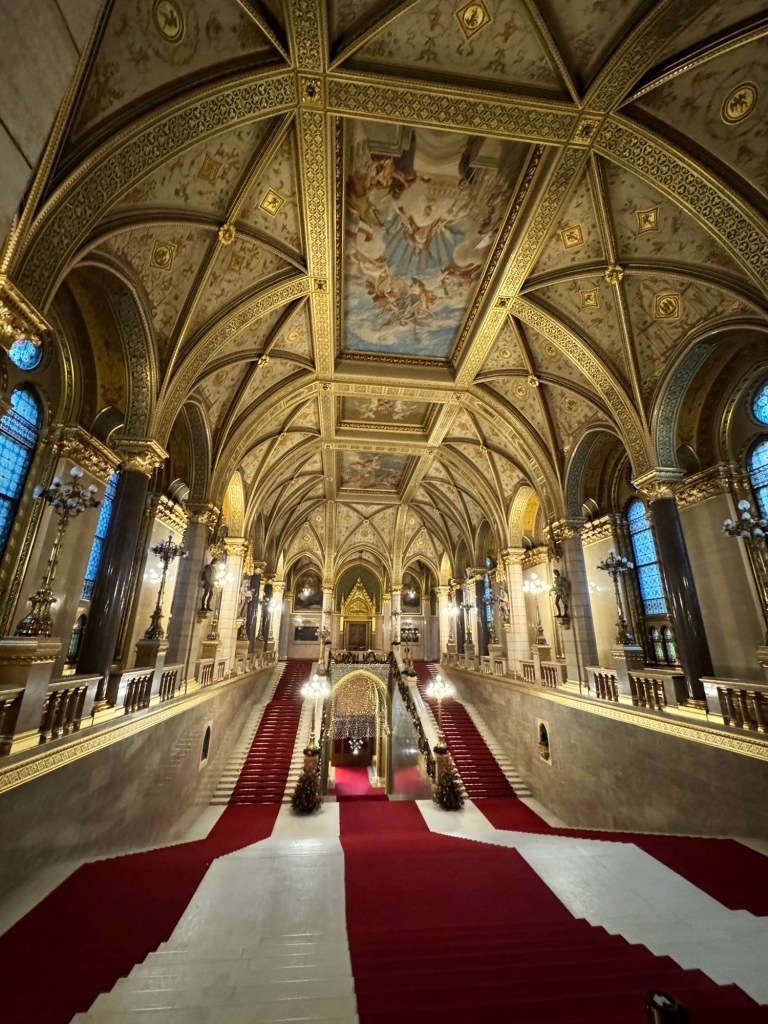
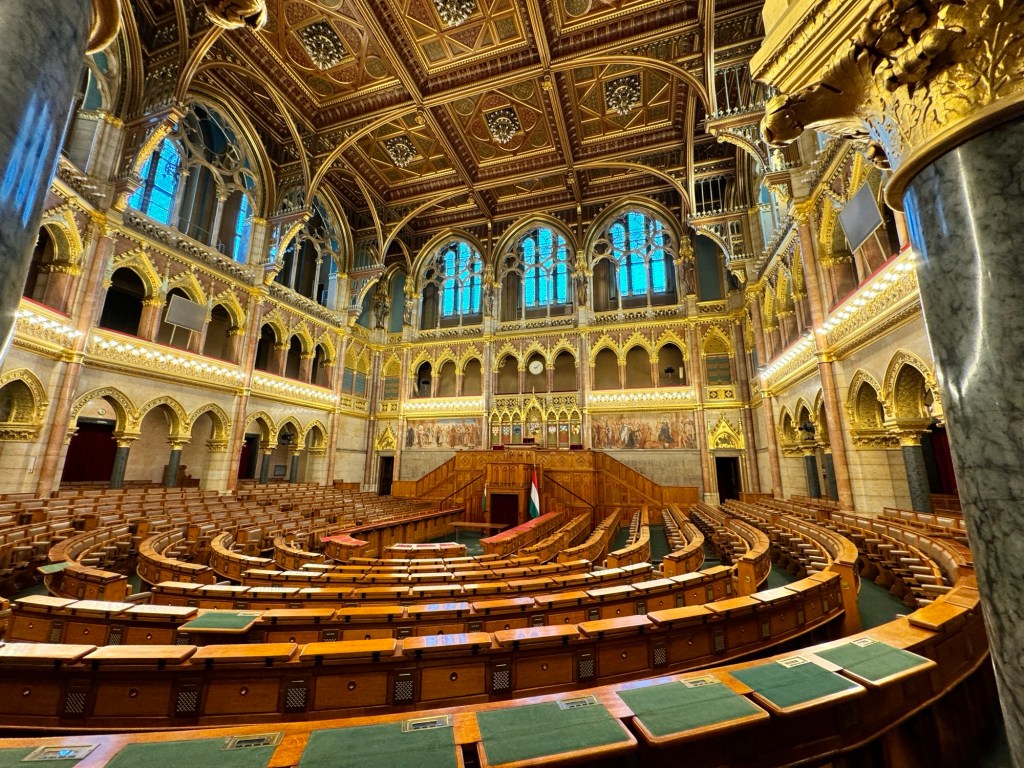
Within 20 years of the 1896 celebrations and these grandiose buildings, Hungary would be in a world war that would shrink its size drastically. Today, only half of the parliament building is used for legislating.
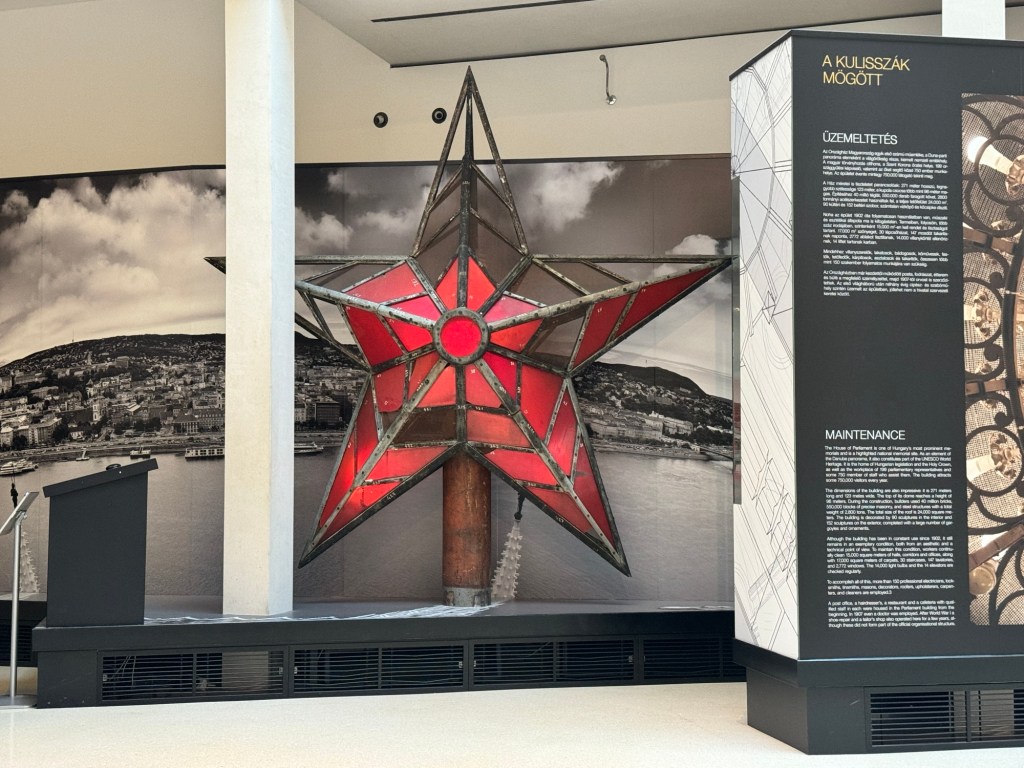
An exhibit in the basement of Parliament includes the red star that the Soviets had installed on the top of the dome.
The current Hungarian government is far-right leaning to the point of being authoritarian and fascist. Though Hungary is part of the EU, the prime minister does not fly the EU flag on the Parliament building. Instead, the Hungarian flag is joined by the flag of Transylvania, currently a part of Romania. The prime minister and his party believe that Transylvania should be part of Hungary. Almost no one outside this cadre takes this claim seriously.
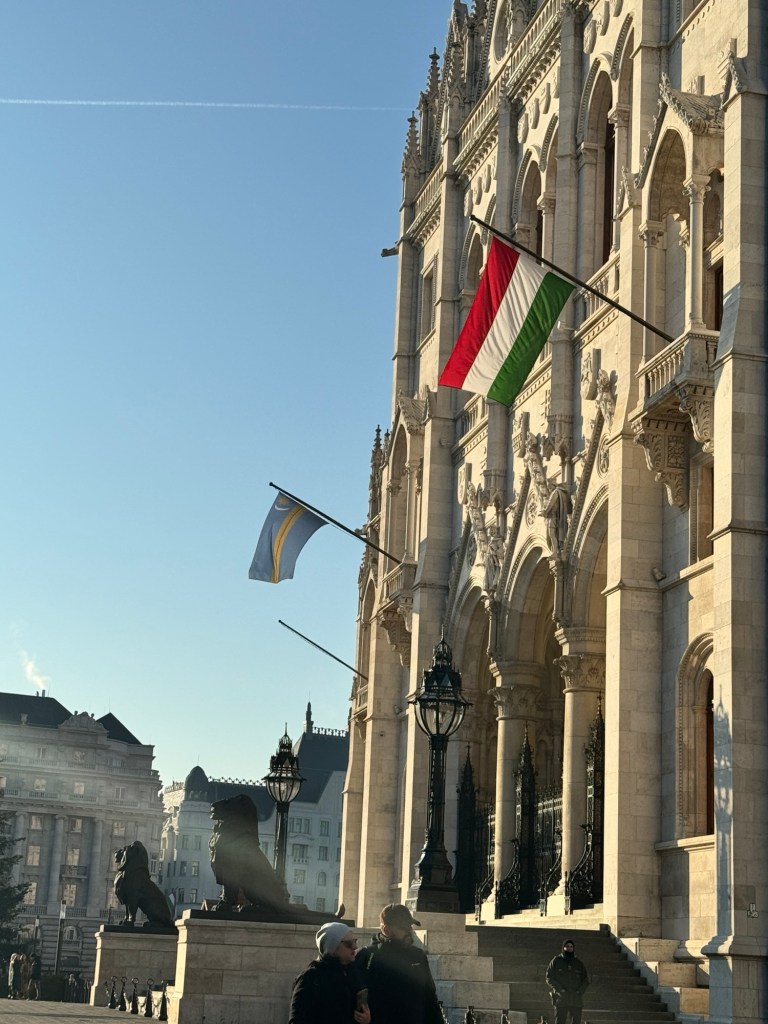
To be fair, we saw EU flags on other government buildings and hotels.
Another addition to Budapest made by the current government is a statue of Ronald Reagan. This statue was added in 2011, as an effort to deflect from the government’s decision at that time to restrict freedom of the press, figuring the Reagan statue made them seem pro-democracy.
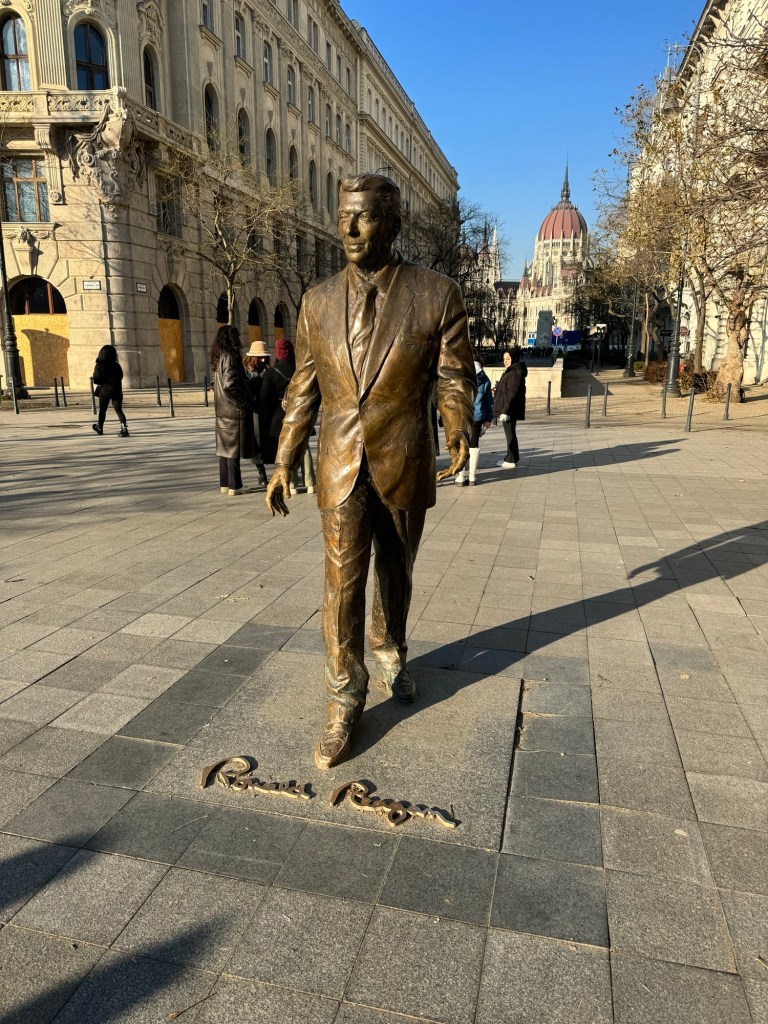
Ironically, Ronald Reagan the cold warrior is on the same Liberty Square as a monument to the Soviets for kicking the Nazis out of Hungary. Later, those same Soviets severely oppressed Hungarians.
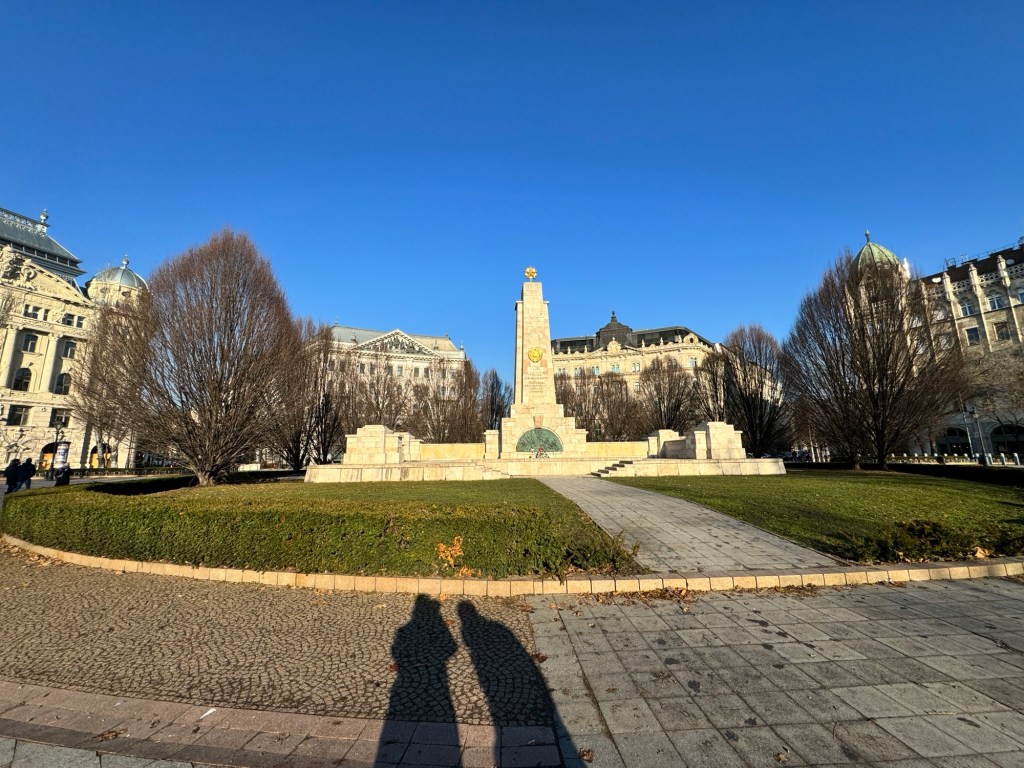
I agree with Rick Steves’ observation that the juxtaposition of these two monuments is a perfect metaphor for Hungary’s complex history of political allegiances.
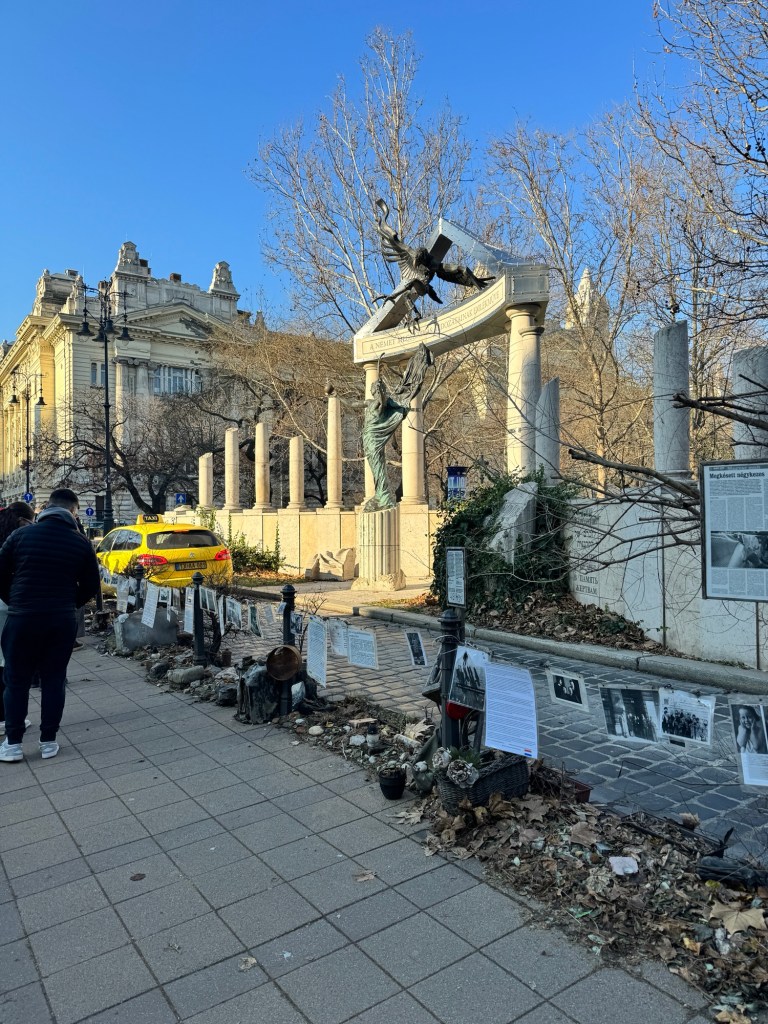
After we restarted our walking tour, we saw one final weird monument on Liberty Square and a moving memorial.
The monument was a controversial (again) addition by the current government. This one features a big, black, iron eagle attacking a peaceful Grecian style woman with arms outstretched and a draped gown. The eagle has a band on its leg labeled 1944. Subtle and artistic, this is not.
This monument represents Nazi’s attacking peaceful, happy Hungary. In reality, Hungary was an active participant in murdering Jewish people. A makeshift memorial in front of the monument remembers Hungarian Jewish people who were murdered. It is quite moving.
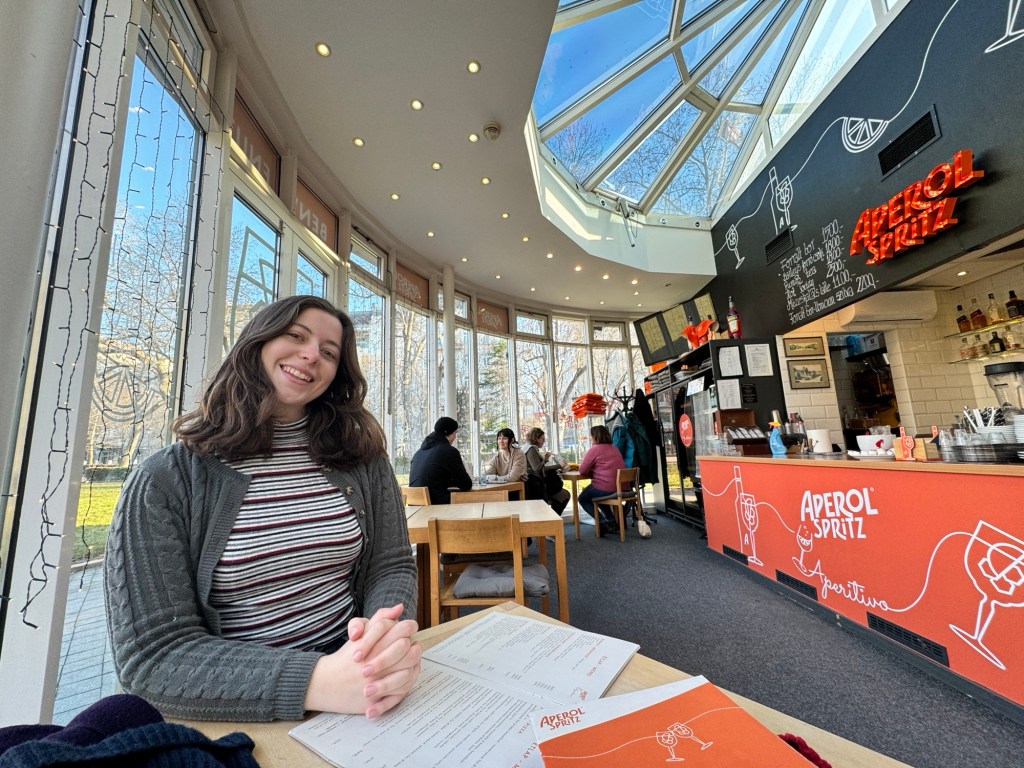
Nezzie and I did enjoy a nice break at a cafe on Liberty Square. We had scrambled eggs and green tea. Not traditional Hungarian, but nourishing and delicious all the same.
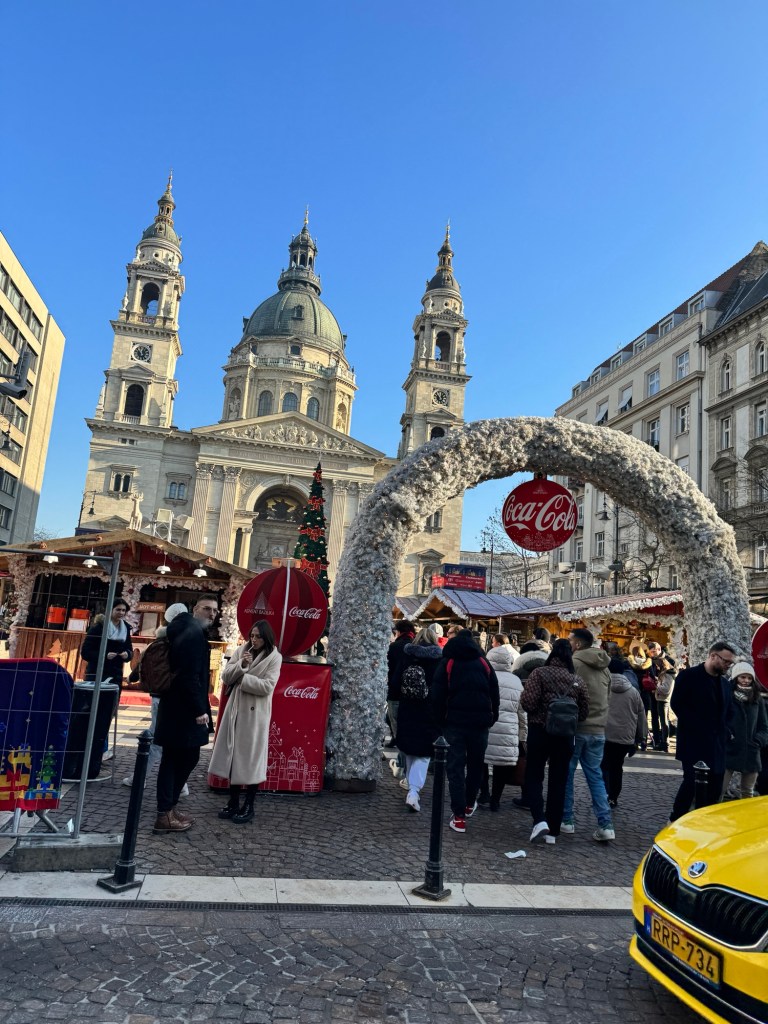
Carrying on with our walking tour, we dashed by St. Istvan’s Basilica. While we hoped to get a peek inside, we did not want to take a full tour. But there was no option for a quick highlight stop, so we mostly viewed the outside of the church, the souvenir shop and the Christmas market out front.
Up to that point, we had stayed on the Pest side of Budapest. We crossed to Buda for lunch and toured the grounds of Buda Castle and the area around Matthias Church and Fisherman’s Bastion. Guess when all those were built or renovated? 1896.
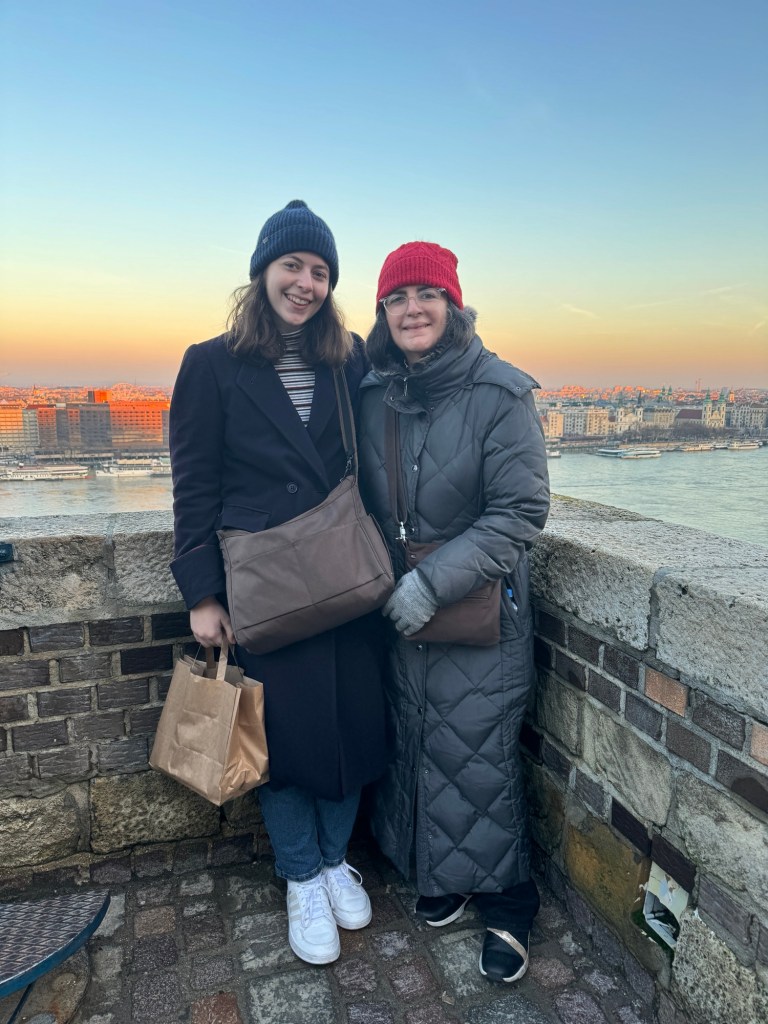
Here is a photo of us on a promontory of Buda Castle overlooking the Danube River and the Pest side of the city.
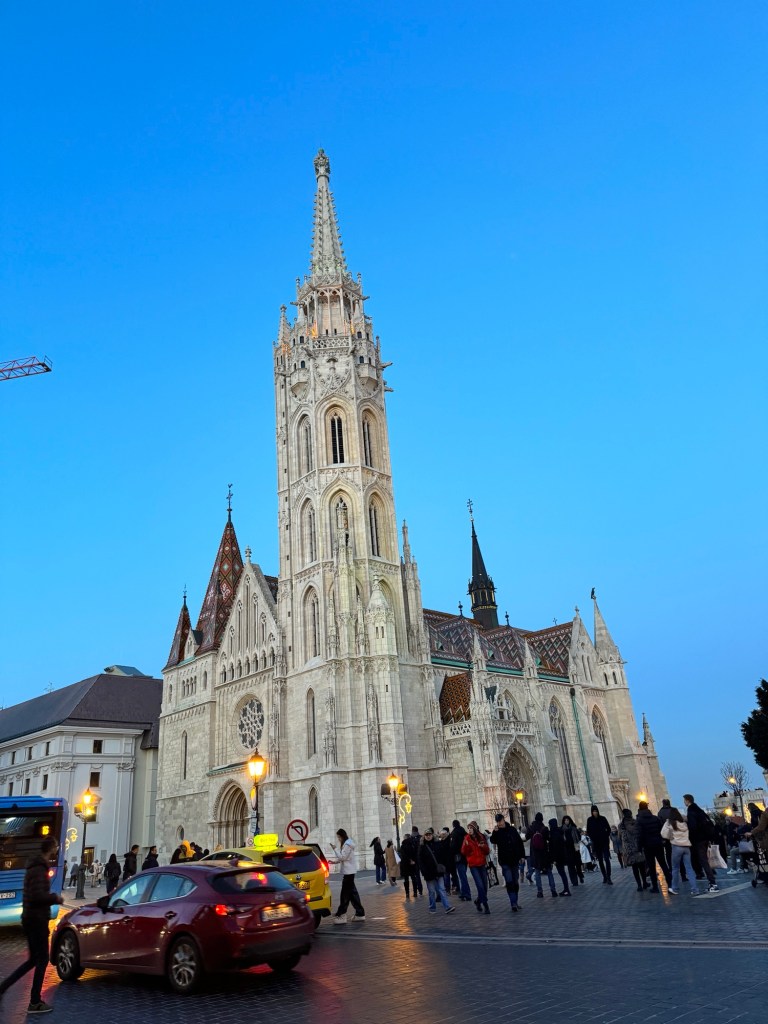
We did the Rick Steves walking tour of the area. It was a pleasant afternoon and evening to walk these streets leading from Buda Castle to Matthias Church. The church roof is made of beautiful tiles. The current version of the church is the result of significant renovations in time for the 1896 millennial celebrations.
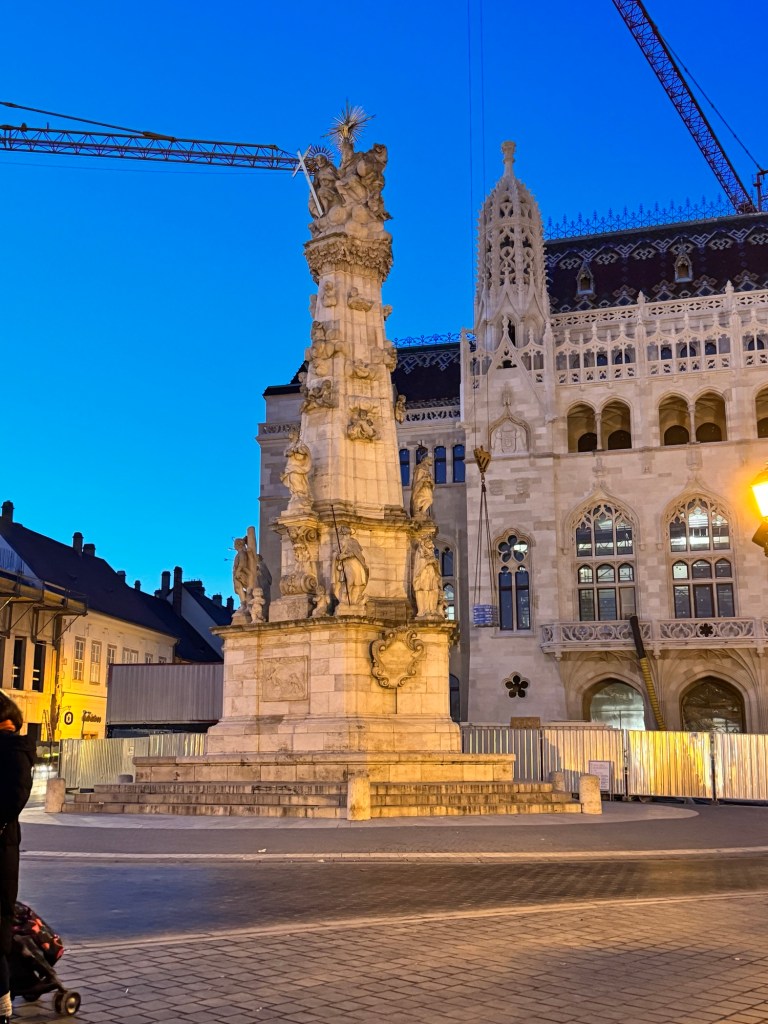
I also was intrigued by the plague column right in front of Matthias Church. These columns are found in many European cities, erected as thanks to God for ending the epidemic. This one dates back to 1713, but it was heavily damaged in WWII. It wasn’t fully restored until the 2000s.
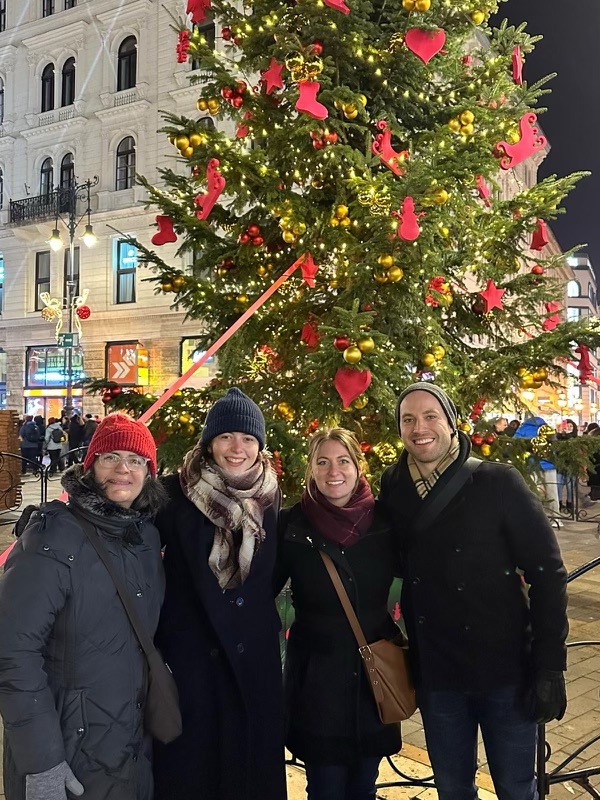
We ended the day by meeting up with some familiar faces – Caleb and Christian Benadum (daughter-in-law Hannah’s brother and his wife) and their friend. The three of them were visiting from Switzerland where they live. Caleb is an attorney working on refugee issues for the United Nations. He also just published his first novel – the Koh Ker Conspiracy. It’s a fun thriller, and I recommend it.
It was a fun coincidence that we were in Budapest at the same time! Here we are in front of the Christmas tree in the Christmas market near our AirBnB.
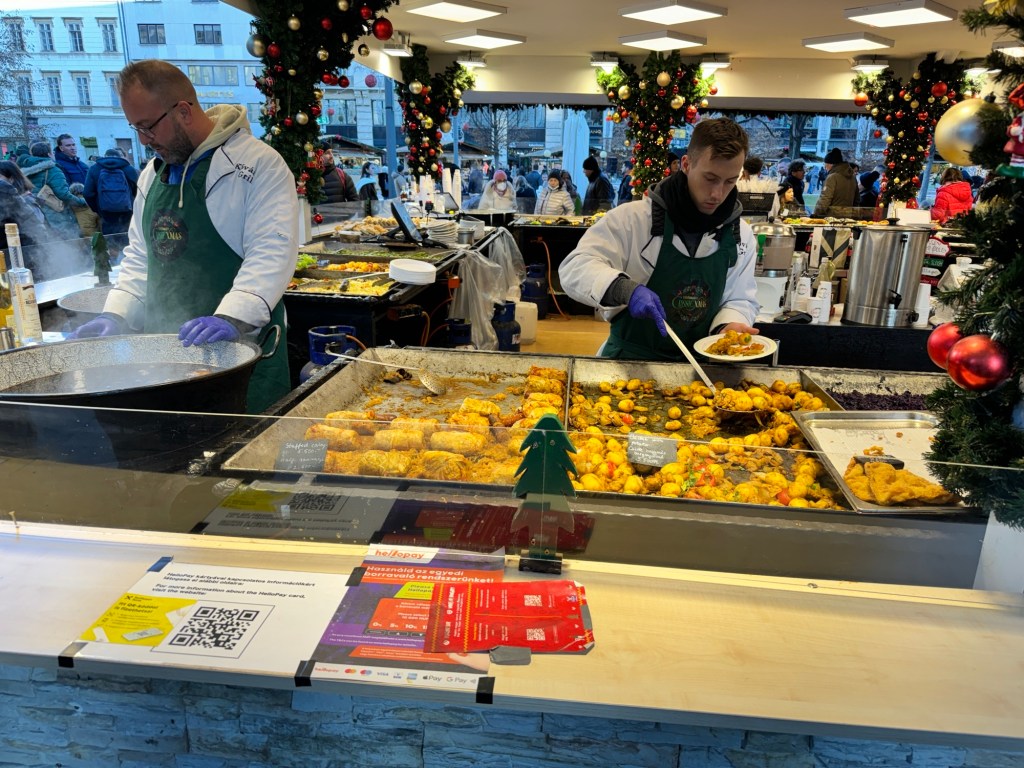
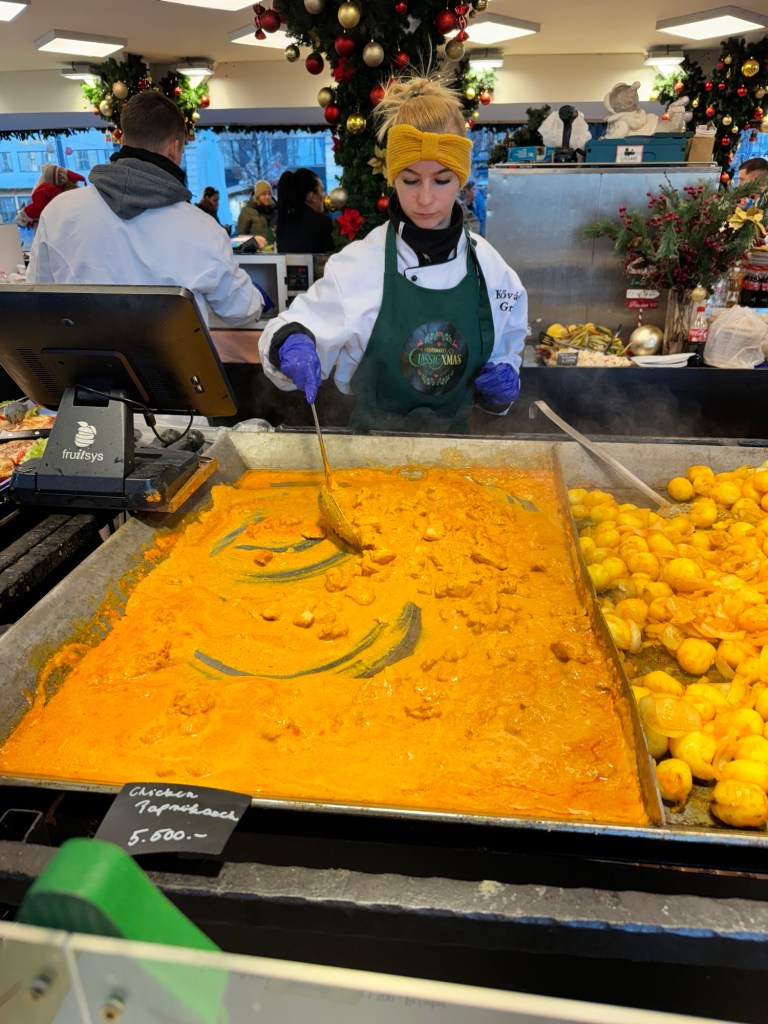
Speaking of that Christmas market near our AirBnB, there were many Hungarian specialties on display, from stuffed cabbage to chicken paprikash.
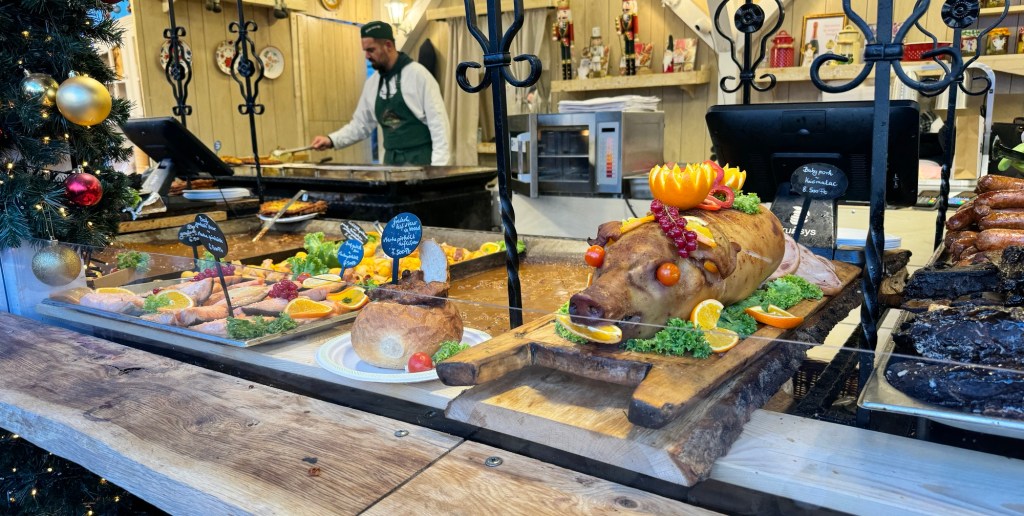
Anyway, after we said farewell to the Benadums, Nezzie convinced me to eat at a Hungarian place she found online where a lot of locals go. We each had schnitzel.
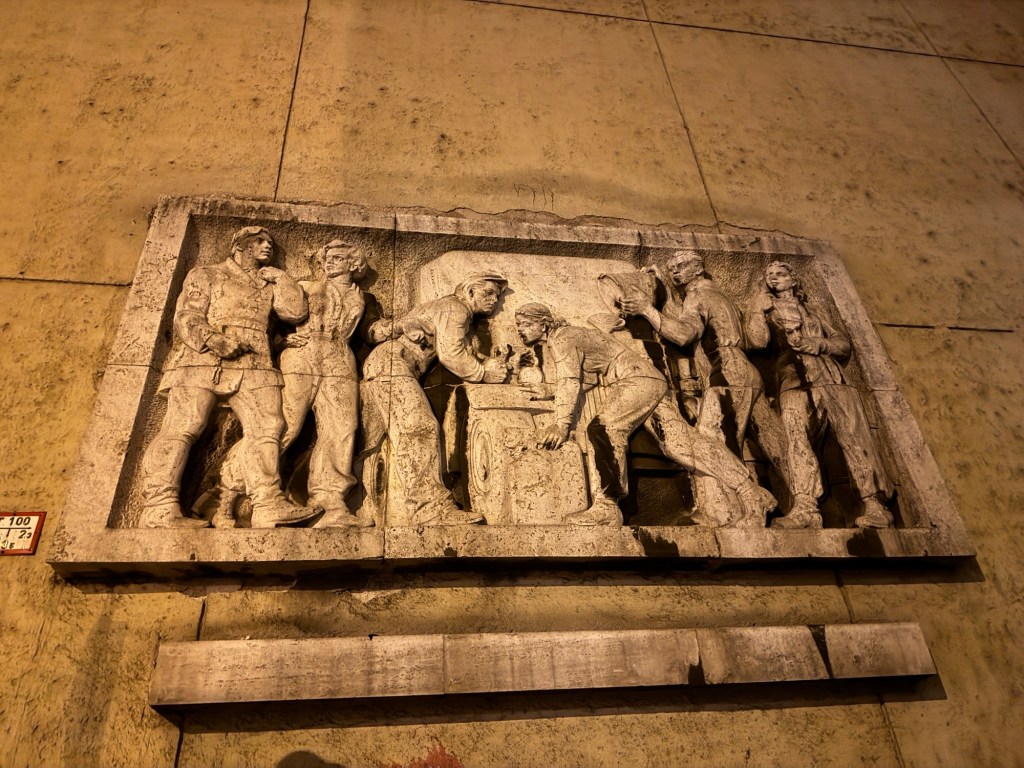
On our way back to our apartment, while waiting for a bus, we noticed another one of those Soviet-era wall art installations, similar to the one we saw in Dresden. In this one, the male and female workers are all collaborating to fix something. Another example of all workers being needed for the common good. It was on the side of a government building.
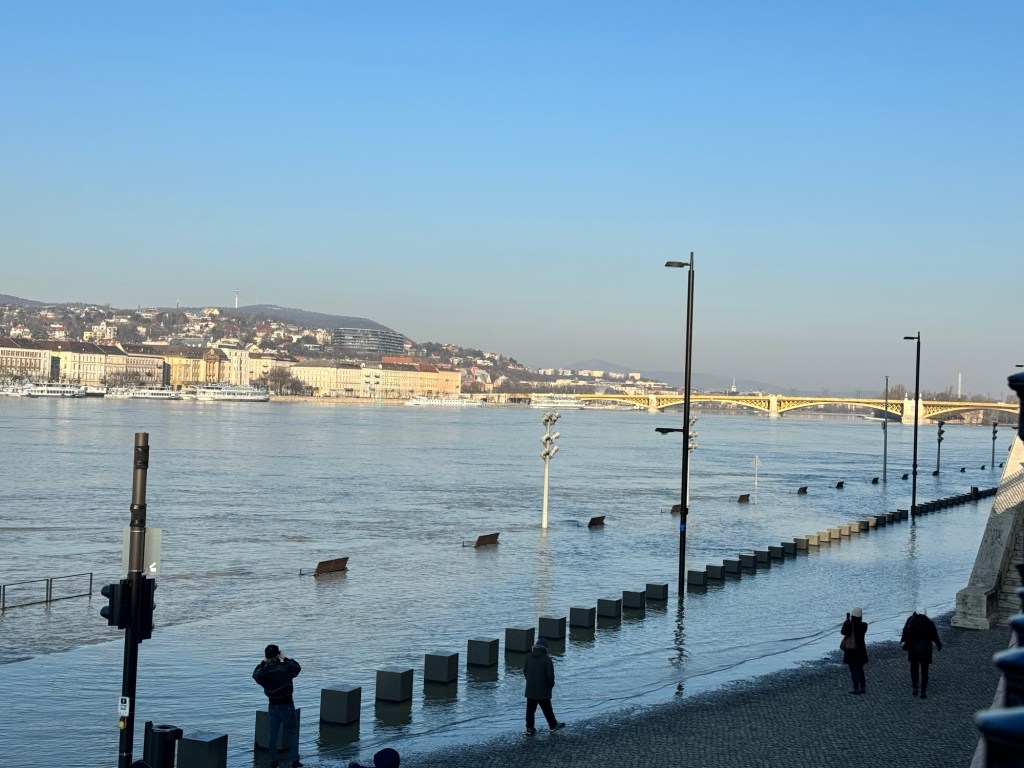
One other thing I wanted to mention is that while we were in Budapest, the city was experiencing severe flooding of the Danube. You can see the tops of park benches that overlook the regular riverbank.
The flooding also covered an important monument to Holocaust victims. In 1944, the Hungarian government massacred Hungarian Jews by lining them up on the riverbank, shooting them, and pushing them in the river, but only after taking their shoes to redistribute. The monument is a row of bronze shoes of all different sizes and genders. That monument was completely flooded when we were there. But not forgotten.
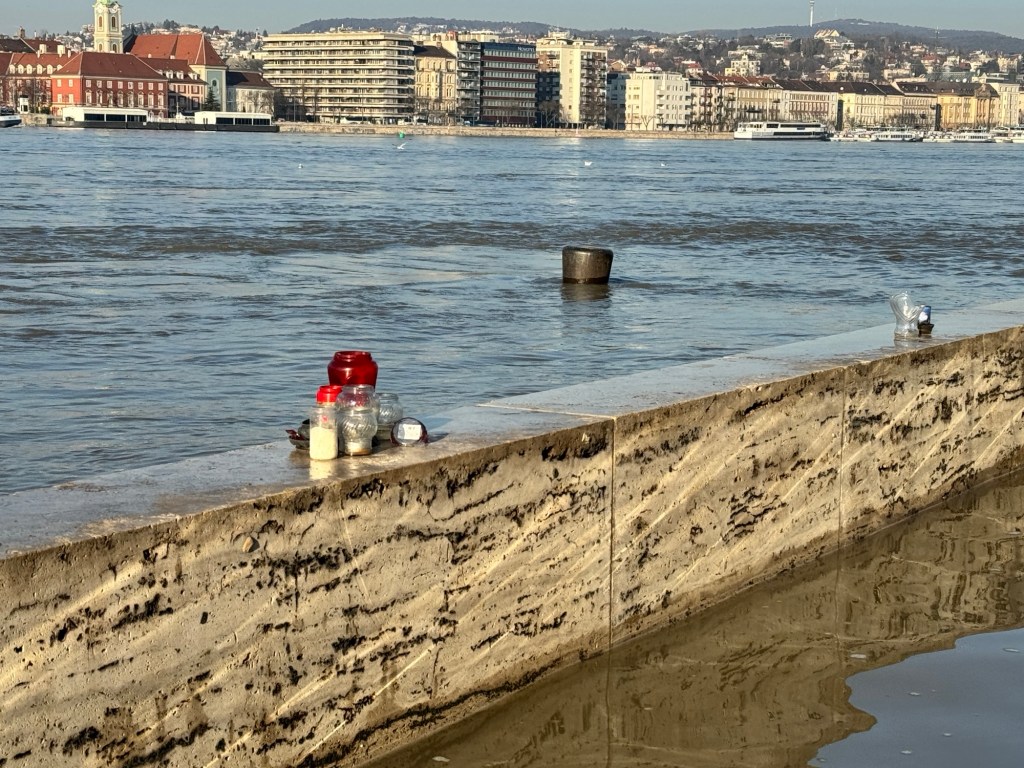
Remembering and documenting history, even the painful parts, is so important. I appreciate that there are people who won’t let these truths be white-washed or forgotten. Working toward peace and reconciliation may seem like an uphill slog at times, but it’s our best way forward.
We will celebrate New Year’s in Barcelona along with Will, a new member of the travel buddies. You may have already started seeing some of his photos. I’ll do my best to keep up this blog as well.
Cheers!


Leave a Reply